切れ目が水を逃がす「霞堤」
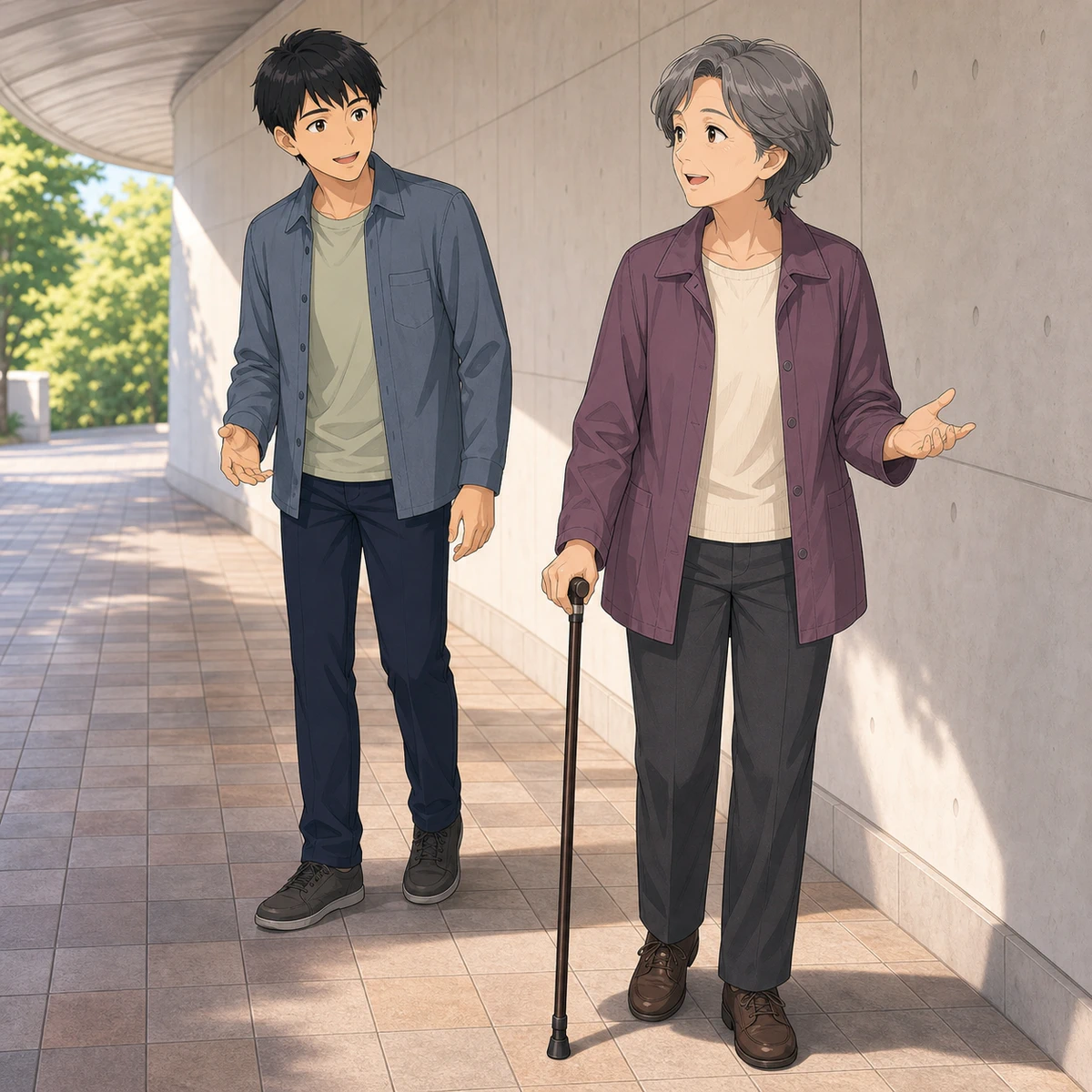
成人の友人MinaとKojiが、地域の治水学習施設を訪れ、昔から残る堤防の形について話す前に説明音声を聞いています。まずは音声に集中して挑戦します。英文・日本語訳・解説は、答え合わせ後に確認できます。

Eiken Style
英文を聞いて質問に答える
英文と2つのQuestionは1回だけ流れます。各Questionのあとに10秒の解答時間があります。英文とQuestionの文字は答え合わせ後に確認できます。
英文と質問を聞き、最も適切な答えを1〜4から選びましょう。
英文と質問は最初は表示しません。選択肢の英文を確認し、音声を聞いて答えます。日本語訳は答え合わせ後に表示されます。
英文を見る答え合わせ前は開かなくてもOK
Along some fast-flowing rivers in Japan, parts of an embankment appear to stop before the next part begins.
日本の流れの速い川の中には、堤防の一部が次の部分につながる前に途切れているように見える場所があります。
These structures are called kasumi levees.
このような構造は霞堤と呼ばれます。
Unlike a continuous levee, their sections overlap on the landward side, leaving an opening between them.
連続した堤防と異なり、陸側で区間が重なり、その間に開口部が残されています。
During a flood, water can move backward through an opening and spread temporarily over nearby land.
洪水時には、水が開口部を通って逆向きに流れ、周辺の土地へ一時的に広がることがあります。
This reduces the force of water continuing downstream.
これにより、下流へ流れ続ける水の勢いを弱めます。
It can also slow a flood before it reaches communities farther down the river.
さらに、洪水が下流の地域へ達する前に、その進み方を遅らせることもできます。
The openings have other functions.
開口部にはほかの働きもあります。
If an upstream levee breaks, floodwater on the plain can return to the river through a downstream opening instead of spreading farther.
上流の堤防が決壊した場合、平地の洪水はさらに広がる代わりに、下流側の開口部を通って川へ戻ることができます。
Some kasumi levees also provide a second line of defense and allow smaller streams or rainwater to drain into the main river.
霞堤の中には、第二の防御線になり、小さな川や雨水を本流へ排水できるものもあります。
However, roads or development that close an opening can prevent these functions.
しかし、開口部をふさぐ道路や開発は、こうした働きを妨げることがあります。
River managers in several regions therefore aim to preserve the structures as part of modern flood-control planning.
そのため複数の地域の河川管理者は、現代の治水計画の一部としてこの構造を残そうとしています。
What is one feature of these flood-control levees?
霞堤の特徴の一つは何ですか。
They continue without gaps from upstream to downstream.
上流から下流まで切れ目なく続いている。
They contain openings between overlapping embankment sections.
重なり合う堤防区間の間に開口部がある。
They are rebuilt on higher ground after every flood.
洪水のたびに高い土地へ造り直される。
They prevent smaller streams from draining into main rivers.
小さな川が本流へ排水されるのを防ぐ。
英文と質問を聞き、最も適切な答えを1〜4から選びましょう。
英文と質問は最初は表示しません。選択肢の英文を確認し、音声を聞いて答えます。日本語訳は答え合わせ後に表示されます。
英文を見る答え合わせ前は開かなくてもOK
Along some fast-flowing rivers in Japan, parts of an embankment appear to stop before the next part begins.
日本の流れの速い川の中には、堤防の一部が次の部分につながる前に途切れているように見える場所があります。
These structures are called kasumi levees.
このような構造は霞堤と呼ばれます。
Unlike a continuous levee, their sections overlap on the landward side, leaving an opening between them.
連続した堤防と異なり、陸側で区間が重なり、その間に開口部が残されています。
During a flood, water can move backward through an opening and spread temporarily over nearby land.
洪水時には、水が開口部を通って逆向きに流れ、周辺の土地へ一時的に広がることがあります。
This reduces the force of water continuing downstream.
これにより、下流へ流れ続ける水の勢いを弱めます。
It can also slow a flood before it reaches communities farther down the river.
さらに、洪水が下流の地域へ達する前に、その進み方を遅らせることもできます。
The openings have other functions.
開口部にはほかの働きもあります。
If an upstream levee breaks, floodwater on the plain can return to the river through a downstream opening instead of spreading farther.
上流の堤防が決壊した場合、平地の洪水はさらに広がる代わりに、下流側の開口部を通って川へ戻ることができます。
Some kasumi levees also provide a second line of defense and allow smaller streams or rainwater to drain into the main river.
霞堤の中には、第二の防御線になり、小さな川や雨水を本流へ排水できるものもあります。
However, roads or development that close an opening can prevent these functions.
しかし、開口部をふさぐ道路や開発は、こうした働きを妨げることがあります。
River managers in several regions therefore aim to preserve the structures as part of modern flood-control planning.
そのため複数の地域の河川管理者は、現代の治水計画の一部としてこの構造を残そうとしています。
Why can roads or new development reduce their effectiveness?
なぜ道路や新しい開発によって霞堤の効果が弱まることがあるのですか。
New development makes floodwater travel farther upstream.
新しい開発によって洪水がさらに上流へ進むから。
Roads force smaller streams to leave the river system.
道路によって小さな川が水系から離れるから。
Modern buildings increase the speed of the main river.
現代の建物が本流の速さを増すから。
Construction can close openings needed for the levees' functions.
建設によって霞堤の働きに必要な開口部がふさがることがあるから。
After Story
切れ目が水を逃がす「霞堤」のその後
本編の「切れ目が水を逃がす「霞堤」」から少し先へ進んだ会話です。先に音で流れをつかみ、3問の内容確認後に英文と日本語訳を確かめます。
Minaは以前、堤防の切れ目をどう考えていましたか。
開口部の背後の土地を使える状態に保つ必要があるのはなぜですか。
Kojiは最後に、治水をどのように考えるべきだとまとめていますか。
After Storyを読む答え合わせ後に、英文と日本語訳を1文ずつ確認できます。
I used to think a gap in a levee meant it was unfinished.
堤防の切れ目は、まだ完成していないという意味だと思ってた。
Same. But the overlap is deliberate, so the opening can control where water moves.
僕も。でも重なりは意図的で、開口部によって水がどこへ動くかを調整できるんだ。
The upstream opening lets some water spread over a planned area, right?
上流側の開口部は、計画された区域に水をある程度広げるんだよね?
Yes, while a downstream one can guide floodwater back into the river.
そう。一方、下流側の開口部は洪水を川へ戻すことができる。
That only works if the land behind it stays available.
それは、背後の土地が使える状態に保たれていないと機能しないね。
Exactly. A road or building in the wrong place can block the opening or put people at risk.
そのとおり。場所を誤った道路や建物は開口部をふさいだり、人を危険にさらしたりする。
So preserving the levee also means planning how nearby land is used.
つまり霞堤を残すには、周辺の土地利用も計画する必要があるんだね。
And checking which function each site actually provides.
それに、各地点が実際にどの機能を果たしているか確認することも必要だ。
Traditional design still needs modern surveys and agreements.
伝統的な設計でも、現代の調査と合意が必要なんだね。
That's why flood control is about the whole river basin, not just taller walls.
だから治水は、壁を高くするだけでなく、流域全体について考えることなんだ。
Chunks
重要チャンク
appear to ...
〜のように見える
appear to + 動詞で、観察からそう見えることを表します。本文例: parts of an embankment appear to stop(堤防の一部が途切れているように見える)。独立例: The problem appears to be temporary.(問題は一時的なようです。)
be called ...
〜と呼ばれる
be called + 名称で、物や仕組みの呼び名を示します。本文例: These structures are called kasumi levees.(この構造は霞堤と呼ばれます。)独立例: This process is called evaporation.(この過程は蒸発と呼ばれます。)
unlike ...
〜と異なり
unlike + 名詞で、比較対象との違いを簡潔に示します。本文例: Unlike a continuous levee(連続した堤防と異なり)。独立例: Unlike the old model, this one uses less energy.(旧型と異なり、これは消費電力が少ないです。)
move through ...
〜を通って移動する
move through + 場所で、ある経路を通る動きを表します。本文例: water can move backward through an opening(水が開口部を通って逆向きに動ける)。独立例: Air moves through the narrow pipe.(空気が細い管を通って移動します。)
reduce the force of ...
〜の勢いを弱める
reduce the force of + 名詞で、力や衝撃を弱めることを表します。本文例: reduce the force of water(水の勢いを弱める)。独立例: The cover reduces the force of the wind.(覆いが風の勢いを弱めます。)
More Stories
次に聞くストーリー
同じ級・場面・テーマに近い話から選んでいます。