
みその色だけでは、味も品質も決まらない
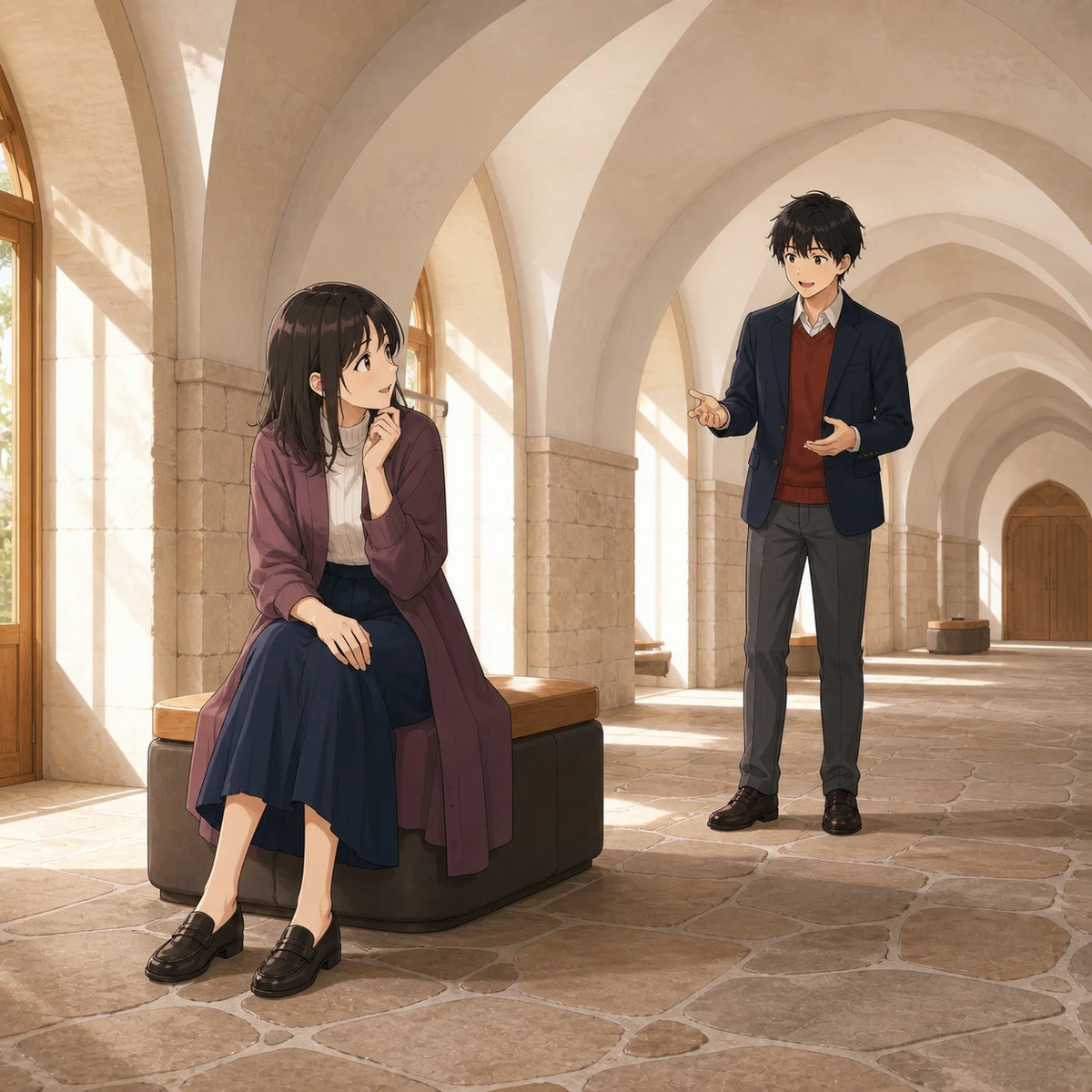
発酵文化館の連続ヴォールト通路で、HanaとTaroが今回の仕組みを確かめています。まずは音声に集中して挑戦します。英文・日本語訳・解説は、答え合わせ後に確認できます。
Eiken Style
英文を聞いて質問に答える
英文と質問を聞き、最も適切な答えを1〜4から選びましょう。
英文と質問は最初は表示しません。選択肢の英文を確認し、音声を聞いて答えます。日本語訳は答え合わせ後に表示されます。
英文を見る答え合わせ前は開かなくてもOK
Japanese miso can be made with rice, barley, or soybean koji mixed with soybeans and salt.
日本のみそは、米、麦、豆の麹を大豆と塩に混ぜて作ることがあります。
These enzymes break starch into sugars and soybean protein into amino acids, while microorganisms and aging create different flavors.
麹の酵素がでんぷんを糖に、大豆たんぱく質をアミノ酸に分解し、微生物と熟成が異なる風味を生みます。
Because recipes and aging periods vary by region and type, a darker color does not by itself prove that one miso is better or saltier.
地域や種類で配合と熟成期間が違うため、色が濃いだけで品質が上、または塩辛いとは言えません。
Why does miso vary?
なぜみそには違いがありますか。
Every region uses one identical recipe.
全地域が同じ配合を使うから。
Color alone sets a national quality rank.
色だけで全国品質順位が決まるから。
Ingredients, koji, and aging can differ.
原料、麹、熟成が異なるから。
All miso is cooked after one day.
すべてのみそを1日後に加熱するから。
After Story
みその色だけでは、味も品質も決まらないのその後
本編の「みその色だけでは、味も品質も決まらない」から少し先へ進んだ会話です。先に音で流れをつかみ、3問の内容確認後に英文と日本語訳を確かめます。
みその結果を変えるものは何ですか。
酵素は何を作りますか。
Hanaは何を決めつけずに比べますか。
After Storyを読む答え合わせ後に、英文と日本語訳を1文ずつ確認できます。
I used to think dark miso was always saltier and older.
色の濃いみそは必ず塩辛く古いと思ってた。
Color does not mean one simple thing across every recipe.
色はすべての配合で一つの意味になるわけではないよ。
Rice koji and barley koji can begin with different materials.
米麹と麦麹では出発する材料が違う。
And the balance of koji, soybeans, salt, and time changes the result.
麹、大豆、塩、時間のバランスで結果が変わる。
The enzymes make sugars and amino acids during the process.
酵素が途中で糖やアミノ酸を作るんだね。
Yes, while microbes add their own changes instead of color acting alone.
そう。色だけでなく微生物も変化を加える。
I want to compare two kinds without calling one better first.
最初から片方を上とせず、二種類を比べたい。
Make sure you note aroma, sweetness, saltiness, and use.
香り、甘味、塩味、用途も記録して。
Even if the colors differ, both may fit different dishes.
色が違っても、別の料理にそれぞれ合うね。
Exactly. A bowl of miso carries a recipe, time, and region together.
その通り。一杯のみそに配合、時間、地域が重なる。
Chunks
重要チャンク
be made with ...
〜で作られる
be made with ... は再利用できる短い型です。本文例: Japanese miso can be made with rice, barley, or soybean koji mixed with soybeans and salt.(日本のみそは、米、麦、豆の麹を大豆と塩に混ぜて作ることがあります。)独立例: This paper is made with long fibers.(この紙は長い繊維で作られます。)
break ... into ...
〜を…に分解する
break ... into ... は再利用できる短い型です。本文例: These enzymes break starch into sugars and soybean protein into amino acids, while microorganisms and aging create different flavors.(麹の酵素がでんぷんを糖に、大豆たんぱく質をアミノ酸に分解し、微生物と熟成が異なる風味を生みます。)独立例: The machine breaks the task into steps.(機械は作業を段階に分けます。)
does not mean ...
〜を意味するわけではない
does not mean ... は再利用できる短い型です。本文例: Color does not mean one simple thing across every recipe.(色はすべての配合で一つの意味になるわけではないよ。)独立例: A dark sky does not mean heavy rain everywhere.(暗い空でも全域で大雨とは限りません。)
instead of ... alone
〜だけではなく
instead of ... alone は再利用できる短い型です。本文例: Yes, while microbes add their own changes instead of color acting alone.(そう。色だけでなく微生物も変化を加える。)独立例: Use both records instead of one alone.(一つだけでなく両方の記録を使ってください。)
even if ...
たとえ〜でも
even if ... は再利用できる短い型です。本文例: Even if the colors differ, both may fit different dishes.(色が違っても、別の料理にそれぞれ合うね。)独立例: Try both even if they look different.(見た目が違っても両方試してください。)
More Stories
次に聞くストーリー
同じ級・場面・テーマに近い話から選んでいます。