同じ六畳でも、広さが違う理由
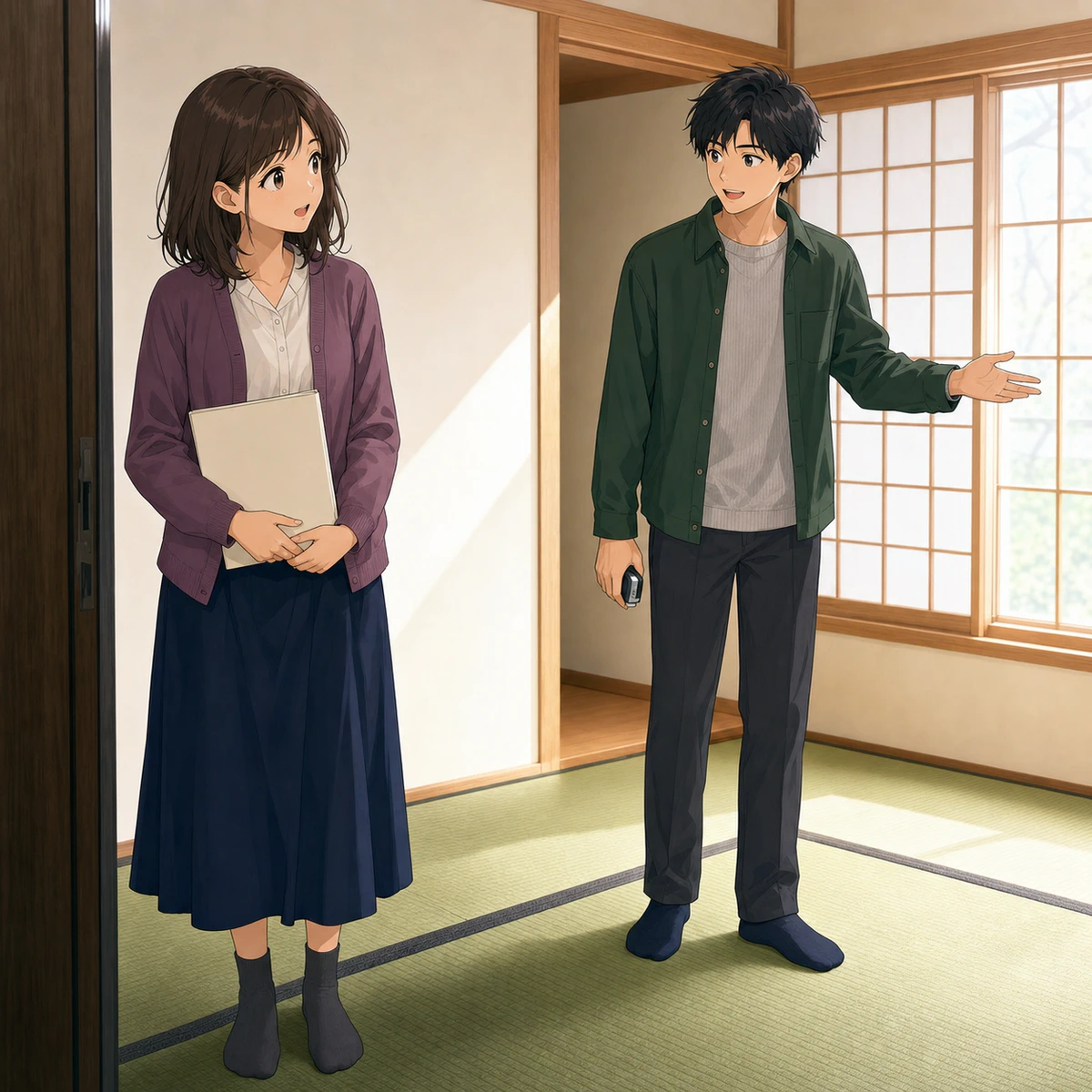
24歳のAyaは、兄のKotaと一緒に二つの和室がある住まいを内覧しました。まずは音声に集中して挑戦します。英文・日本語訳・解説は、答え合わせ後に確認できます。
Eiken Style
英文を聞いて質問に答える
英文と質問を聞き、最も適切な答えを1〜4から選びましょう。
英文と質問は最初は表示しません。選択肢の英文を確認し、音声を聞いて答えます。日本語訳は答え合わせ後に表示されます。
英文を見る答え合わせ前は開かなくてもOK
In Japan, room sizes are often described by the number of tatami mats that fit on the floor.
日本では、部屋の広さを、床に敷ける畳の枚数で表すことがよくあります。
However, one tatami mat does not have exactly the same area everywhere.
しかし、畳一枚の面積は、どこでもまったく同じというわけではありません。
Kyoma mats are generally used in western Japan and are larger than Edoma mats commonly found in the east.
京間は一般に西日本で使われ、東日本でよく見られる江戸間より大きいものです。
Smaller Danchima mats are also used in some apartment buildings.
より小さい団地間も、一部の集合住宅で使われています。
Therefore, two rooms described as six-tatami rooms can have different floor areas.
したがって、同じ六畳と表された二つの部屋でも、床面積が違うことがあります。
Why can two six-tatami rooms have different floor areas?
同じ六畳と表された二つの部屋で、床面積が違うことがあるのはなぜですか。
Because the size of one tatami mat can differ.
畳一枚の大きさが異なることがあるから。
Because some tatami mats have much thicker woven surfaces.
一部の畳は畳表がずっと厚いから。
Because eastern homes usually leave one mat space empty.
東日本の家は通常、一畳分を空けるから。
Because apartment residents often remove mats during the day.
集合住宅の住人は日中に畳を外すことが多いから。
After Story
同じ六畳でも、広さが違う理由のその後
本編の「同じ六畳でも、広さが違う理由」から少し先へ進んだ会話です。先に音で流れをつかみ、3問の内容確認後に英文と日本語訳を確かめます。
Kotaは畳数のほかに何を比べるべきだと言いましたか。
もう一つの建物では、どの大きさの畳を使っていましたか。
Ayaは本棚で何をふさぎたくないと言いましたか。
After Storyを読む答え合わせ後に、英文と日本語訳を1文ずつ確認できます。
This room felt larger than the other six-tatami room.
この部屋、もう一つの六畳間より広く感じた。
I noticed that too. The labels were the same.
僕も気づいた。表示は同じだったのにね。
So the number alone does not tell us the exact floor area.
じゃあ、畳数だけでは正確な床面積は分からないんだね。
Right. We should compare the square-meter figure as well.
そうだね。平方メートルの数字も比べたほうがいい。
The guide said this room uses Kyoma-sized mats.
案内の人は、この部屋は京間の大きさだと言ってた。
And the other building used smaller Danchima mats.
それで、もう一つの建物は小さい団地間を使ってた。
That explains why my bookshelf fit differently on the floor plan.
だから間取り図では、私の本棚の収まり方が違ったんだ。
Let's measure the wall before you choose a room.
部屋を決める前に、壁を測っておこう。
Good idea. I don't want the shelf to block the closet.
いいね。本棚で押し入れをふさぎたくないし。
A six-tatami mystery solved with one tape measure.
六畳の謎、メジャー一本で解決だね。
Chunks
重要チャンク
be described as ...
〜と表される・説明される
表示や説明上の呼び方を示す短いパターンです。本文例:two rooms described as six-tatami rooms(六畳間と表された二つの部屋)/独立例:The weather was described as unusually dry.(その天候は異常に乾燥していると説明されました。)
not have exactly the same ...
まったく同じ〜を持つわけではない
似た対象の差を慎重に述べるパターンです。本文例:does not have exactly the same area(まったく同じ面積ではない)/独立例:The two phones do not have exactly the same features.(その二台の電話はまったく同じ機能ではありません。)
be commonly found in ...
〜でよく見られる
物や特徴がよく見られる場所を表します。本文例:Edoma mats commonly found in the east(東日本でよく見られる江戸間)/独立例:This tree is commonly found in city parks.(この木は都市公園でよく見られます。)
be used in ...
〜で使われる
物が使われる場所や場面を述べる短いパターンです。本文例:are used in some apartment buildings(一部の集合住宅で使われる)/独立例:These lights are used in tunnels.(これらの照明はトンネルで使われます。)
... as well
〜もまた・〜も同様に
追加でもう一つ確認する対象を示します。本文例:compare the square-meter figure as well(平方メートルの数字も比べる)/独立例:Please check the back door as well.(裏口も確認してください。)
More Stories
次に聞くストーリー
同じ級・場面・テーマに近い話から選んでいます。