木綿豆腐は、なぜ少しかたい?
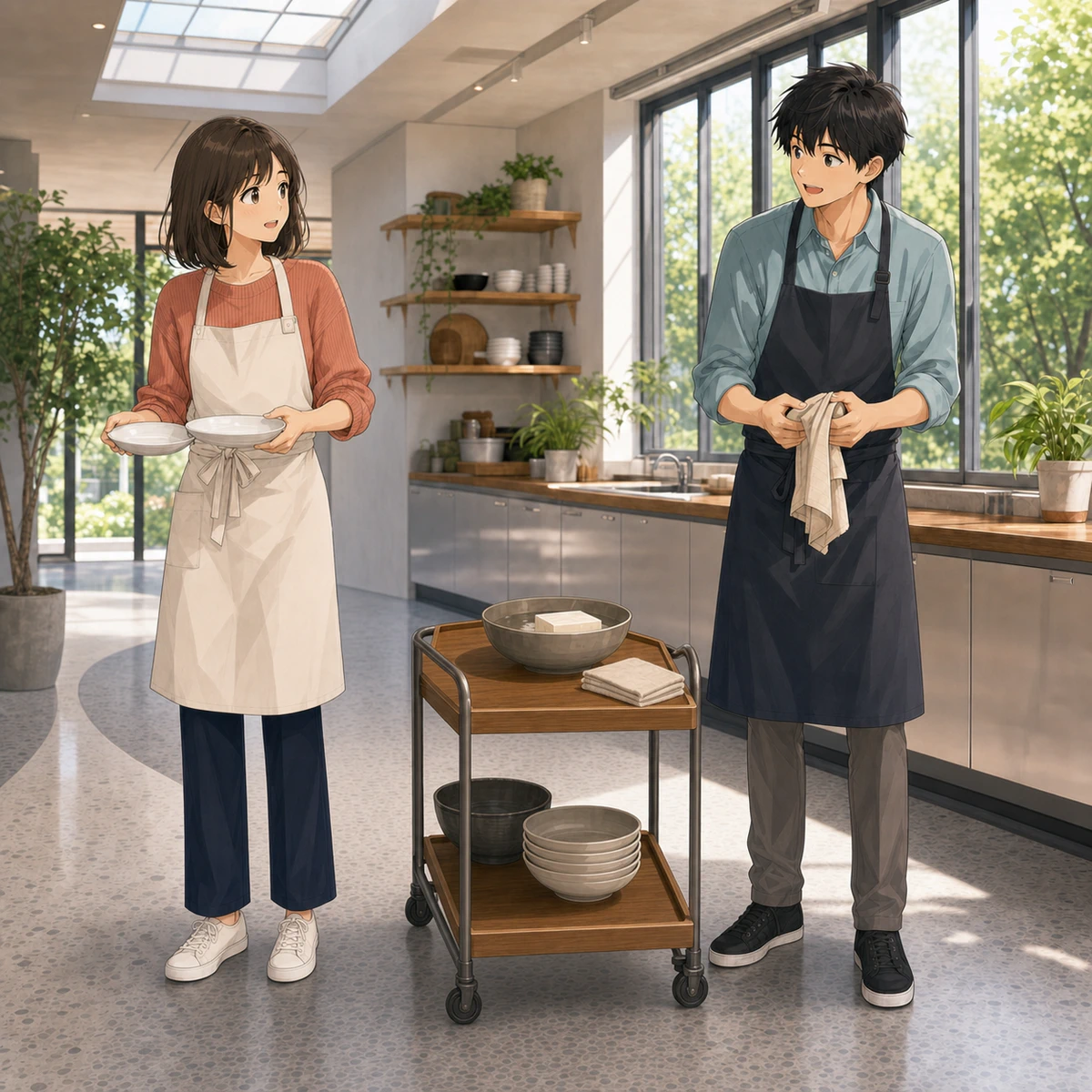
20歳のYunaと21歳のKentaが、地域の食品文化スタジオで豆腐の試食講座を終え、片付けをしています。まずは音声に集中して挑戦します。英文・日本語訳・解説は、答え合わせ後に確認できます。
Eiken Style
対話を聞いて質問に答える
対話と質問を聞き、最も適切な答えを1〜4から選びましょう。
対話と質問は最初は表示しません。選択肢の英文を確認し、音声を聞いて答えます。日本語訳は答え合わせ後に表示されます。
英文を見る答え合わせ前は開かなくてもOK
The momen tofu at this workshop was much firmer than the silken tofu.
この講座の木綿豆腐は、絹ごし豆腐よりずっとしっかりしていたね。
That difference comes from how it is made. Momen tofu is pressed after the soy milk is set.
その違いは作り方から来るんだ。木綿豆腐は豆乳を固めた後に圧力をかけるよ。
So the word momen does not mean cotton is mixed into it?
じゃあ、木綿という言葉は、中に綿を混ぜるという意味じゃないの?
Right. Pressing removes water and gives the tofu its firmer texture.
そう。圧力をかけると水分が抜けて、豆腐にしっかりした食感が生まれるんだ。
What does Kenta say about momen tofu?
Kentaは木綿豆腐について何と述べていますか。
Some water is pressed out of it.
水分の一部が押し出される。
Sugar is mixed into its soy milk.
豆乳に砂糖を混ぜる。
It is frozen before it is shaped.
形を整える前に冷凍する。
Its soybeans are cooked for less time.
大豆を加熱する時間が短い。
After Story
木綿豆腐は、なぜ少しかたい?のその後
本編の「木綿豆腐は、なぜ少しかたい?」から少し先へ進んだ会話です。先に音で流れをつかみ、3問の内容確認後に英文と日本語訳を確かめます。
YunaとKentaによると、木綿や絹という名前は何を意味しませんか。
Kentaによると、絹ごし豆腐はどのように作られますか。
Yunaは次に何をすると言っていますか。
After Storyを読む答え合わせ後に、英文と日本語訳を1文ずつ確認できます。
Then silken tofu does not have silk mixed into it, either.
それなら、絹ごし豆腐にも絹が混ぜてあるわけじゃないんだね。
Exactly. Neither name means that cloth is an ingredient.
そのとおり。どちらの名前も、布が材料という意味じゃないよ。
How is silken tofu made differently?
絹ごし豆腐は、どう違う作り方をするの?
Thicker soy milk is set in the mold without breaking or pressing the curds.
より濃い豆乳を型の中で、固まったものを崩したり圧力をかけたりせずに固めるんだ。
That makes its smooth texture feel less mysterious.
それなら、なめらかな食感も少し不思議じゃなくなるね。
Momen tofu's firm texture also suits frying, simmering, and other cooking.
木綿豆腐のしっかりした食感は、焼いたり煮たりする料理にも合うよ。
So should we always choose momen tofu for hot dishes?
じゃあ、温かい料理にはいつも木綿豆腐を選ぶべき?
Not necessarily. Both kinds can work, and the choice depends on the texture you like.
必ずしもそうじゃないよ。どちらも使えるし、選び方は好きな食感によるんだ。
I will compare them in the same dish next time.
次は同じ料理で二つを比べてみるよ。
Then dinner can double as a very quiet experiment.
それなら夕食が、とても静かな実験も兼ねるね。
Chunks
重要チャンク
much ... than ...
〜よりずっと…
much + 比較級 + thanで、二つの差が大きいことを表します。本文例:much firmer than the silken tofu(絹ごし豆腐よりずっとしっかりしている)/独立例:This route is much shorter than the old one.(この道は以前の道よりずっと短いです。)
come from how ...
〜のやり方から生じる
come from how + 文で、違い・結果の原因が方法にあることを表します。本文例:That difference comes from how it is made.(その違いは作り方から来ます。)/独立例:The sound comes from how the strings are played.(その音は弦の弾き方から生まれます。)
be mixed into ...
〜の中に混ぜられる
be mixed into + 名詞で、材料などが別のものへ混ぜ込まれることを表します。本文例:cotton is mixed into it(木綿がその中に混ぜられる)/独立例:The sauce is mixed into the rice.(そのソースはご飯に混ぜ込まれます。)
without ...ing
〜せずに
without + 動名詞で、ある動作をしないまま別のことを行うと表します。本文例:without breaking or pressing the curds(固まったものを崩したり圧力をかけたりせずに)/独立例:She left without closing the window.(彼女は窓を閉めずに出ました。)
depend on ...
〜による、〜次第である
depend on + 名詞で、結果や選択がその条件によって変わることを表します。本文例:the choice depends on the texture you like(選び方は好きな食感によります)/独立例:The picnic depends on the weather.(ピクニックは天気次第です。)
More Stories
次に聞くストーリー
同じ級・場面・テーマに近い話から選んでいます。