古い写真の表情から、時代の空気を読む
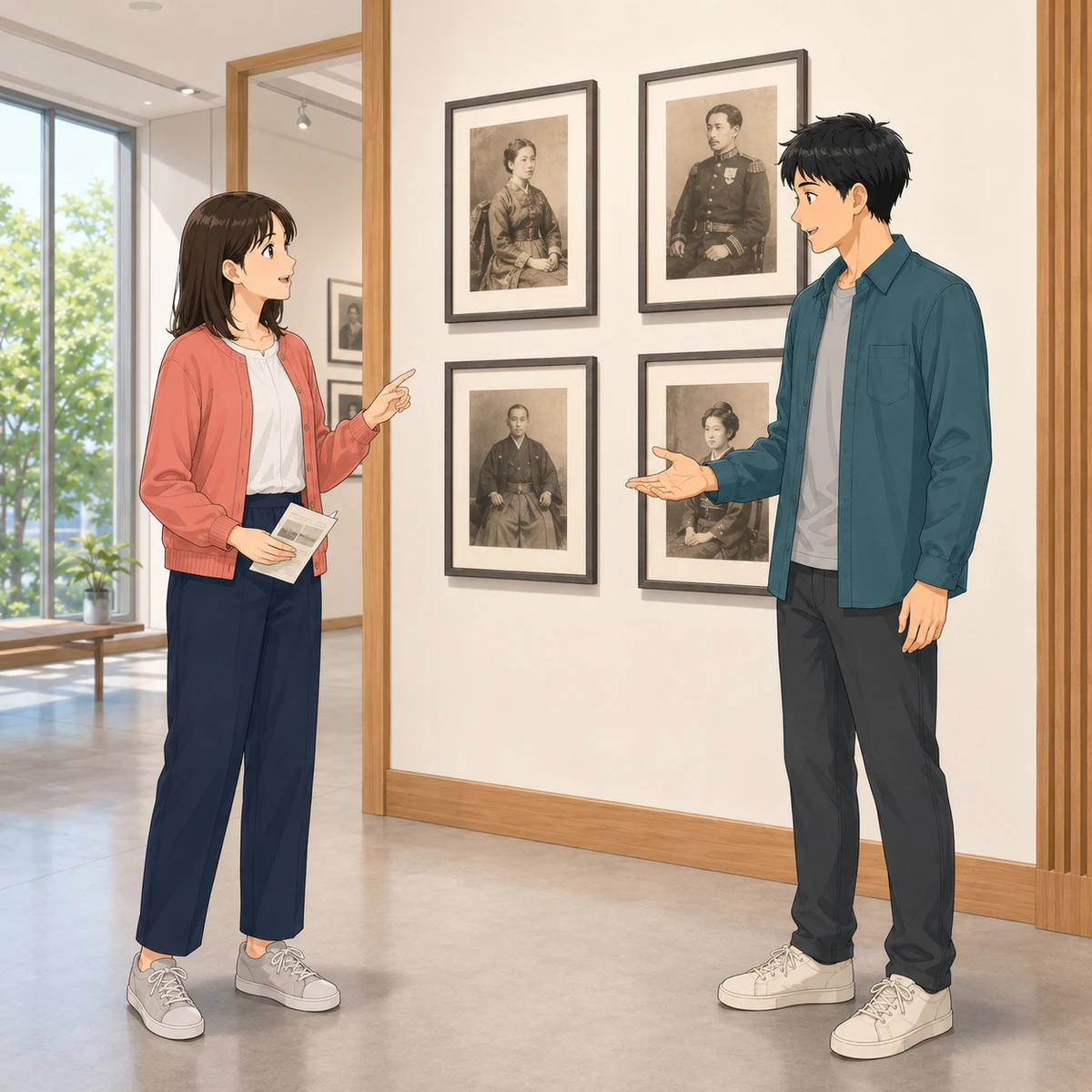
市立写真博物館で、大学生のAyaが古い肖像写真についての短い解説を聞きます。まずは音声に集中して挑戦します。英文・日本語訳・解説は、答え合わせ後に確認できます。
Eiken Style
英文を聞いて質問に答える
英文と質問を聞き、最も適切な答えを1〜4から選びましょう。
英文と質問は最初は表示しません。選択肢の英文を確認し、音声を聞いて答えます。日本語訳は答え合わせ後に表示されます。
英文を見る答え合わせ前は開かなくてもOK
At the City Photography Museum, visitors are looking at portraits made in the nineteenth century.
市立写真博物館では、来館者が19世紀に制作された肖像写真を見ています。
Many of the people in these pictures have serious expressions.
これらの写真に写る多くの人は、真剣な表情をしています。
Some early cameras required people to remain still for several minutes.
初期のカメラの中には、人が数分間じっとしている必要があるものもありました。
However, that was not the only reason, because formal portraits often showed people as calm and dignified.
しかし、それだけが理由ではなく、格式のある肖像写真では、人を落ち着いて威厳のある姿で見せることが多くありました。
Their expressions reflected both the limits of early photography and the customs of formal portrait making.
その表情には、初期の写真技術の制約と、格式ある肖像制作の慣習の両方が表れていたのです。
What does the guide say caused the serious expressions?
ガイドは何が真剣な表情の原因だったと話していますか。
They proved that most sitters were unhappy.
写っている人の多くが不幸だったことを証明していた。
They were required by a law for photographers.
写真家に関する法律によって求められていた。
They appeared only after cameras became faster.
カメラが速くなったあとにだけ見られるようになった。
They had both technical and cultural reasons.
技術面と文化面の両方に理由があった。
After Story
古い写真の表情から、時代の空気を読むのその後
本編の「古い写真の表情から、時代の空気を読む」から少し先へ進んだ会話です。先に音で流れをつかみ、3問の内容確認後に英文と日本語訳を確かめます。
Ayaは、古い肖像写真について以前どのように考えていましたか。
撮影時間が短くなったあとについて、Kenは何を付け加えましたか。
AyaとKenが古い肖像写真と現代のプロフィール写真に共通すると考えたことは何ですか。
After Storyを読む答え合わせ後に、英文と日本語訳を1文ずつ確認できます。
I used to think everyone in old portraits looked unhappy.
昔の肖像写真に写っている人は、みんな不幸そうだと思ってた。
I did too, but a serious face doesn't tell us how a person felt all day.
僕も。でも、真剣な顔だけでは、その人が一日中どんな気持ちだったかまではわからないよね。
The long exposure explains part of it, especially in the earliest photographs.
長い撮影時間で一部は説明できるよね。特に、いちばん初期の写真なら。
Right, and later cameras became faster, but formal poses continued.
そう。それに、あとでカメラが速くなっても、格式ばったポーズは残ったんだ。
Maybe people treated a portrait like a carefully planned message about themselves.
肖像写真を、自分についてよく考えて作るメッセージみたいに扱っていたのかも。
That makes sense. They often wanted to appear dignified, not casual.
それなら納得できる。気軽な感じより、威厳のある姿に見せたかったことが多いんだね。
We still do something similar when we choose a profile picture, don't we?
プロフィール写真を選ぶとき、今の私たちも似たことをしてるよね?
Definitely. We may smile more, but we still choose what impression to give.
確かに。笑顔は増えたかもしれないけど、どんな印象を与えるかは今も選んでる。
Then a serious face in an old photo is not a direct window into someone's mood.
じゃあ、古い写真の真剣な顔が、その人の気分をそのまま映す窓とは限らないんだね。
Exactly. It may show both the rules of the camera and the rules of the time.
そのとおり。そこには、カメラの制約と時代の決まりごとの両方が表れているのかもしれない。
Chunks
重要チャンク
both A and B
AとBの両方
二つの要素を同じ重さでまとめるときに使います。例: The plan needs both time and money.(その計画には時間とお金の両方が必要です。)
not the only reason
唯一の理由ではない
一つの説明だけで決めつけず、ほかの要因もあると示す表現です。例: Price is not the only reason I chose this café.(値段だけがこのカフェを選んだ理由ではありません。)
doesn't tell us how ...
どのように〜かまではわからない
見えている情報だけでは判断できないことを伝えます。例: One message doesn't tell us how she feels now.(一通のメッセージだけでは、彼女が今どう感じているかまではわかりません。)
explain part of ...
〜の一部を説明する
ある理由が全体ではなく一部だけを説明するときに使います。例: The weather may explain part of the delay.(天気が遅れの一因かもしれません。)
treat A like B
AをBのように扱う
物事を別のものにたとえて、その扱い方や考え方を表します。例: We treat this room like a small library.(私たちはこの部屋を小さな図書館のように使っています。)
More Stories
次に聞くストーリー
同じ級・場面・テーマに近い話から選んでいます。