
科学館の世界時計から、時間帯の境界へ話を広げる
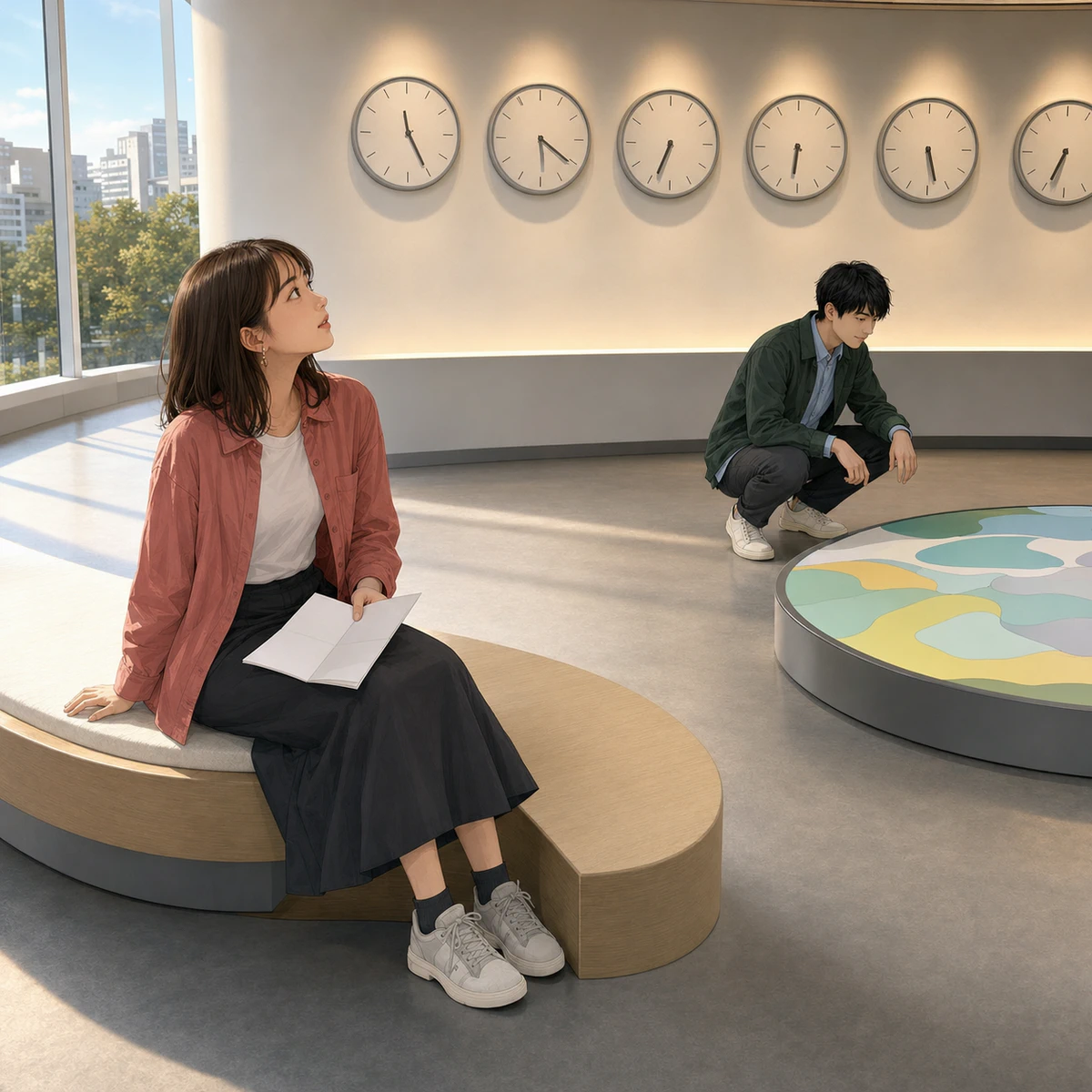
大学生のMeiとKotaが、科学館の世界時計展示を見ています。まずは音声に集中して挑戦します。英文・日本語訳・解説は、答え合わせ後に確認できます。
Eiken Style
英文を聞いて質問に答える
英文と質問を聞き、最も適切な答えを選びましょう。
英文と質問は最初は表示しません。選択肢の英文を確認し、音声を聞いて答えます。日本語訳は答え合わせ後に表示されます。
英文を見る答え合わせ前は開かなくてもOK
A science museum has a display about the world's time zones.
科学館には、世界の時間帯についての展示があります。
Each time zone is about fifteen degrees wide on average.
各時間帯の幅は、平均すると約15度です。
If longitude were the only factor, their boundaries could be straight.
経度だけが要因なら、その境界は直線にできるでしょう。
However, many boundaries follow national or regional borders.
しかし、多くの境界は国や地域の境界線に沿っています。
This makes daily life more convenient for local people.
これにより、地元の人々の暮らしがより便利になります。
Why are many time-zone boundaries not straight?
多くの時間帯の境界が直線ではないのはなぜですか。
After Story
科学館の世界時計から、時間帯の境界へ話を広げるのその後
本編の「科学館の世界時計から、時間帯の境界へ話を広げる」から少し先へ進んだ会話です。先に音で流れをつかみ、3問の内容確認後に英文と日本語訳を確かめます。
Meiは最初、時間帯をどのようなものだと思っていましたか。
近くの地域どうしが同じ時刻を使う利点は何ですか。
Meiが最後にたどり着いた考えはどれですか。
After Storyを読む答え合わせ後に、英文と日本語訳を1文ずつ確認できます。
I used to imagine every time zone as a straight strip.
時間帯って、全部まっすぐな帯みたいなものだと思ってた。
That would be simple, because Earth turns three hundred sixty degrees in twenty-four hours.
それなら単純だよね。地球は24時間で360度回転するから。
So one hour is about fifteen degrees of longitude on average?
じゃあ、1時間は平均すると経度約15度ってこと?
On average, yes. But local time is also a social decision.
平均では、そう。でも現地時刻は社会的な決定でもあるんだ。
Is that why some boundaries follow national or regional borders?
だから、国や地域の境界線に沿う時間帯の境界もあるの?
Exactly. It can be easier when nearby communities share the same clock.
そのとおり。近くの地域どうしが同じ時刻を使うほうが便利なこともあるんだ。
Can a government change its time zone later?
政府があとから時間帯を変えることもできるの?
Yes. The international database is updated when political bodies change boundaries or time differences.
うん。政治機関が境界や時差を変えると、国際的なデータベースも更新されるんだ。
Then a time-zone map is part astronomy and part human agreement.
じゃあ、時間帯の地図は天文学でもあり、人間の取り決めでもあるんだね。
Right. The sun starts the problem, but society draws many of the lines.
そうだね。問題の出発点は太陽だけど、多くの境界線を引くのは社会なんだ。
Chunks
重要チャンク
on average
平均すると
個々の違いをならした平均値を示すチャンクです。例: The trip takes two hours on average.(その移動には平均して2時間かかります。)
be adjusted to + 動詞
〜するよう調整される
目的に合うよう変更・調整されることを表します。例: The schedule was adjusted to fit the new plan.(予定は新しい計画に合うよう調整されました。)
follow national or regional borders
国や地域の境界線に沿う
followは道や規則だけでなく、線・境界に「沿う」という意味でも使えます。例: The road follows the river.(その道は川に沿っています。)
share the same clock
同じ標準時を使う
ここでのclockは時計という物ではなく、地域が使う共通の時刻制度を表します。例: The two towns share the same clock.(その2つの町は同じ標準時を使います。)
part ... and part ...
一部は〜で、一部は…/〜でもあり…でもある
物事が2つの性質や要素を持つと簡潔に伝えるチャンクです。例: The job is part art and part science.(その仕事は芸術でもあり科学でもあります。)
More Stories
次に聞くストーリー
同じ級・場面・テーマに近い話から選んでいます。