A. 動詞 + 副詞
give up / put off / turn on / take off
- 目的語を取るものと取らないものがあります。
- 目的語が代名詞のとき、間に入るものがあります。
Put it off.
群動詞とは、give up、look for、take off のように、動詞に副詞や前置詞がくっついて、
全体で1つの意味を作る表現です。単語を1つずつ直訳すると意味が取りにくいものも多いため、
意味だけでなく、型・語順・目的語の位置を短い例文とセットで覚えるのがおすすめです。
このページでは、群動詞とは何か、句動詞との違い、よく使う群動詞一覧、語順ルール、覚え方、ミニ確認をやさしく整理します。
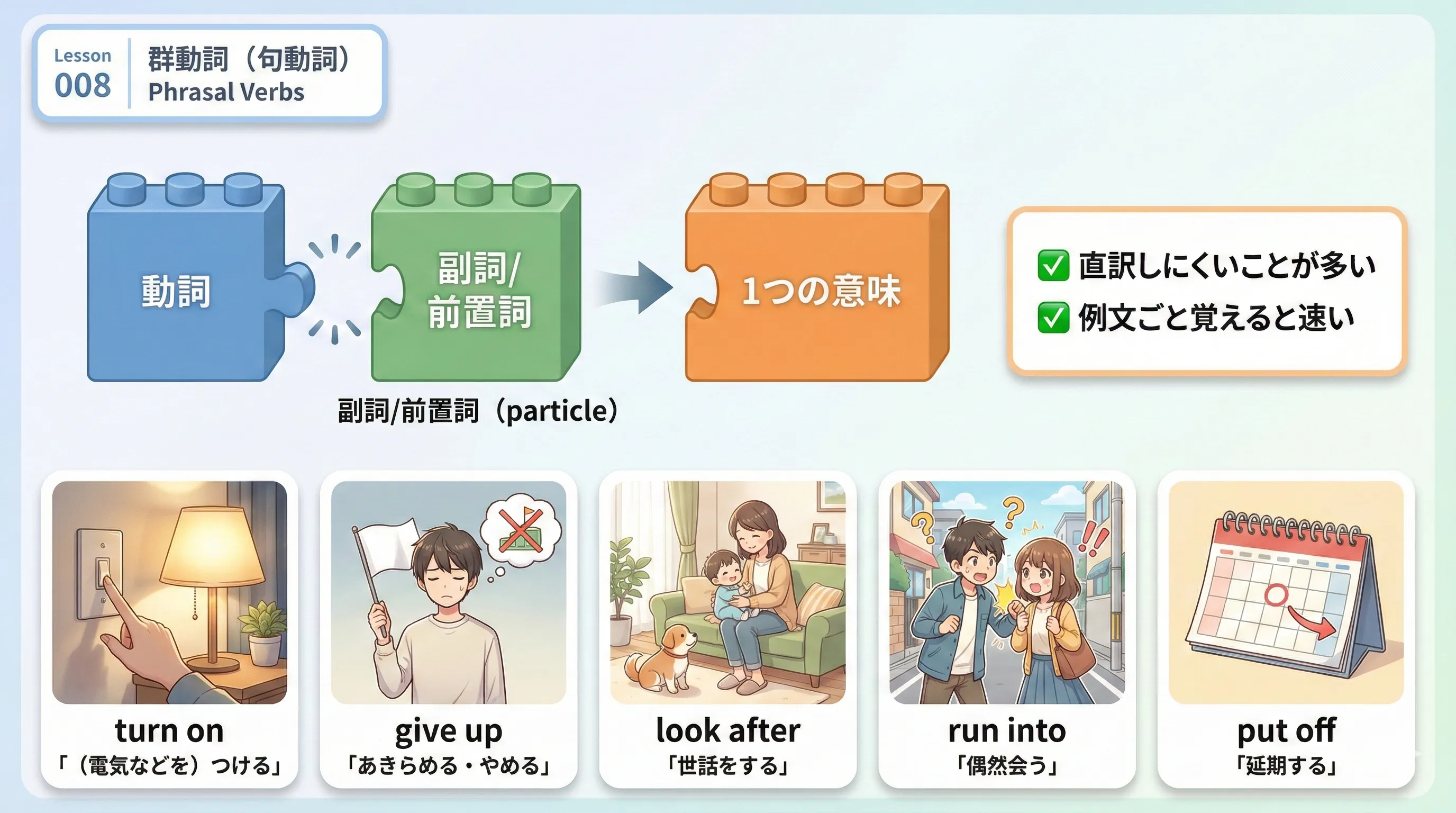
give up = あきらめるlook for = 探すtake off = 脱ぐ / 離陸するput it off のように、代名詞が間に入るものがあります。look for it のように、前置詞の後ろに目的語を置くものがあります。look forward to seeing のように、3語セットで覚えるものがあります。まずは意味を丸暗記するより、型と例文をセットで見ましょう。
日本語の英語学習では、「群動詞」と「句動詞」はほぼ同じ意味で使われることが多いです。 英語では phrasal verb という呼び方がよく使われます。 厳密には「動詞 + 副詞」「動詞 + 前置詞」「動詞 + 副詞 + 前置詞」などに分けられますが、初心者はまず「意味」「型」「語順」を押さえればOKです。
| 呼び方 | 学習上の考え方 | 例 |
|---|---|---|
| 群動詞 | 動詞に副詞・前置詞などがついて1つの意味を作る表現 | give up / look for / take off |
| 句動詞 | 群動詞とほぼ同じ意味で使われることが多い呼び方 | put off / run into / look up |
| phrasal verb | 英語でよく使われる呼び方 | take off / give up / come up with |
この教材の「群動詞」は広い学習上の呼び名です。厳密な文法分類では、動詞+副詞の phrasal verb、動詞+前置詞の prepositional verb、動詞+副詞+前置詞の phrasal-prepositional verb などを区別します。意味と語順に加え、途中の語の品詞も確認しましょう。
give up / put off / turn on / take off
Put it off.look for / listen to / depend on / believe in
I'm looking for it.look forward to / catch up with / come up with / put up with
I look forward to meeting you.take care of / pay attention to / take part in
Please pay attention to the details.最初から40個すべてを覚えようとしなくて大丈夫です。まずは、語順のルールも一緒に確認しやすい10個から始めましょう。
give up意味:あきらめる
例文:Don't give up.
型:動詞 + 副詞
目的語なしでもよく使います。
look for意味:探す
例文:I'm looking for my key.
型:動詞 + 前置詞
for の後ろに探すものを置きます。
put off意味:延期する
例文:We put it off.
型:動詞 + 副詞
it は put と off の間に置きます。
turn on意味:つける
例文:Turn it on.
型:動詞 + 副詞
代名詞の it は間に入れます。
turn off意味:消す
例文:Please turn off the TV.
型:動詞 + 副詞
名詞なら turn the TV off もよく使います。
take off意味:脱ぐ / 離陸する
離陸する:The plane took off.(目的語なし)
脱ぐ:Take your coat off. / Take it off.(目的語あり)
型:動詞 + 副詞
同じ表現でも、意味によって目的語の有無が変わります。
pick up意味:拾う / 迎えに行く
例文:I picked her up.
型:動詞 + 副詞
代名詞は pick と up の間に入ります。
get up意味:起きる
例文:I get up at six.
型:自動詞 + 副詞
目的語なしで完結します。
look forward to意味:楽しみにする
例文:I look forward to seeing you.
型:動詞 + 副詞 + 前置詞
to の後ろは名詞か動名詞にします。
come up with意味:思いつく
例文:She came up with a plan.
型:動詞 + 副詞 + 前置詞
3語セットで覚えます。
意味だけでなく、型・目的語の位置・短い例文を一緒に確認しましょう。
スマホでは各行をカードとして読めます
| 重要度 | 群動詞 | 意味 | 型 | 目的語の位置 | 例文 | 一言メモ |
|---|---|---|---|---|---|---|
| ★★★ | give up | あきらめる | 動詞 + 副詞 | 目的語なしでもOK | Don't give up. | 会話でも読解でもよく出ます。 |
| ★★★ | put off | 延期する | 動詞 + 副詞 | put it off / put off the meeting | We put off the meeting. | 代名詞は間に入れます。 |
| ★★★ | turn on | つける | 動詞 + 副詞 | turn it on / turn on the light | Turn on the light. | 電気・機械によく使います。 |
| ★★★ | turn off | 消す | 動詞 + 副詞 | turn it off / turn off your phone | Please turn off your phone. | off は「切る」イメージ。 |
| ★★★ | pick up | 拾う / 迎えに行く | 動詞 + 副詞 | pick her up / pick up the keys | I picked up the keys. | 文脈で意味が変わります。 |
| ★★ | throw away | 捨てる | 動詞 + 副詞 | throw it away / throw away old papers | Don't throw it away. | 代名詞は間に置きます。 |
| ★★ | look up | 調べる | 動詞 + 副詞 | look it up / look up the word | Look up the word. | 辞書やネットで調べるときに便利です。 |
| ★★ | call off | 中止する | 動詞 + 副詞 | call it off / call off the game | They called off the game. | cancel に近い意味です。 |
| ★★ | bring up | 話題に出す / 育てる | 動詞 + 副詞 | bring it up / bring up the issue | She brought up the issue. | 会議や会話でよく見ます。 |
| ★★ | try on | 試着する | 動詞 + 副詞 | try it on / try on this jacket | Can I try this on? | 服・靴に使いやすい表現です。 |
| ★★★ | take off | 脱ぐ / 離陸する | 動詞 + 副詞 | 脱ぐ: take it off / 離陸: 目的語なし | The plane took off. | 2つの意味を文脈で判断します。 |
| ★★ | clean up | 片づける | 動詞 + 副詞 | clean it up / clean up the room | Let's clean up the room. | up は「きちんと終える」感じ。 |
| ★★★ | look for | 探す | 動詞 + 前置詞 | look for + 目的語 | I'm looking for my phone. | look my phone for は不可。 |
| ★★★ | listen to | 聞く | 動詞 + 前置詞 | listen to + 目的語 | Listen to me. | to を忘れやすいです。 |
| ★★★ | depend on | 頼る / 次第である | 動詞 + 前置詞 | depend on + 目的語 | It depends on the weather. | 会話でもTOEIC文脈でも見かけます。 |
| ★★ | believe in | 信じる | 動詞 + 前置詞 | believe in + 目的語 | I believe in you. | 人や考えを信じる感じです。 |
| ★★ | belong to | 〜に属する | 動詞 + 前置詞 | belong to + 目的語 | This book belongs to me. | to を落とさないようにします。 |
| ★★ | agree with | 〜に賛成する | 動詞 + 前置詞 | agree with + 人・考え | I agree with your idea. | 人にも意見にも使えます。 |
| ★★ | wait for | 待つ | 動詞 + 前置詞 | wait for + 目的語 | I'm waiting for the bus. | for が必要です。 |
| ★★ | hear from | 連絡をもらう | 動詞 + 前置詞 | hear from + 人 | I heard from her yesterday. | 手紙・メール・連絡に使えます。 |
| ★★★ | deal with | 対応する | 動詞 + 前置詞 | deal with + 問題・人 | We need to deal with this problem. | TOEIC・ビジネス文脈で見かけやすいです。 |
| ★★ | run into | 偶然会う / 衝突する | 動詞 + 前置詞 | run into + 目的語 | I ran into my teacher. | 文脈で意味を判断します。 |
| ★★★ | get up | 起きる | 自動詞 + 副詞 | 目的語なし | I get up at seven. | 中学英語で最初に覚えたい表現です。 |
| ★★★ | wake up | 目が覚める / 起こす | 自動詞 + 副詞 / 動詞 + 副詞 | 自動詞なら目的語なし / wake him up | She woke up early. | 「起こす」は目的語を取ります。 |
| ★★ | come in | 入ってくる | 自動詞 + 副詞 | 目的語なし | Please come in. | 短い会話でよく使います。 |
| ★★ | go out | 外出する | 自動詞 + 副詞 | 目的語なし | We went out for dinner. | out は「外へ」のイメージ。 |
| ★★ | sit down | 座る | 自動詞 + 副詞 | 目的語なし | Please sit down. | 命令文でもよく使います。 |
| ★★ | stand up | 立ち上がる | 自動詞 + 副詞 | 目的語なし | Stand up slowly. | up は上への動き。 |
| ★★ | break down | 故障する / 崩れる | 自動詞 + 副詞 | 目的語なし | My car broke down. | 機械や計画に使われます。 |
| ★★ | show up | 現れる | 自動詞 + 副詞 | 目的語なし | He showed up late. | 予定の場に来る感じです。 |
| ★★★ | look forward to | 楽しみにする | 動詞 + 副詞 + 前置詞 | to + 名詞 / 動名詞 | I look forward to seeing you. | to see にしない点が大切です。 |
| ★★★ | run out of | 使い果たす / なくなる | 動詞 + 副詞 + 前置詞 | run out of + 目的語 | We ran out of time. | of を落とさないようにします。 |
| ★★ | catch up with | 追いつく | 動詞 + 副詞 + 前置詞 | catch up with + 人・内容 | I need to catch up with the class. | 授業・仕事にも使えます。 |
| ★★★ | come up with | 思いつく | 動詞 + 副詞 + 前置詞 | come up with + アイデア | She came up with a good idea. | 長文読解でも見抜きたい表現です。 |
| ★★ | get along with | 仲よくする | 動詞 + 副詞 + 前置詞 | get along with + 人 | I get along with my classmates. | 人間関係の表現です。 |
| ★★★ | take care of | 世話をする / 気をつける | 動詞 + 名詞 + 前置詞 | take care of + 目的語 | Take care of yourself. | 3語まとめて覚えます。 |
| ★★ | put up with | 我慢する | 動詞 + 副詞 + 前置詞 | put up with + 目的語 | I can't put up with the noise. | 長いですが3語セットです。 |
| ★★ | look up to | 尊敬する | 動詞 + 副詞 + 前置詞 | look up to + 人 | I look up to my coach. | look up と意味が違います。 |
| ★★ | get rid of | 取り除く | 動詞 + 形容詞 + 前置詞 | get rid of + 目的語 | Let's get rid of old files. | rid は形容詞。of までセットです。 |
| ★★★ | pay attention to | 注意を払う | 動詞 + 名詞 + 前置詞 | pay attention to + 目的語 | Pay attention to the details. | 説明文や指示文でよく見ます。 |
群動詞は丸暗記だけだと忘れやすいので、副詞・前置詞のざっくりしたイメージもヒントにしましょう。 ただし、すべての意味がイメージだけで決まるわけではありません。最後は必ず例文で確認します。
up上へ、完全に、終わりまで
give up / clean up / wake up
off離れる、消える、中止
take off / turn off / call off
on接触、継続、作動
turn on / depend on / go on
out外へ、表に出る、なくなる
go out / find out / run out of
down下へ、停止、弱まる
sit down / break down / calm down
I'm looking for my phone.
I'm looking for it.
NG: I'm looking it for.
前置詞の後ろに目的語を置きます。
Turn on the light.
Turn the light on.
Turn it on.
NG: Turn on it.
名詞なら前後どちらでもよいことがあります。代名詞なら間に入れます。
The plane took off.
My car broke down.
She woke up early.
目的語なしで完結する表現もあります。
I look forward to seeing you.
We ran out of time.
She came up with a good idea.
最後の前置詞を落とさないようにします。to が前置詞なら後ろは ing になることがあります。
NG: Please turn on it.
OK: Please turn it on.
turn on は動詞 + 副詞型なので、目的語が it のときは間に入れます。
NG: I'm looking it for.
OK: I'm looking for it.
look for は動詞 + 前置詞型なので、目的語は for の後ろです。
NG: I look forward to see you.
OK: I look forward to seeing you.
look forward to の to は前置詞なので、後ろは名詞または動名詞にします。
NG: We ran out time.
OK: We ran out of time.
run out of は3語セットです。of を落とさないようにします。
NG: This book belongs me.
OK: This book belongs to me.
belong to はセットで使います。to が必要です。
群動詞は会話や日常表現でよく使われます。1語の動詞は少しフォーマルに見えることがあります。 どちらが正しいというより、場面によって使い分けると考えましょう。
| 群動詞 | 近い意味の1語動詞 | ニュアンス |
|---|---|---|
put off | postpone | postpone の方がややフォーマルです。 |
give up | quit / abandon | give up は日常的に使いやすい表現です。 |
find out | discover | discover の方がやや硬く見えることがあります。 |
deal with | handle | どちらもよく使います。文脈で自然さが変わります。 |
call off | cancel | cancel の方が基本的で分かりやすいことがあります。 |
look for | search for | search for は少し意識的に探す感じが出ます。 |
英語のニュアンスは文脈で変わるため、表の内容は「近い意味」として使ってください。
get up / wake up / go out / come in / sit down / stand up / look for / listen to
pick up / turn on / turn off / clean up / take off / try on / hang out / run into
deal with / depend on / be responsible for / look forward to / follow up on / carry out / set up / run out of
come up with / put up with / get along with / catch up with / look up to / get rid of / pay attention to / take care of
put off = 延期する だけで終わらせず、put it off / put off the meeting の形で覚えます。turn it on、look for it、look forward to seeing を声に出して確認します。(A) She put it off.
(B) She put off it.
答え:(A)。目的語が it のときは、put と off の間に入れます。
(A) I'm looking my key for.
(B) I'm looking for my key.
答え:(B)。look for は for の後ろに目的語を置きます。
(A) see
(B) seeing
答え:(B)。look forward to の to は前置詞なので、後ろは ing になります。
答え:離陸する。take off は「脱ぐ」だけでなく、飛行機が離陸する意味でも使います。
(A) Turn off it.
(B) Turn it off.
答え:(B)。turn off の目的語が it のときは間に入れます。
答え:時間を使い果たす / 時間がなくなる。run out of は3語セットで覚えます。
答え:名詞・代名詞・動名詞など。例: It depends on the weather.
答え:come up with。例: She came up with a good idea.
give up は「あきらめる」、look for は「探す」という意味になります。
put it off が自然です。put off は動詞 + 副詞型なので、目的語が it のような代名詞のときは、動詞と副詞の間に入れます。
look forward to の to は不定詞の to ではなく前置詞として働くためです。前置詞の後ろには名詞や動名詞が来るので、I look forward to seeing you. になります。
deal with、depend on、look forward to、run out of などは、文の意味を取るうえで知っておくと安心です。
look for のように動詞と小さな語がまとまって1つの意味を作る表現です。前置詞句は in the room のように前置詞から始まるかたまりです。迷ったら、まず「動詞とセットで意味を作っているか」を見ましょう。
turn it on、look for it、look forward to seeing のように語順つきで覚えることです。1表現につき短い例文を1つ作るだけでも、かなり使いやすくなります。