
場所の前置詞一覧:at / in / on / under / near の違い
場所の前置詞は、「どこにあるか」「どこへ向かうか」を伝えるための基本表現です。
at は点、in は中、on は面、under は下、near は近く
のように、イメージで整理すると丸暗記より使い分けがラクになります。
このページでは、場所・方向・距離・周辺を表す前置詞を一覧で比べ、
例文で確認します。
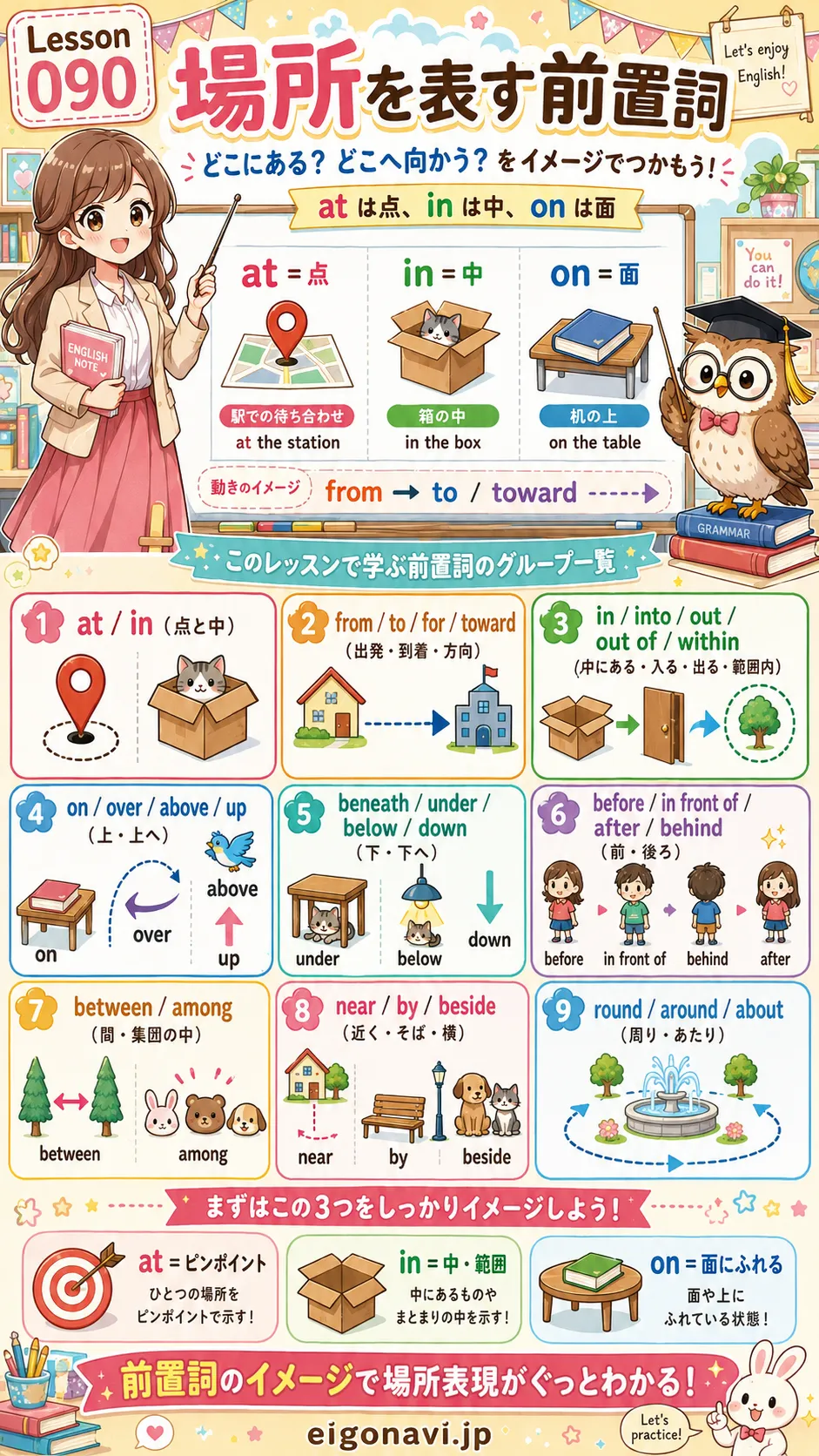
場所を表す前置詞とは?まず結論
場所を表す前置詞は、「どこにあるか」「どこへ動くか」を名詞の前で示す言葉です。 日本語訳だけで選ぶより、点・中・面・上下・前後・距離感のイメージで分けると、迷いにくくなります。
at / in / on
at は点、in は中、on は面に接している場所。
場所の前置詞で最初に押さえる3つです。
上下・前後
under / below は下、over / above は上。
in front of / behind は前後を表します。
距離・間
near / by / beside は近さ、
between / among は間や集団の中を表します。
場所を表す前置詞一覧
まずは代表的な前置詞を、短いイメージと例で確認しましょう。
| 前置詞 | イメージ | 例 |
|---|---|---|
at | 点・地点 | at the station |
in | 中・範囲の内側 | in the room |
on | 面に接する | on the wall |
under | 真下・下 | under the table |
below | 基準より下 | below sea level |
over | 真上・覆う・越える | over the bridge |
above | 基準より上 | above the clouds |
in front of | 正面の前 | in front of the building |
behind | 後ろ | behind the door |
between | 2つ・個別の間 | between two trees |
among | 集団の中 | among the students |
near | 近く | near the park |
by | すぐそば | by the window |
beside | 横 | beside me |
迷ったときの選び方
地点なら at、空間の中なら in、表面に接していれば on を選びます。
上なら over / above、下なら under / below、
前後なら in front of / behind を比べます。
近くなら near / by / beside、
間なら between / among を使います。
▮ 目次
✅ 迷ったら 「1 → 2 → 3 → 4…」 の順に進むのがおすすめです。
📱 スマホでも見やすいように、今回は大きなテーマだけを並べています。
-
1. at / in の使い分け 最初にここ
atは「点」、inは「中」。場所の広さと見方の違いを整理します。 -
2. from / to / for / toward の使い分け出発点・到着点・目的地・方向など、「動きの矢印」を表す前置詞を比べます。
-
3. in / into / out / out of / within の使い分け「中にある」「中へ入る」「外へ出る」「範囲内」など、箱や枠のイメージで理解します。
-
4. on / over / above / up の使い分け「くっついた上」「真上」「基準より上」「上へ動く」など、高さの違いを整理します。
-
5. beneath / under / below / down の使い分け「下にある」「基準より下」「下へ動く」など、下方向の前置詞をまとめて確認します。
-
6. before / in front of / after / behind の使い分け「前」「目の前」「後」「うしろ」を、位置関係と視点の違いから整理します。
-
7. between / among の使い分け「2つの間」と「集団の中」の違いを、人数だけでなく見方の違いから学びます。
-
8. near / by / beside の距離感の違い「近く」「そば」「すぐ横」など、近さのニュアンスを比べます。
-
9. round / around / about の使い分け「ぐるっと周り」「周辺」「あたり」など、ぼんやりした場所表現を整理します。
-
🧾 総まとめ:場所を表す前置詞マップ 復習におすすめそれぞれの前置詞を「点・中・上・下・前後・間・近く・周り」のイメージで一気に復習します。
-
📝 Lesson090 まとめクイズ — 場所を表す前置詞 総仕上げ
at/in/on/under/behind/between/near/aroundなど、Lesson090で学んだ場所を表す前置詞をクイズで総復習します。
1. at / in の使い分け
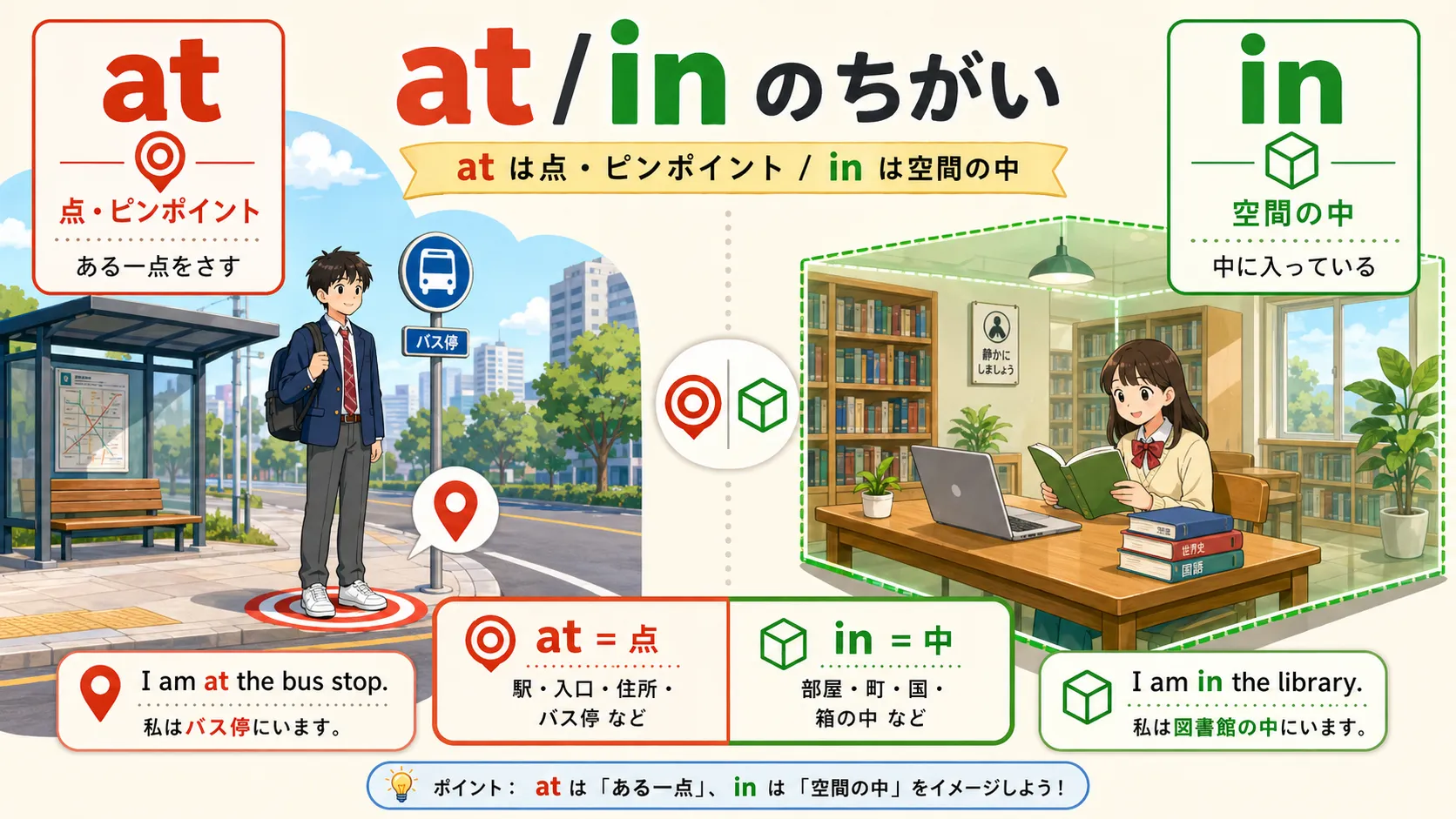
at と in はどちらも「〜で」「〜に」と訳せますが、見ている場所のとらえ方が違います😊
at はピンで刺すような“一点”、
in は中に入っている“空間”
と考えると、かなり整理しやすくなります。
たとえば at the station は「駅という地点で」、
in the station は「駅の建物・空間の中で」という感じです。
at は、地図にピンを立てるような感覚です。
入口・受付・バス停・住所・待ち合わせ場所
のように、「そこ!」と場所を指すときに向いています。
in は、箱・部屋・町・国などの
内側に入っている
イメージです。
広がりのある場所・囲まれた場所
に強い前置詞です。
at school は「学校にいる/授業・活動の場にいる」感じ。
in the school は
学校の建物の中
という物理的な感じが強くなります。
⚠️ よくあるミスと覚え方
in にする
I am in the station. だけだと「駅の建物の中」が強くなります。✅ 待ち合わせ場所・地点として言うなら
at the station
が自然です。
at を使ってしまう
at Tokyo / at Japan は基本的に不自然。✅ 都市・国・地域は広がりのある場所なので
in Tokyo / in Japan
が基本です。
📌 at / in の使い分け早見表
| 分類 | at を使いやすい代表語 | in を使いやすい代表語 | 判断ポイント | ミニ例文 |
|---|---|---|---|---|
| 基本イメージ |
at the point(その地点)at the spot(その場所)at the place(その場所)
|
in the space(その空間の中)in the area(その区域内)in the place(その場所の中)
|
at 点として見る in 中・範囲として見る |
Meet me at this point.Stay in this area.
|
| 待ち合わせ |
at the station(駅で)at the bus stop(バス停で)at the entrance(入口で)at the gate(門・搭乗口で)
|
in the station(駅の中で)in the lobby(ロビーの中で)in the waiting room(待合室の中で)
|
待ち合わせ地点なら at。建物・部屋の内部を言いたいなら in。
|
I’ll wait at the gate.She is in the lobby.
|
| 都市・国 |
at a stopover(経由地で)at the border(国境で)at the city gate(町の門で)
|
in Tokyo(東京で)in Japan(日本で)in Osaka(大阪で)in Europe(ヨーロッパで)
|
都市・国・地域は「広がりのある範囲」なので基本は in。
|
He lives in Tokyo.We stopped at the border.
|
| 住所 |
at 25 King Street(キング通り25番地で)at this address(この住所で)at my office address(私の職場住所で)
|
in Shibuya(渋谷で)in this neighborhood(この近所で)in the downtown area(繁華街で)
|
番地までピンポイントなら at。町・地区・エリアなら in。
|
The shop is at this address.The shop is in Shibuya.
|
| 建物・施設 |
at school(学校で)at work(職場で)at the hospital(病院で)at the airport(空港で)
|
in the school building(校舎の中で)in the office(オフィスの中で)in the hospital room(病室の中で)
|
施設を「活動の場」と見るなら at。建物の内部を強調するなら in。
|
My son is at school.He is in the school building.
|
| 部屋・容器 |
at the door(ドアのところで)at the window(窓のところで)at the table(テーブルについて)
|
in the room(部屋の中で)in the box(箱の中に)in the bag(バッグの中に)in the drawer(引き出しの中に)
|
境目・場所の一点なら at。中に入っているなら in。
|
Someone is at the door.The keys are in the drawer.
|
| イベント |
at the meeting(会議で)at the concert(コンサートで)at the party(パーティーで)at the wedding(結婚式で)
|
in a meeting(会議中で)in class(授業中で)in a workshop(ワークショップの中で)
|
イベント会場・参加場所なら at。その活動の最中・内部状態なら in。
|
I saw her at the party.I’m in a meeting now.
|
| 端・角・地点 |
at the corner(角で)at the end of the street(通りの端で)at the top(頂上・上部で)at the bottom(下部で)
|
in the corner(隅の中に)in the top drawer(一番上の引き出しの中に)in the bottom box(一番下の箱の中に)
|
線や場所の「端・点」なら at。隅・箱・引き出しの内側なら in。
|
Turn left at the corner.The cat is in the corner.
|
| 自然・屋外 |
at the beach(浜辺で)at the lake(湖のほとりで)at the park entrance(公園入口で)
|
in the park(公園の中で)in the forest(森の中で)in the garden(庭の中で)in the mountains(山あいで)
|
目的地・スポットなら at。広い自然の中・エリア内なら in。
|
We relaxed at the beach.They walked in the forest.
|
| 交通・乗り物 |
at the platform(ホームで)at the ticket gate(改札で)at the traffic light(信号で)
|
in a taxi(タクシーの中で)in a car(車の中で)in the train car(電車の車両内で)
|
停止地点・設備なら at。乗り物の中なら in。
|
Wait at the platform.She is in a taxi.
|
| 写真・絵・画面 |
at the top of the screen(画面の上部に)at the bottom of the page(ページ下部に)at the center point(中心点に)
|
in the picture(写真の中に)in the photo(写真の中に)in the video(動画の中に)in the document(文書の中に)
|
画面・紙面の一点なら at。写真・動画・文書の中なら in。
|
Click at the bottom.Who is in the photo?
|
| 比喩表現 |
at risk(危険な状態で)at peace(平和な状態で)at work(働いていて)at home(家にいて)
|
in trouble(困った状況で)in danger(危険の中に)in a hurry(急いでいて)in good condition(良い状態で)
|
慣用表現は丸暗記も大切。 ただし in は「状態の中」、at は「ある状態・場面にいる」と考えると覚えやすいです。
|
He is at work.We are in trouble.
|
at at the point(その地点) / at the spot(その場所)
in in the space(その空間の中) / in the area(その区域内)
📌 地図にピンなら at、箱やエリアの中なら in。
at at the station(駅で) / at the entrance(入口で) / at the gate(門・搭乗口で)
in in the station(駅の中で) / in the lobby(ロビーの中で)
📌 待ち合わせ地点なら at。建物の中なら in。
at at the border(国境で) / at a stopover(経由地で)
in in Tokyo(東京で) / in Japan(日本で) / in Europe(ヨーロッパで)
📌 都市・国・地域は「広がり」があるので in。
at at 25 King Street(キング通り25番地で) / at this address(この住所で)
in in Shibuya(渋谷で) / in this neighborhood(この近所で)
📌 番地まで特定するなら at、町や地区なら in。
at at school(学校で) / at work(職場で) / at the airport(空港で)
in in the school building(校舎の中で) / in the office(オフィスの中で)
📌 施設を活動の場として見るなら at、内部なら in。
at at the door(ドアのところで) / at the window(窓のところで)
in in the room(部屋の中で) / in the box(箱の中に) / in the bag(バッグの中に)
📌 境目・場所の一点なら at、中に入っているなら in。
at at the party(パーティーで) / at the meeting(会議で)
in in a meeting(会議中で) / in class(授業中で)
📌 イベント場所なら at、活動の最中なら in。
at at the corner(角で) / at the top(上部で) / at the bottom(下部で)
in in the corner(隅の中に) / in the top drawer(一番上の引き出しの中に)
📌 道の角・端なら at、部屋の隅の中なら in。
at at the beach(浜辺で) / at the lake(湖のほとりで)
in in the park(公園の中で) / in the forest(森の中で) / in the garden(庭の中で)
📌 スポットなら at、広い自然の中なら in。
at at the platform(ホームで) / at the ticket gate(改札で)
in in a taxi(タクシーの中で) / in a car(車の中で)
📌 設備・地点なら at、乗り物の中なら in。
at at the top of the screen(画面の上部に) / at the bottom of the page(ページ下部に)
in in the photo(写真の中に) / in the video(動画の中に)
📌 紙面・画面の一点は at、写真や動画の中は in。
💬 例文で感覚をつかもう!
I’ll meet you at the station entrance at seven.
(7時に駅の入口で会います。)
🔧 at the station entrance は「駅の入口という一点」を指しています。
✅ 待ち合わせでは「どこにピンを立てるか」が大切なので at が自然です。
💡 in the station entrance だと「入口の中」という不自然な感じになりやすいので注意しましょう。
My cousin lives in Sapporo and works in the city center.
(私のいとこは札幌に住んでいて、市の中心部で働いています。)
🔧 in Sapporo は「札幌という都市の中」。都市・国・地域は広がりがあるので in が基本です。
✅ in the city center も「中心部というエリア内」で働くという意味です。
⚠️ at Sapporo は普通の「札幌に住む」では使いません。
The new café is at 18 Green Street, next to the post office.
(新しいカフェは、郵便局の隣のグリーン通り18番地にあります。)
🔧 番地まで出ている住所は「地図上の一点」なので at がぴったりです。
✅ at 18 Green Street は、配達先・店舗所在地・待ち合わせ場所の説明でよく使います。
💡 地区名なら in Green Street ではなく、文脈によって on Green Street なども出ますが、番地つき住所はまず at と覚えましょう。
Your jacket is in the meeting room, on the chair near the window.
(あなたのジャケットは会議室の中、窓の近くの椅子の上にあります。)
🔧 in the meeting room は「会議室という空間の中」を表します。
✅ 部屋・箱・バッグ・引き出しなど、囲まれた空間の中は in が基本です。
📌 さらに細かい位置として on the chair(椅子の上)も組み合わせています。
I met an old classmate at the company party last Friday.
(先週の金曜日、会社のパーティーで昔のクラスメートに会いました。)
🔧 at the company party は「会社のパーティーというイベントの場で」という意味です。
✅ パーティー・会議・コンサート・結婚式など、イベントを「参加場所」として見ると at が自然です。
💡 in a meeting は「会議中」という状態を表しやすいので、イベント名でも意味の方向が少し変わります。
She can’t answer the phone because she is in a meeting.
(彼女は会議中なので、電話に出られません。)
🔧 in a meeting は「会議という活動の中にいる」=「会議中」という意味です。
✅ at the meeting は「会議の場で」ですが、電話に出られない理由としては in a meeting がよく使われます。
📌 コールセンターやビジネスの会話でも、そのまま使いやすい表現です。
Turn right at the next corner, and you’ll see the bookstore.
(次の角で右に曲がると、本屋が見えます。)
🔧 at the next corner は「次の角という地点で」という意味です。
✅ 道案内では、曲がるポイント・止まるポイントを at で示すことがよくあります。
⚠️ in the corner は「部屋の隅の中に」のような意味になり、道の角とは違います。
Who is the woman in the photo next to your brother?
(写真の中で、あなたのお兄さんの隣にいる女性は誰ですか。)
🔧 in the photo は「写真の中に写っている」という意味です。
✅ 写真・動画・絵・文書などの中にあるものは in で表すことが多いです。
💡 一方、画面やページの「上部・下部」という位置を点として言うなら at the top / at the bottom が使えます。
We waited at the airport for two hours, then sat in the departure lounge.
(私たちは空港で2時間待ち、それから出発ロビーの中に座りました。)
🔧 at the airport は「空港という地点・施設で」。旅行の話ではよく使います。
✅ in the departure lounge は「出発ロビーの中に」。具体的な内部空間なので in です。
📌 同じ文の中で at と in を使い分けると、場所の見方の違いがはっきりします。
- ✅
atは、駅・入口・住所・角・イベント会場などを「一点」として見るときに使いやすい。 - ✅
inは、部屋・箱・都市・国・地域・写真など「中・範囲」に入っているイメージで使いやすい。 - ⚠️
at the stationは「駅で」、in the stationは「駅の中で」。同じ名詞でも見方で前置詞が変わります。 - 💡 迷ったら、まず「地図にピンを立てる感じ?」なら
at、「中に入っている感じ?」ならinと考えましょう。
at は「地点・一点」、in は「中・空間・範囲」。
駅・部屋・都市・住所などの場所を見て、正しく使い分けられるかクイズで確認してみよう 😊
2. from / to / for / toward の使い分け
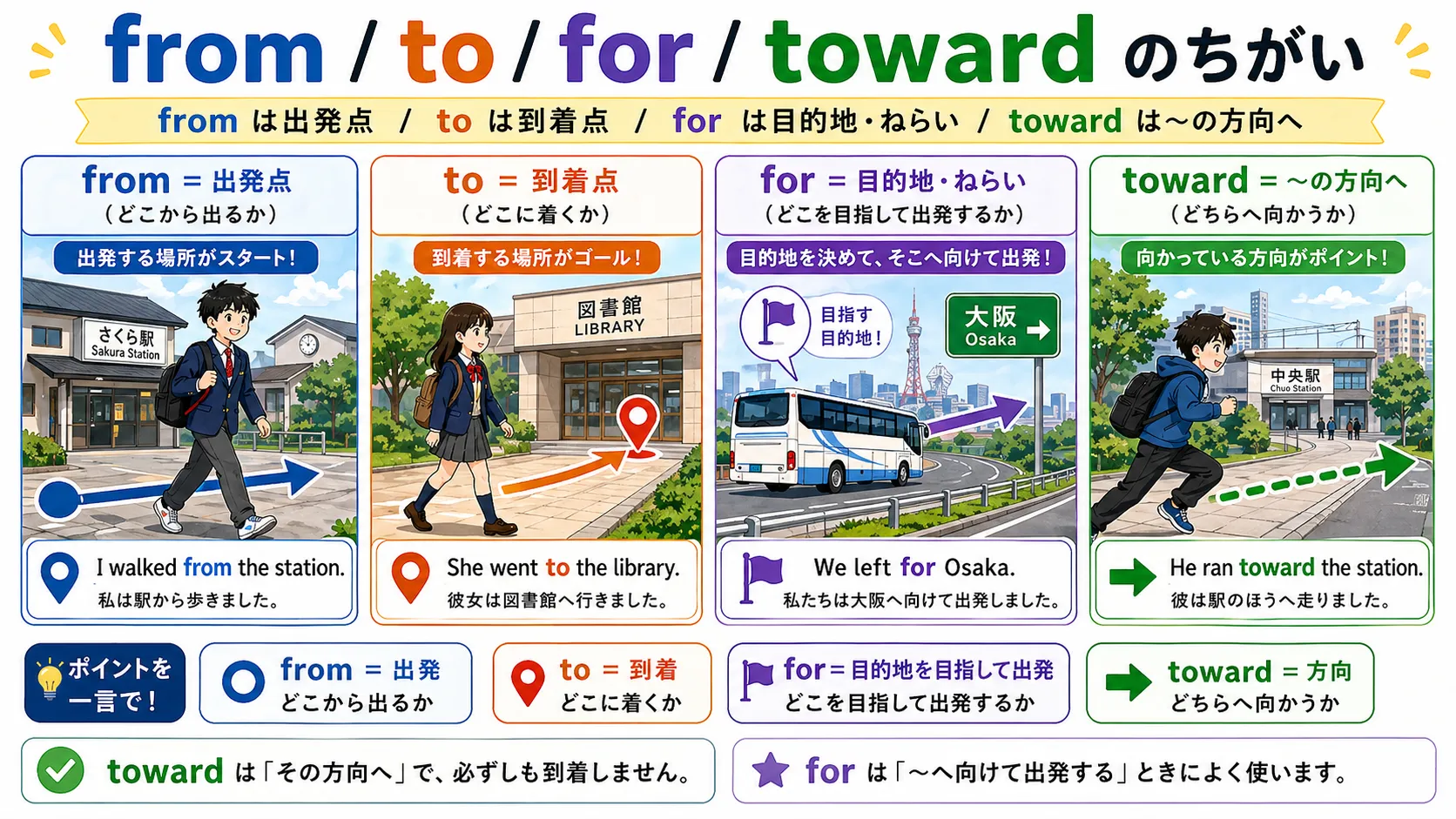
from / to / for / toward は、場所の「矢印」を表す前置詞です😊
from は出発点、
to は到着点、
for は目的地・ねらい、
toward は方向
と考えると、かなり整理しやすくなります。
とくに to と toward は似ていますが、
to はゴールに届く感じ、
toward はゴール方向へ向かう感じ
です。
from は、動きや情報の
スタート地点・出どころ
を表します。
人・物・メール・音・においなど、「どこから来たの?」と聞けるものに使いやすいです。
to は、矢印が
ゴール地点に向かって届く
イメージです。
go to school、send it to her のように「到着先」をはっきり言うときに使います。
for は、到着したかどうかよりも
そこを目指している・そのために動く
感じが強いです。
leave for Kyoto は「京都へ向けて出発する」、
a train for Osaka は「大阪行きの電車」です。
toward は、ゴールに着いたかどうかまでは言いません。
方向だけを示す
のがポイントです。
walk toward the station は「駅の方へ歩く」で、駅に到着したとは限りません。
⚠️ よくあるミスと覚え方
to と toward を同じにしてしまう
go to the station は「駅へ行く」=到着点がはっきり。✅
walk toward the station は「駅の方へ歩く」=到着したかは不明。to はゴール、
toward は方向
と分けましょう。
for をいつも「〜のために」だけで覚える
for は「〜のために」だけでなく、
目的地・ねらい
にも使います。✅
The train for Nara は「奈良行きの電車」。✅
leave for Seoul は「ソウルへ向けて出発する」です。
📌 from / to / for / toward の使い分け早見表
| 分類 | 代表語・代表表現 | 意味のイメージ | 使い分けポイント | ミニ例文 |
|---|---|---|---|---|
|
from
出発点
|
from home(家から)from the station(駅から)from school(学校から)from the airport(空港から)from the entrance(入口から)
|
人や物が動き出す スタート地点 を表します。 |
「どこから?」と聞けるなら from。出発地・発信元・出どころを示します。 |
I came from Osaka.The bus starts from here.
|
|
to
到着点
|
to school(学校へ)to the office(会社へ)to the station(駅へ)to the front desk(受付へ)to the second floor(2階へ)
|
矢印が ゴール地点まで届く イメージです。 |
「どこへ?」のゴールがはっきりしているときに使います。go / come / move / send などと相性◎。
|
She went to the office.Please send it to me.
|
|
for
目的地
|
for Kyoto(京都行きで)for London(ロンドン行きで)for the airport(空港行きで)for home(家へ向けて)for the exit(出口へ向けて)
|
到着よりも、 そこを目指している ことを表します。 |
leave for / head for / train for などでよく使います。「〜行き」「〜へ向けて」の感じ。 |
We left for Kyoto.This train is for Nara.
|
|
toward
方向
|
toward the station(駅の方へ)toward the river(川の方へ)toward the door(ドアの方へ)toward the city center(市の中心部の方へ)toward the light(明かりの方へ)
|
ゴールに着いたかより、 その方向へ進んでいる ことを表します。 |
to よりも「方向だけ」の感じが強いです。到着を保証しません。 |
He walked toward the river.The dog ran toward me.
|
|
from A to B
範囲
|
from Tokyo to Osaka(東京から大阪まで)from the hotel to the museum(ホテルから博物館まで)from Monday to Friday(月曜から金曜まで)from 9 to 5(9時から5時まで)
|
始まり と 終わり をセットで示します。 | 場所だけでなく、時間・期間・数値の範囲にも使えます。 |
We walked from the hotel to the museum.Open from 9 to 5.
|
|
送る・渡す
相手へ
|
send it to her(それを彼女に送る)give the form to him(彼に用紙を渡す)show the map to them(彼らに地図を見せる)explain it to the customer(お客様にそれを説明する)
|
物・情報・説明が 相手へ届く イメージです。 |
受け取る相手がゴールなら to。explain to / send to は実用頻度が高いです。
|
Please send the file to Ken.I explained it to her.
|
|
利益・目的
〜のために
|
for my mother(母のために)for the team(チームのために)for customers(お客様のために)for safety(安全のために)for practice(練習のために)
|
行動の 目的・利益を受ける相手 を表します。 |
「誰のため?」「何のため?」と聞けるなら for。場所だけでなく気持ちや目的にも広がります。 |
I bought flowers for my mother.This rule is for safety.
|
|
出どころ
情報・人
|
from my manager(上司から)from a customer(お客様から)from the website(ウェブサイトから)from this report(この報告書から)from the news(ニュースから)
|
情報や連絡の 発信元・出どころ を表します。 | メール・電話・知らせ・引用元などに使いやすいです。 |
I got a message from my manager.This data comes from the report.
|
|
方向の動き
toward
|
move toward the exit(出口の方へ動く)turn toward the window(窓の方を向く)look toward the stage(ステージの方を見る)run toward the crowd(群衆の方へ走る)
|
視線・体・動きが ある方向へ向く 感じです。 |
到着よりも向きが大事。towards も同じ意味で使われます。
|
She looked toward the stage.We moved toward the exit.
|
|
近づく
to
|
close to the window(窓の近くに)next to the bank(銀行の隣に)go back to the room(部屋へ戻る)move closer to the door(ドアの近くへ移動する)
|
位置や距離が ある対象に近づく・接近する イメージです。 |
to は移動だけでなく、位置関係でも「対象への接近」を表せます。
|
Sit close to the window.The café is next to the bank.
|
|
出発表現
leave for
|
leave for Paris(パリへ向けて出発する)depart for Seoul(ソウルへ向けて出発する)set out for the village(村へ向けて出発する)head for the exit(出口へ向かう)
|
出発したあとに目指す 目的地・ねらい を表します。 |
leave to Paris ではなく、普通は leave for Paris。「〜へ向けて出発」が合言葉。 |
They left for Paris.We headed for the exit.
|
|
離れる
away from
|
away from the road(道路から離れて)far from home(家から遠く離れて)keep away from the edge(端から離れている)move away from the fire(火から離れる)
|
from に「離れる」イメージが加わります。危険・距離・安全確保でよく使います。 |
起点から外へ離れるなら from。away from は「〜から離れて」を強調します。
|
Stay away from the road.Move away from the fire.
|
from home(家から) / from the station(駅から) / from the airport(空港から)
from my manager(上司から) / from the website(ウェブサイトから)
📌 「どこから?」「誰から?」「何から?」と聞けるなら from。
to school(学校へ) / to the office(会社へ) / to the front desk(受付へ)
send it to her(彼女に送る) / explain it to the customer(お客様に説明する)
📌 ゴール・受け取る相手に矢印が届くなら to。
for Kyoto(京都行きで) / for the airport(空港行きで) / for the exit(出口へ向けて)
for my mother(母のために) / for safety(安全のために)
📌 到着より「そこを目指す」「そのために」が中心なら for。
toward the station(駅の方へ) / toward the door(ドアの方へ) / toward the river(川の方へ)
📌 到着したかどうかは言わず、「その方向へ」を表します。
from Tokyo to Osaka(東京から大阪まで) / from Monday to Friday(月曜から金曜まで)
from 9 to 5(9時から5時まで)
📌 場所・時間・数値など「始まり〜終わり」を示せます。
send it to her(彼女に送る) / give the form to him(彼に用紙を渡す)
explain it to the customer(お客様に説明する)
📌 物・情報・説明が「相手へ届く」なら to。
for my mother(母のために) / for the team(チームのために)
for customers(お客様のために) / for safety(安全のために)
📌 利益を受ける相手・目的を表すときも for。
from my manager(上司から) / from a customer(お客様から)
from this report(この報告書から) / from the news(ニュースから)
📌 メール・情報・データ・知らせの発信元は from。
look toward the stage(ステージの方を見る) / turn toward the window(窓の方を向く)
move toward the exit(出口の方へ動く)
📌 視線・体・動きの方向にも toward が使えます。
leave for Paris(パリへ向けて出発する) / depart for Seoul(ソウルへ向けて出発する)
head for the exit(出口へ向かう)
📌 leave to Paris ではなく、基本は leave for Paris。
away from the road(道路から離れて) / far from home(家から遠く離れて)
keep away from the edge(端から離れている)
📌 起点から外へ離れる動きは from の仲間です。
💬 例文で感覚をつかもう!
The shuttle bus leaves from the hotel entrance every thirty minutes.
(シャトルバスは30分ごとにホテルの入口から出発します。)
🔧 from the hotel entrance は「ホテルの入口から」という出発点を表します。
✅ leave from ... は、バス・電車・ツアーなどの集合場所や出発場所を説明するときに便利です。
💡 「どこから出るの?」と聞けるので from が自然です。
We walked to the riverside café after lunch.
(昼食のあと、私たちは川沿いのカフェまで歩きました。)
🔧 to the riverside café は「川沿いのカフェまで」という到着点です。
✅ walk to ... は「歩いてその場所へ行く」で、矢印がゴールに届く感じがあります。
⚠️ walk toward ... なら「その方角へ歩く」だけで、到着したかは言いません。
They left for Fukuoka before sunrise.
(彼らは日の出前に福岡へ向けて出発しました。)
🔧 leave for Fukuoka は「福岡へ向けて出発する」という決まった形としてよく使います。
✅ for は「到着した」よりも「そこを目的地としている」ことに注目します。
⚠️ leave to Fukuoka ではなく、基本は leave for Fukuoka と覚えましょう。
A black cat ran toward the old bridge and disappeared.
(黒い猫が古い橋の方へ走っていき、姿を消しました。)
🔧 toward the old bridge は「古い橋の方へ」という方向を表します。
✅ 猫が橋に到着したかどうかは、この文だけではわかりません。
💡 toward は「ゴール手前までの向き」を言いたいときに便利です。
The walking tour goes from the old market to the castle gate.
(そのウォーキングツアーは古い市場から城門まで進みます。)
🔧 from A to B は「AからBまで」という範囲を表す基本セットです。
✅ 場所だけでなく、from 9 to 5(9時から5時まで)のように時間にも使えます。
📌 from が始まり、to が終わりです。
Please send the updated schedule to everyone on the team.
(更新したスケジュールをチーム全員に送ってください。)
🔧 send ... to everyone は「情報を全員へ届ける」という意味です。
✅ to は場所だけでなく、受け取る相手にも使えます。
💡 send for everyone だと「全員のために送る」のように意味がずれるので注意しましょう。
I saved a seat for my sister near the window.
(私は妹のために、窓の近くの席を取っておきました。)
🔧 for my sister は「妹のために」という利益を受ける相手を表します。
✅ for は目的地だけでなく、「誰のために?」にも使えます。
📌 to my sister なら「妹へ届く」感じになり、席を取っておく意味とは少し違います。
I received a detailed reply from the support team this morning.
(今朝、サポートチームから詳しい返信を受け取りました。)
🔧 from the support team は「サポートチームから」という発信元を表します。
✅ from は移動の出発点だけでなく、メール・返事・連絡の出どころにも使えます。
💡 a reply to the support team なら「サポートチームへの返信」になります。向きが逆です。
The child looked toward the stage when the music started.
(音楽が始まると、その子はステージの方を見ました。)
🔧 toward the stage は「ステージの方へ」という視線の向きを表します。
✅ toward は歩く・走るだけでなく、見る・向く・動く方向にも使えます。
📌 イギリス英語では towards もよく使われます。意味はほぼ同じです。
We headed for the nearest exit, but the crowd moved toward the main hall.
(私たちは一番近い出口へ向かいましたが、人ごみはメインホールの方へ動きました。)
🔧 headed for the nearest exit は「出口を目的地として向かう」という意味です。
✅ moved toward the main hall は「メインホールの方へ動いた」で、到着したかは言っていません。
💡 for は「ねらい」、toward は「方向」と考えると区別しやすいです。
- ✅
fromは「出発点・発信元・出どころ」を表します。 - ✅
toは「到着点・受け取る相手」へ矢印が届くイメージです。 - ✅
forは「目的地・ねらい・〜のために」を表し、leave for/train forでよく使います。 - ✅
towardは「その方向へ」で、到着したかどうかまでは言いません。 - ⚠️ 迷ったら、矢印のどこを見ているかを確認しましょう。出発点なら
from、ゴールならto、ねらいならfor、方向だけならtowardです。
from は「出発点」、to は「到着点」、
for は「目的地・ねらい」、toward は「方向」。
矢印がどこを見ているのかを意識しながら、クイズで使い分けを確認してみよう 😊
3. in / into / out / out of / within の使い分け
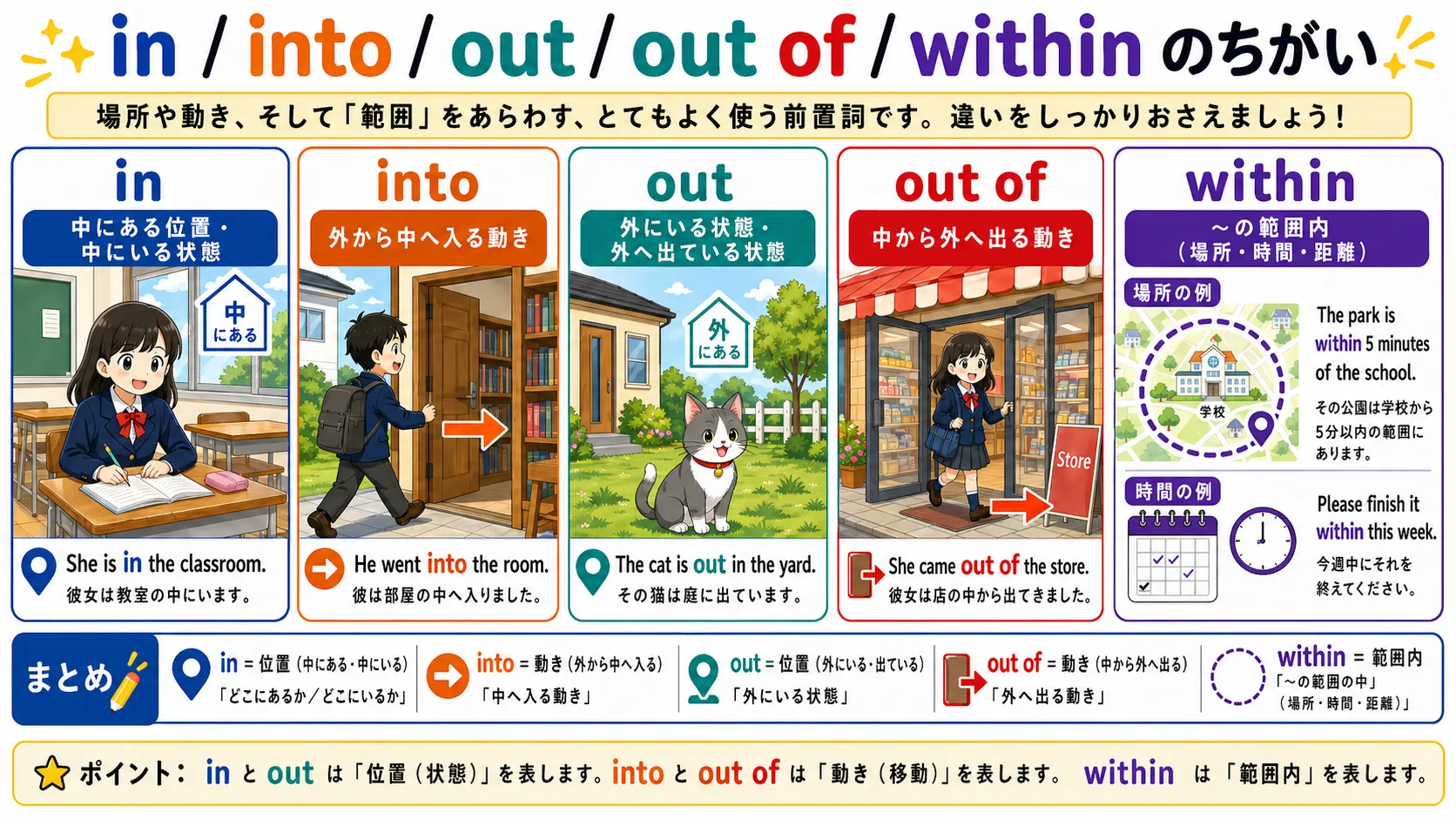
このグループは、「中にあるのか」「中へ入るのか」「外にあるのか」「外へ出るのか」を見分ける前置詞です😊
in は中にある状態、
into は中へ入る動き、
out は外にいる状態、
out of は中から外へ出る動き、
within は範囲内
と整理すると、ぐっとわかりやすくなります。
ポイントは、状態なのか、動きなのかを先に見ることです。
in は、すでに
箱・部屋・町・範囲の中にある
イメージです。
動きよりも「今どこにある?」を答えるときに使います。
into は、外にいたものが
内側へ移動する
イメージです。
go into / put ... into / fall into のように、動きのある動詞と相性がいいです。
out は、内側ではなく
外側にいる状態
を表します。
be out は「外出中」、go out は「外へ出る」と覚えると便利です。
out of は、もともと中にあったものが
外へ出る
動きを表します。
get out of the car は「車の中から外へ出る」です。
within は、時間・距離・地域・ルールなどの
範囲の内側
を表します。
within ten minutes(10分以内に)、
within walking distance(歩ける距離内に)のように、少しかための表現でもよく使われます。
⚠️ よくあるミスと覚え方
in と into を同じにしてしまう
She is in the room. は「部屋の中にいる」状態。✅
She went into the room. は「部屋の中へ入った」動き。in は状態、
into は動き
と分けましょう。
out と out of を混ぜる
He is out. は「彼は外出中」。✅
He got out of the car. は「車の中から出た」。out は外の状態、
out of は中から外へ
と考えると自然です。
📌 in / into / out / out of / within の使い分け早見表
| 分類 | 代表語・代表表現 | 意味のイメージ | 使い分けポイント | ミニ例文 |
|---|---|---|---|---|
|
in
中の状態
|
in the room(部屋の中に)in the box(箱の中に)in the bag(バッグの中に)in the drawer(引き出しの中に)in the building(建物の中に)
|
すでに 内側にある状態 を表します。 |
「どこにある?」への答え。 動きよりも位置・状態が中心です。 |
The keys are in the drawer.She is in the room.
|
|
into
中への動き
|
go into the room(部屋の中へ入る)come into the office(オフィスに入ってくる)put it into the box(それを箱に入れる)fall into the river(川に落ちる)walk into the store(店に入る)
|
外側から 内側へ入りこむ動き を表します。 |
go / come / put / fall / walk など、動きのある動詞と相性◎。
|
He went into the store.Put the card into the slot.
|
|
out
外の状態
|
be out(外出中である)go out(外出する)stay out(外にいる)look out(外を見る / 気をつける)eat out(外食する)
|
内側ではなく 外側にいる・外へ出る 感じです。 |
out は副詞的に使われることも多く、あとに名詞が続かない形が多いです。
|
My father is out now.We ate out last night.
|
|
out of
中から外へ
|
get out of the car(車から降りる)come out of the room(部屋から出てくる)take it out of the bag(バッグから取り出す)run out of the building(建物から走り出る)jump out of bed(ベッドから飛び起きる)
|
中にあったものが 外へ出る動き を表します。 |
後ろに「どこの中から?」という名詞を置きます。out of + 場所・容器 が基本。
|
She got out of the taxi.Take your phone out of your pocket.
|
|
within
範囲内
|
within ten minutes(10分以内に)within a week(1週間以内に)within walking distance(徒歩圏内に)within the city limits(市域内に)within the rules(規則の範囲内で)
|
時間・距離・地域・ルールなどの 決められた範囲の内側 を表します。 |
in より少しかため。ビジネス・案内・ルール説明でよく使います。 |
Please reply within two days.The hotel is within walking distance.
|
|
in
地域・範囲
|
in Tokyo(東京で)in Japan(日本で)in the neighborhood(近所で)in the area(その地域で)in the city center(市の中心部で)
|
町・国・地域など、 広がりのある場所の中 にいる感じです。 | 建物の中だけでなく、都市・国・地域の中にも使えます。 |
She works in Tokyo.There are many cafés in this area.
|
|
into
変化
|
turn into ice(氷に変わる)change into a new form(新しい形に変わる)grow into an adult(大人へ成長する)translate into English(英語に翻訳する)divide into groups(グループに分ける)
|
場所だけでなく、 別の状態・形の中へ入る イメージで変化も表します。 |
turn into / change into は頻出。「〜になる」に近い感覚です。 |
The rain turned into snow.Translate this into English.
|
|
out of
不足・なくなる
|
out of stock(在庫切れで)out of order(故障中で)out of time(時間切れで)out of money(お金がなくて)out of battery(電池切れで)
|
もともと中にあったものが 外へ出て、残っていない 感じです。 | 「足りない・切れている・使えない」表現でもよく使います。 |
We are out of paper.The printer is out of order.
|
|
out
外出・公開
|
go out for dinner(夕食に外出する)be out of town(町を離れている)the news is out(ニュースが出ている)the sun is out(太陽が出ている)school is out(学校が終わっている)
|
「内側にこもっていない」 外へ出ている・外に出た状態 です。 | 場所だけでなく、公開・終了・外出にも広がります。 |
The news is out.Let’s go out for dinner.
|
|
within
かため表現
|
within the company(社内で)within the department(部署内で)within the budget(予算内で)within the law(法律の範囲内で)within the deadline(期限内に)
|
組織・予算・法律・期限などの 枠の中に収まる 感じです。 |
ビジネス文書・規則・条件説明に向きます。 日常会話なら in の方が自然な場合もあります。
|
Please stay within the budget.We must act within the law.
|
|
into
衝突・接触
|
run into a wall(壁にぶつかる)bump into a chair(椅子にぶつかる)crash into a tree(木に衝突する)walk into a glass door(ガラス戸にぶつかる)drive into a pole(柱にぶつかる)
|
対象の方へ進み、 ぶつかって入りこむような動き を表します。 |
run into は「偶然会う」という意味にもなるので文脈に注意。
|
He bumped into a chair.I ran into an old friend.
|
in the room(部屋の中に) / in the box(箱の中に) / in the bag(バッグの中に)
in Tokyo(東京で) / in the area(その地域で)
📌 すでに中にある・範囲の内側にいるなら in。
go into the room(部屋の中へ入る) / put it into the box(箱に入れる)
fall into the river(川に落ちる) / walk into the store(店に入る)
📌 外から中へ動くなら into。
be out(外出中である) / go out(外出する) / stay out(外にいる)
eat out(外食する) / the news is out(ニュースが出ている)
📌 名詞なしで「外へ・外に」を表すことが多いです。
get out of the car(車から降りる) / come out of the room(部屋から出てくる)
take it out of the bag(バッグから取り出す) / run out of the building(建物から走り出る)
📌 「どこの中から?」があるなら out of + 名詞。
within ten minutes(10分以内に) / within a week(1週間以内に)
within walking distance(徒歩圏内に) / within the rules(規則の範囲内で)
📌 少しかための表現。ビジネス・案内・ルール説明に向いています。
turn into ice(氷に変わる) / grow into an adult(大人へ成長する)
translate into English(英語に翻訳する) / divide into groups(グループに分ける)
📌 「別の形・状態の中へ入る」と考えると、変化の into も理解しやすいです。
out of stock(在庫切れで) / out of order(故障中で)
out of time(時間切れで) / out of battery(電池切れで)
📌 中にあったものがなくなった感じから「不足・切れ」に広がります。
💬 例文で感覚をつかもう!
The spare charger is in the top drawer.
(予備の充電器は一番上の引き出しの中にあります。)
🔧 in the top drawer は「引き出しの中にある」という位置・状態を表します。
✅ in は、箱・バッグ・引き出し・部屋など、内側にあるものを言うときの基本です。
💡 動きではなく「今どこにある?」に答えているので into ではありません。
Please step into the waiting area and take a seat.
(待合スペースの中へお入りいただき、席におかけください。)
🔧 step into the waiting area は「待合スペースの中へ一歩入る」という動きです。
✅ into は、外側から内側へ移動する感じをはっきり出します。
📌 案内・接客の表現としても自然です。
Mr. Tanaka is out right now, but he will be back after lunch.
(田中さんはただいま外出中ですが、昼食後に戻ります。)
🔧 is out は「外にいる」「外出中」という意味で、名詞を後ろに置かずに使えます。
✅ 受付・電話対応・社内連絡でよく使う表現です。
💡 out of the office と言うと「オフィスの外にいる」感じがより具体的になります。
She took her notebook out of her backpack.
(彼女はリュックからノートを取り出しました。)
🔧 out of her backpack は「リュックの中から外へ」という動きです。
✅ take ... out of は「〜を…から取り出す」の定番パターンです。
⚠️ out だけでは「どこの中から?」が足りないので、out of her backpack とします。
Please reply within two business days.
(2営業日以内にご返信ください。)
🔧 within two business days は「2営業日の範囲内で」という意味です。
✅ within は、期限・距離・ルールなどの範囲内を表す少しかための表現です。
📌 メール・案内文・規約でとても使いやすい表現です。
Insert your card into the machine and wait for the screen to change.
(カードを機械に挿入して、画面が変わるのをお待ちください。)
🔧 into the machine は「機械の中へ入れる」という方向の動きです。
✅ insert は「差し込む」なので、into と非常に相性が良いです。
💡 in the machine なら「機械の中にある」という状態になり、操作の動きが弱くなります。
We are out of printer paper, so I ordered more.
(プリンター用紙が切れているので、追加で注文しました。)
🔧 out of printer paper は「プリンター用紙がなくなっている」という意味です。
✅ out of は「中から外へ」だけでなく、「残っていない・切れている」にも広がります。
📌 out of stock(在庫切れ)、out of time(時間切れ)も同じ仲間です。
The hotel is within walking distance of the station.
(そのホテルは駅から徒歩圏内にあります。)
🔧 within walking distance は「歩いて行ける距離の範囲内」という意味です。
✅ within は「範囲内」を少しかために表すので、ホテル案内や地図説明に向いています。
💡 日常的には near the station でも言えますが、within walking distance の方が「徒歩で行ける範囲」がはっきりします。
The files are in the folder, and I copied the new report into it.
(ファイルはそのフォルダの中にあり、私は新しい報告書をそこにコピーしました。)
🔧 in the folder は「フォルダの中にある」という状態です。
✅ copied ... into it は「そこへコピーして入れた」という動きです。
📌 同じ「中」でも、状態なら in、中へ入れる動きなら into です。
The children were out in the yard, so I called them out of the rain.
(子どもたちは庭に外でいたので、私は雨の中から出るように呼びました。)
🔧 were out は「外にいた」という状態です。
✅ out of the rain は「雨の中から外へ」という感じで、雨に当たる範囲から出るイメージです。
💡 out は外の状態、out of は何かの中・範囲から外へ出る動き、と分けましょう。
- ✅
inは「中にある状態」。部屋・箱・町・地域などの内側にいるイメージです。 - ✅
intoは「中へ入る動き」。外から内側へ移動するときに使います。 - ✅
outは「外にいる・外へ」。be out(外出中)やgo out(外出する)でよく使います。 - ✅
out ofは「中から外へ」。get out of the carやtake ... out of the bagが基本です。 - ✅
withinは「範囲内」。時間・距離・ルール・予算などの枠の中を表します。 - ⚠️ 迷ったら、まず「状態」か「動き」かを見ること。状態なら
in/out、動きならinto/out ofが判断の軸になります。
in は「中にある状態」、into は「中へ入る動き」、
out は「外」、out of は「中から外へ」、
within は「範囲内」。
状態なのか、動きなのかを意識しながら、クイズで使い分けを確認してみよう 😊
4. on / over / above / up の使い分け
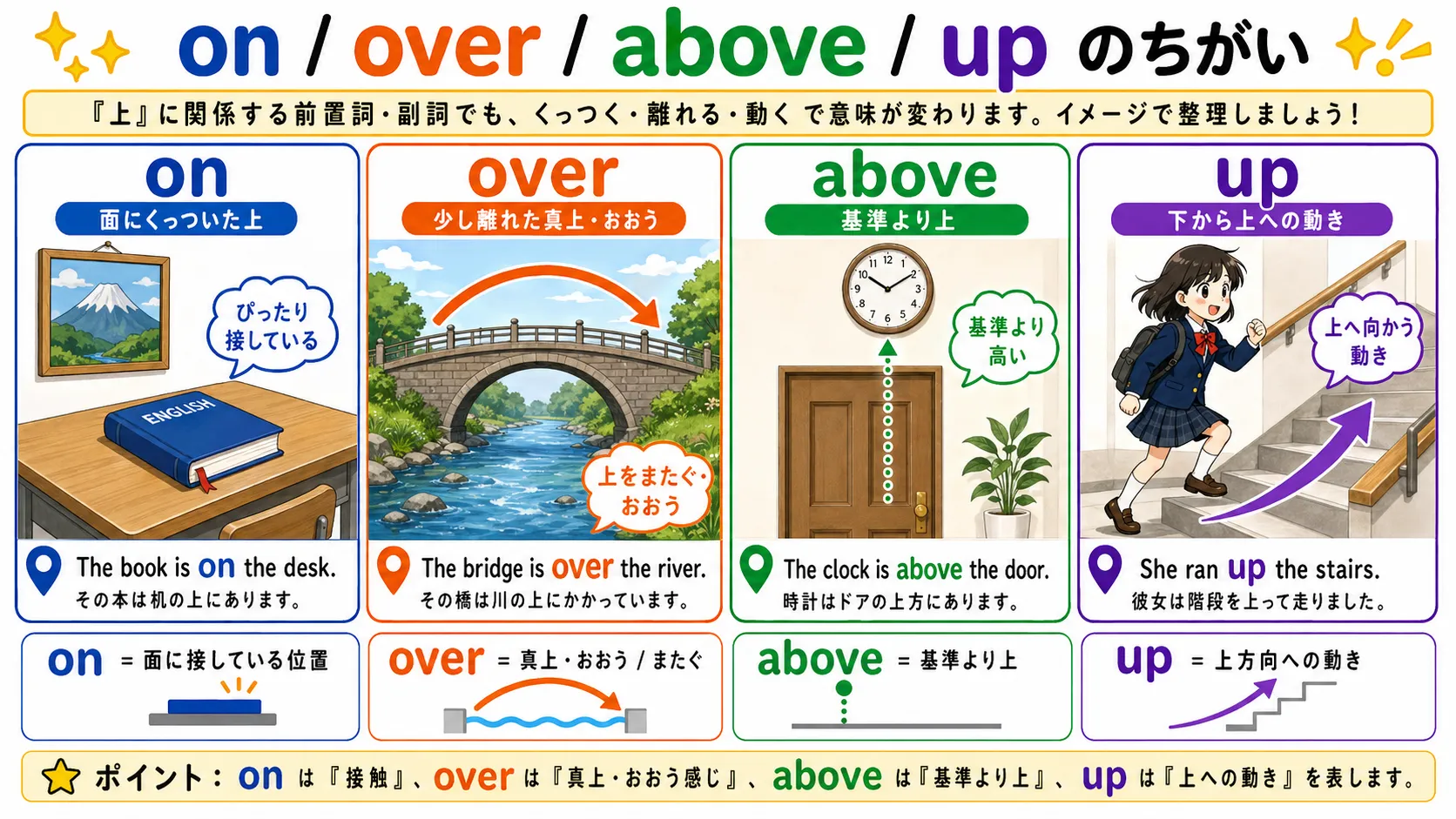
on / over / above / up は、どれも「上」に関係しますが、見ているポイントが違います😊
on は面にくっついている、
over は上を覆う・越える・真上を通る、
above は基準より上、
up は下から上へ動く
と考えると整理しやすくなります。
迷ったら、まず くっついている? 離れている? 動いている? を確認しましょう。
on は、物が表面に
接している
イメージです。
机の上だけでなく、壁・床・画面・道路・ページなど「面」に触れているときにも使います。
over は、上にあって
覆う・またぐ・通り越す
感じです。
a bridge over the river は「川をまたぐ橋」、fly over the city は「街の上空を飛ぶ」です。
above は、接触しているかどうかよりも
基準線より高い
ことが大切です。
高さ・温度・年齢・点数・基準値など、数字やレベルの比較でもよく使います。
up は、位置そのものより
上方向への動き・上昇
を表します。
go up the stairs(階段を上る)や prices go up(価格が上がる)のように使います。
⚠️ よくあるミスと覚え方
on と above を同じにしてしまう
The book is on the desk. は「机に接している」。✅
The light is above the desk. は「机より上にある」。on は接触、
above は基準より上
と分けましょう。
over と above を全部入れ替える
A plane flew over the town. は「町の上空を通過」。✅
The temperature is above 30 degrees. は「30度より上」。over は覆う・越える・通る、
above は基準より上
です。
📌 on / over / above / up の使い分け早見表
| 分類 | 代表語・代表表現 | 意味のイメージ | 使い分けポイント | ミニ例文 |
|---|---|---|---|---|
|
on
接触した上
|
on the table(テーブルの上に)on the desk(机の上に)on the floor(床の上に)on the shelf(棚の上に)on the chair(椅子の上に)
|
物が面に ぴったり接している イメージです。 |
「上」と訳せても、くっついていれば on。机・床・棚などの表面に強いです。 |
The keys are on the table.Put the box on the floor.
|
|
on
垂直面に接触
|
on the wall(壁に)on the door(ドアに)on the window(窓に)on the ceiling(天井に)on the screen(画面に)
|
水平の「上」だけでなく、
面に貼りつく
感じも on です。
|
壁にかかった絵、ドアの札、画面表示なども on。
|
There is a poster on the wall.Your name is on the screen.
|
|
over
真上・覆う
|
over the table(テーブルの上方に)over my head(私の頭上に)over the bed(ベッドの上に覆うように)over the city(街の上空に)over the mountain(山の上を越えて)
|
対象の上にあり、 覆う・またぐ・上を通る イメージです。 |
接触していなくてもOK。 「上を通過」「上から覆う」に強いです。 |
A lamp hangs over the table.The plane flew over the city.
|
|
above
基準より上
|
above the clouds(雲の上に)above the door(ドアの上方に)above the line(線より上に)above eye level(目線より上に)above sea level(海抜〜で)
|
何かを基準にして それより高い位置 を表します。 |
真上でなくてもOK。 「基準より上」が中心です。 |
The sign is above the door.The plane flew above the clouds.
|
|
up
上方向へ
|
go up the stairs(階段を上る)walk up the hill(丘を上る)climb up the ladder(はしごを上る)look up(上を見る)stand up(立ち上がる)
|
下から上へ向かう 上昇・上方向の動き を表します。 |
位置よりも「動き」が中心。 階段・坂・数値の上昇にも使えます。 |
She ran up the stairs.Please stand up.
|
|
over
越える
|
jump over the fence(フェンスを飛び越える)climb over the wall(壁を乗り越える)cross over the bridge(橋を渡る)go over the hill(丘を越える)step over the cable(ケーブルをまたぐ)
|
対象の上を 越えて反対側へ行く 感じです。 |
「越える」「またぐ」「通り過ぎる」があれば over が自然です。
|
The dog jumped over the fence.Step over the cable carefully.
|
|
above
数値・基準
|
above 30 degrees(30度を超えて)above average(平均以上で)above the limit(制限を超えて)above 18 years old(18歳以上で)above the target(目標を上回って)
|
数値・成績・温度・年齢などが 基準より上 です。 | 物理的な位置だけでなく、抽象的な基準にも使えます。 |
The score is above average.The temperature rose above 30 degrees.
|
|
up
数値上昇
|
prices go up(価格が上がる)sales are up(売上が上がっている)turn up the volume(音量を上げる)speed up(スピードを上げる)move up the date(日程を早める)
|
数値・強さ・レベルが 上がる イメージです。 | 物理的な上方向だけでなく、音量・価格・売上にも使えます。 |
Prices went up again.Turn up the volume, please.
|
|
on
線・道・ページ上
|
on the road(道路上に)on the street(通りに)on the map(地図上に)on page 10(10ページに)on the list(リストに)
|
面・線・表示場所に 載っている・接している 感じです。 |
道路・地図・ページ・リストなど「表示面」にも on。
|
Your name is on the list.The café is on this map.
|
|
over
覆う・かぶせる
|
a blanket over the baby(赤ちゃんにかかった毛布)a roof over our heads(頭上の屋根)clouds over the town(町の上を覆う雲)put a cloth over the table(テーブルに布をかける)hold an umbrella over her(彼女に傘を差しかける)
|
上から 覆う・かぶさる イメージです。 |
ただ「上」ではなく、覆う感じがあると over が自然です。
|
She put a blanket over the baby.Clouds hung over the town.
|
|
above
表示位置
|
above the title(タイトルの上に)above the chart(グラフの上に)above the photo(写真の上に)above the paragraph(段落の上に)above the search box(検索ボックスの上に)
|
画面・紙面で、 ある要素より上の位置 にあることを表します。 | 接触よりも「位置関係」が大事。UI説明や資料説明でも便利です。 |
The button is above the chart.Write your name above the line.
|
on the table(テーブルの上に) / on the desk(机の上に) / on the floor(床の上に)
on the wall(壁に) / on the screen(画面に)
📌 面に触れていれば、水平でも垂直でも on。
over my head(私の頭上に) / over the table(テーブルの上方に)
jump over the fence(フェンスを飛び越える) / fly over the city(街の上空を飛ぶ)
📌 上を覆う・またぐ・通り越す感じがあれば over。
above the door(ドアの上方に) / above the line(線より上に)
above 30 degrees(30度を超えて) / above average(平均以上で)
📌 接触より「基準より高い」が大切です。
go up the stairs(階段を上る) / walk up the hill(丘を上る)
look up(上を見る) / stand up(立ち上がる)
📌 位置よりも「下から上へ」の動きが中心です。
climb over the wall(壁を乗り越える) / step over the cable(ケーブルをまたぐ)
go over the hill(丘を越える)
📌 「障害物の上を越える」イメージです。
above average(平均以上で) / above the limit(制限を超えて)
above 18 years old(18歳以上で) / above the target(目標を上回って)
📌 温度・年齢・成績・目標などの比較にも使えます。
prices go up(価格が上がる) / sales are up(売上が上がっている)
turn up the volume(音量を上げる) / speed up(スピードを上げる)
📌 物理的な上だけでなく、数値・音量・スピードにも使えます。
on page 10(10ページに) / on the map(地図上に)
on the list(リストに) / on the screen(画面に)
📌 「表示面に載っている」イメージで on を使います。
💬 例文で感覚をつかもう!
Your glasses are on the kitchen counter.
(あなたの眼鏡はキッチンカウンターの上にあります。)
🔧 on the kitchen counter は「カウンターの表面に接している」という意味です。
✅ on は、単なる「上」ではなく「面にくっついている」ことが大切です。
💡 机・棚・床・カウンターなど、表面に置かれているものは on が基本です。
The emergency number is written on the notice board.
(緊急連絡先は掲示板に書かれています。)
🔧 on the notice board は「掲示板という面に表示されている」という意味です。
✅ on は水平面だけでなく、壁・掲示板・画面のような垂直面にも使えます。
📌 on the screen(画面に)や on the wall(壁に)も同じ仲間です。
A small drone flew over the schoolyard during the event.
(イベント中、小さなドローンが校庭の上を飛びました。)
🔧 over the schoolyard は「校庭の上空を通る」という意味です。
✅ over は、対象の上を通過する・覆う・またぐイメージがあります。
⚠️ above the schoolyard でも「上方に」は言えますが、飛んで通過する動きは over が自然です。
The little dog jumped over the low fence.
(その小さな犬は低いフェンスを飛び越えました。)
🔧 jumped over the low fence は「フェンスの上を越えて反対側へ行った」という動きです。
✅ 障害物をまたぐ・越えるときは over がよく使われます。
💡 over は「上にある」だけでなく、「越えていく」動きまで表せます。
The clock is above the whiteboard, so everyone can see it.
(時計はホワイトボードの上にあるので、全員が見ることができます。)
🔧 above the whiteboard は「ホワイトボードより上の位置に」という意味です。
✅ above は接触よりも、基準との上下関係を見ています。
📌 時計がホワイトボードにくっついている必要はありません。「基準より上」がポイントです。
The customer satisfaction score stayed above 90 percent for three months.
(顧客満足度スコアは3か月間、90%を上回っていました。)
🔧 above 90 percent は「90%という基準より上」という意味です。
✅ above は、温度・年齢・点数・成績・基準値などにもよく使います。
💡 物理的な場所だけでなく、数字の「上」にも使えるのが大切です。
We walked up the narrow stairs to the rooftop.
(私たちは屋上へ行くために、狭い階段を上りました。)
🔧 up the narrow stairs は「階段を上方向へ進む」という意味です。
✅ up は場所そのものより、下から上への動きに注目します。
📌 go up / walk up / run up は移動表現でよく使います。
The number of online orders went up after the campaign.
(キャンペーン後、オンライン注文数が増えました。)
🔧 went up は「上がった・増えた」という意味です。
✅ up は、物理的な上方向だけでなく、数値・量・レベルの上昇にも使えます。
💡 売上・価格・注文数・音量・スピードなど、増えるものに広く使えます。
The label is on the box, and the price is written above the barcode.
(ラベルは箱に貼ってあり、価格はバーコードの上に書かれています。)
🔧 on the box は「箱の表面に貼ってある」という接触です。
✅ above the barcode は「バーコードより上の位置に」という基準との関係です。
📌 同じ「上」でも、接触なら on、基準より上なら above と考えます。
The hikers climbed up the hill and looked over the valley.
(ハイカーたちは丘を登り、谷を見渡しました。)
🔧 up the hill は「丘を上へ登る」という上方向の動きです。
✅ looked over the valley は「谷を上から見渡す」という広がりのある見方です。
💡 up は上昇、over は上から覆う・見渡す・越えるイメージです。
- ✅
onは「面にくっついている」イメージ。机・壁・画面・ページなどに使えます。 - ✅
overは「上を覆う・越える・通る」イメージ。上空通過や障害物を越える動きに強いです。 - ✅
aboveは「基準より上」。位置だけでなく、温度・点数・年齢・基準値にも使えます。 - ✅
upは「上方向への動き・上昇」。階段を上る、価格が上がる、音量を上げるなどに使います。 - ⚠️ 迷ったら、接触なら
on、上を越えるならover、基準より上ならabove、上へ動くならupと整理しましょう。
on は「面にくっついている」、
over は「上を覆う・越える・真上を通る」、
above は「基準より上」、
up は「上方向への動き」。
接触しているのか、上を越えているのか、基準より上なのか、上へ動いているのかをクイズで確認してみよう 😊
5. beneath / under / below / down の使い分け
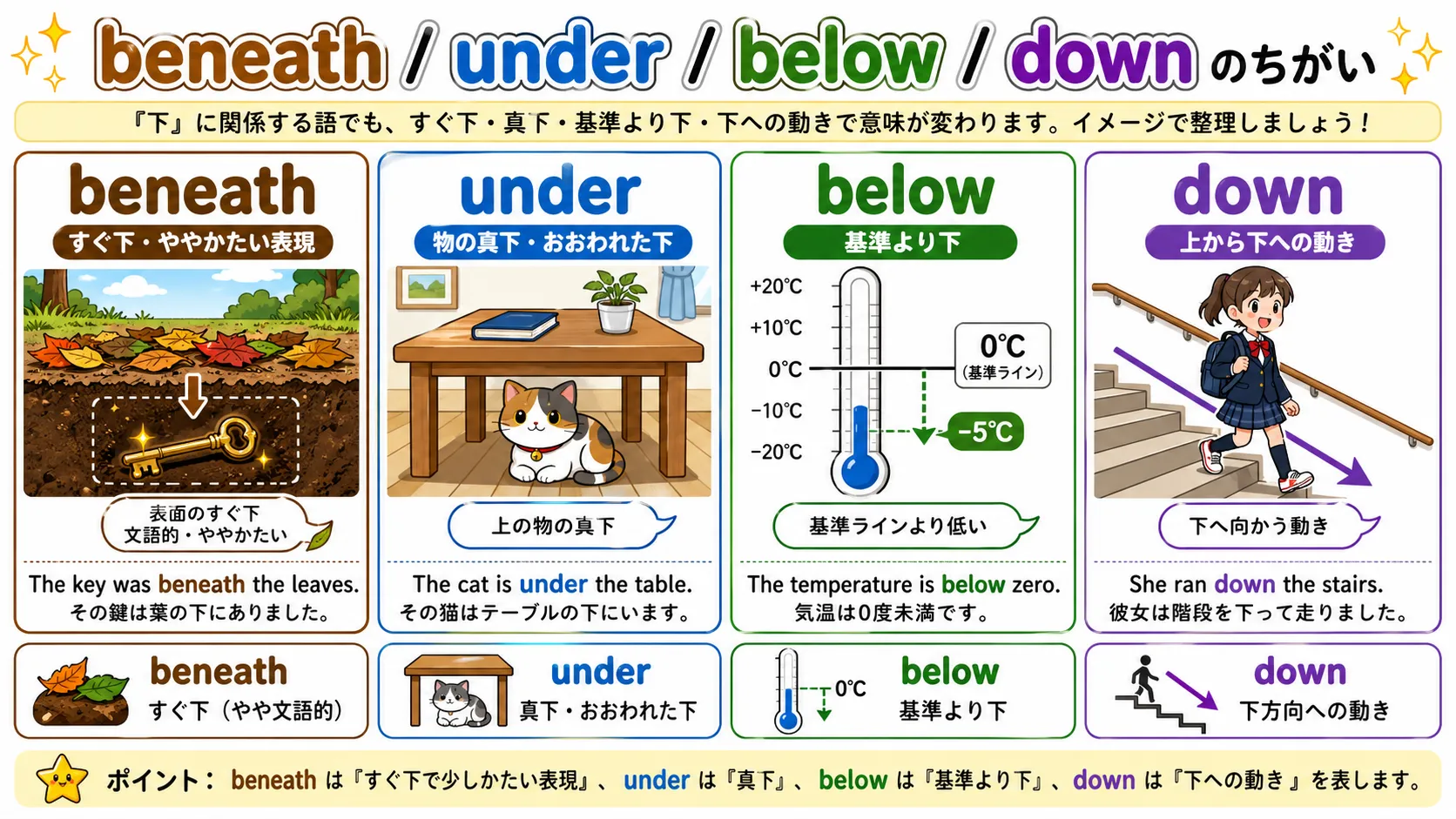
beneath / under / below / down は、どれも「下」に関係しますが、見ているポイントが違います😊
beneath は足元・すぐ下、
under は物の真下・覆われた下、
below は基準より下、
down は上から下への動き
と整理するとわかりやすくなります。
迷ったら、まず 真下なのか、基準より下なのか、下へ動いているのか を確認しましょう。
beneath は、ある物や人の
すぐ下・足元・下側
にある感じです。
under より少しかため・文学的に聞こえることもあります。
under は、机・ベッド・橋・屋根などの
真下にある・上から覆われている
イメージです。
日常会話では「下にある」を表す基本語としてとてもよく使います。
below は、位置・高さ・温度・点数・年齢などが
基準ラインより下
にあることを表します。
真下である必要はなく、「レベルが下」と考えるのがコツです。
down は、場所そのものより
下方向への動き・低下
を表します。
go down the stairs(階段を下りる)、
prices go down(価格が下がる)のように使います。
⚠️ よくあるミスと覚え方
under と below を同じにしてしまう
The cat is under the table. は「テーブルの真下」。✅
The temperature is below zero. は「0度より下」。under は物の真下、
below は基準より下
と分けましょう。
below と down を混ぜる
The label is below the picture. は「写真より下にある」位置。✅
Walk down the stairs. は「階段を下へ歩く」動き。below は位置・基準、
down は動き
です。
📌 beneath / under / below / down の使い分け早見表
| 分類 | 代表語・代表表現 | 意味のイメージ | 使い分けポイント | ミニ例文 |
|---|---|---|---|---|
|
beneath
足元・すぐ下
|
beneath the tree(木の下に)beneath her feet(彼女の足元に)beneath the table(テーブルの下に)beneath the surface(表面の下に)beneath the blanket(毛布の下に)
|
物や人の すぐ下・下側 にあるイメージです。 |
under より少しかため・書き言葉寄り。風景描写や落ち着いた文章でよく合います。 |
Leaves lay beneath the tree.The ground shook beneath her feet.
|
|
under
真下
|
under the table(テーブルの下に)under the bed(ベッドの下に)under the chair(椅子の下に)under the bridge(橋の下に)under the desk(机の下に)
|
物体の 真下・覆われた下 にあるイメージです。 |
日常会話で最も使いやすい「下」。 机・ベッド・橋・屋根などと相性◎。 |
The cat is under the table.We waited under the bridge.
|
|
below
基準より下
|
below the line(線より下に)below the picture(写真の下に)below eye level(目線より下に)below sea level(海抜より下に)below the surface(表面より下に)
|
ある基準・線・位置より 低い場所 にあることを表します。 |
真下でなくてもOK。 「基準より下」が中心です。 |
Write your name below the line.The valley is below us.
|
|
down
下方向へ
|
go down the stairs(階段を下りる)walk down the hill(丘を下る)run down the road(道を走って下る / 道を走って進む)look down(下を見る)sit down(座る)
|
上から下へ向かう 下方向の動き を表します。 |
位置よりも動きが中心。 階段・坂・視線・姿勢の変化でよく使います。 |
She walked down the stairs.Please sit down.
|
|
under
覆われている
|
under the roof(屋根の下に)under an umbrella(傘の下に)under a blanket(毛布の下に)under the cover(カバーの下に)under the shade(日陰に)
|
上から何かに 覆われている・守られている 感じです。 |
ただ低いだけでなく、上に何かがかぶさっている感じがあれば under。
|
Stand under the umbrella.The baby slept under a blanket.
|
|
below
数値・レベル
|
below zero(0度未満で)below average(平均以下で)below the limit(制限未満で)below 18 years old(18歳未満で)below the target(目標を下回って)
|
温度・年齢・点数・目標などが 基準値より低い ことを表します。 | 物理的な位置だけでなく、数字や成績にも使えます。 |
The temperature fell below zero.Sales were below the target.
|
|
down
数値低下
|
prices go down(価格が下がる)sales are down(売上が下がっている)turn down the volume(音量を下げる)slow down(速度を落とす)bring down the cost(費用を下げる)
|
数値・音量・スピード・費用などが 下がる・弱まる イメージです。 | 物理的な下だけでなく、抽象的な低下にも使えます。 |
Prices went down last month.Turn down the volume.
|
|
beneath
表面の下
|
beneath the surface(表面の下に)beneath the water(水面下に)beneath the snow(雪の下に)beneath the floor(床下に)beneath the skin(皮膚の下に)
|
表に見えているものの 下側・内側に隠れている 感じです。 |
物理的にも比喩的にも使えます。 文章に少し落ち着いた印象を出します。 |
Fish swam beneath the surface.There was fear beneath his smile.
|
|
under
未満・管理下
|
under 18(18歳未満で)under 100 yen(100円未満で)under control(管理下で)under pressure(プレッシャーの下で)under construction(工事中で)
|
何かの 下・範囲内・影響下 にあるイメージです。 |
under は場所だけでなく、年齢・金額・状態・管理にも広がります。
|
Children under 12 can enter free.The situation is under control.
|
|
below
画面・文章
|
below the title(タイトルの下に)below the photo(写真の下に)below the chart(グラフの下に)below the paragraph(段落の下に)below the search box(検索ボックスの下に)
|
画面・紙面で、 ある要素より下の位置 にあることを表します。 | UI説明・資料説明・ページ案内で便利です。 |
Click the button below the chart.Write your answer below the question.
|
|
down
道に沿って進む
|
walk down the street(通りを歩いていく)drive down the road(道を車で進む)go down the hallway(廊下を進む)run down the path(小道を走っていく)come down this way(こちらへ進んでくる)
|
必ずしも「低い方へ」ではなく、 道・通りに沿って進む 感じもあります。 |
道案内でよく使います。down the street は「通りを進んで」の定番表現です。
|
Walk down this street.The shop is down the hall.
|
beneath the tree(木の下に) / beneath her feet(彼女の足元に)
beneath the surface(表面の下に) / beneath the blanket(毛布の下に)
📌 under より少しかため。風景描写・文章表現にも合います。
under the table(テーブルの下に) / under the bed(ベッドの下に)
under the bridge(橋の下に) / under the desk(机の下に)
📌 真下・覆われている下なら under。
below the line(線より下に) / below eye level(目線より下に)
below sea level(海抜より下に) / below the surface(表面より下に)
📌 真下でなくてもOK。「基準より下」が中心です。
go down the stairs(階段を下りる) / walk down the hill(丘を下る)
look down(下を見る) / sit down(座る)
📌 位置より「上から下へ」の動きが中心です。
under an umbrella(傘の下に) / under a blanket(毛布の下に)
under control(管理下で) / under pressure(プレッシャーの下で)
📌 物理的な下だけでなく、管理・影響の下にも使えます。
below zero(0度未満で) / below average(平均以下で)
below the limit(制限未満で) / below the target(目標を下回って)
📌 温度・成績・年齢・目標などの比較に便利です。
prices go down(価格が下がる) / sales are down(売上が下がっている)
turn down the volume(音量を下げる) / slow down(速度を落とす)
📌 物理的な下だけでなく、数字・レベルの低下にも使えます。
walk down the street(通りを歩いていく) / go down the hallway(廊下を進む)
drive down the road(道を車で進む) / run down the path(小道を走っていく)
📌 道案内では「下る」だけでなく「通りに沿って進む」意味でも使います。
💬 例文で感覚をつかもう!
Dry leaves were scattered beneath the old tree.
(乾いた葉が古い木の下に散らばっていました。)
🔧 beneath the old tree は「古い木のすぐ下・足元」という意味です。
✅ beneath は under より少し書き言葉寄りで、風景描写に合います。
💡 日常会話なら under the tree でも自然ですが、beneath は少し落ち着いた響きになります。
The remote control is under the sofa.
(リモコンはソファの下にあります。)
🔧 under the sofa は「ソファの真下・下側にある」という意味です。
✅ 机・ベッド・ソファ・橋など、物の真下にあるときは under が基本です。
📌 「下にある」を日常会話で言うなら、まず under を使えるか考えるとよいです。
Please write your email address below the signature line.
(署名欄の下にメールアドレスを書いてください。)
🔧 below the signature line は「署名欄という基準線より下に」という意味です。
✅ below は真下かどうかより、基準との上下関係が大切です。
💡 フォーム・資料・画面説明では below the line / below the chart のように使いやすいです。
We walked down the stairs because the elevator was crowded.
(エレベーターが混んでいたので、私たちは階段を下りました。)
🔧 down the stairs は「階段を下方向へ進む」という意味です。
✅ down は、位置ではなく「下へ動く」ことを表します。
📌 go down / walk down / run down は移動表現でよく使います。
We stood under a large umbrella until the rain stopped.
(雨が止むまで、私たちは大きな傘の下に立っていました。)
🔧 under a large umbrella は「大きな傘に覆われている下」という意味です。
✅ under は、真下にあるだけでなく、屋根・傘・毛布などに覆われる感じにも使えます。
💡 below an umbrella ではなく、覆われて守られている感じなので under が自然です。
The temperature dropped below freezing during the night.
(夜の間に気温が氷点下まで下がりました。)
🔧 below freezing は「氷点より下」=「氷点下」という意味です。
✅ below は、温度・点数・平均・目標など、基準より低いことを表すのが得意です。
📌 under freezing より、温度の基準には below が自然です。
The number of complaints went down after we improved the instructions.
(説明を改善したあと、苦情の件数は減りました。)
🔧 went down は「下がった・減った」という意味です。
✅ down は、物理的な下方向だけでなく、数値や件数の低下にも使えます。
💡 prices go down(価格が下がる)、sales are down(売上が下がっている)も同じ仲間です。
The storage box is under the desk, and the warning label is printed below the handle.
(収納ボックスは机の下にあり、警告ラベルは取っ手の下に印刷されています。)
🔧 under the desk は「机の真下・机に覆われる下」です。
✅ below the handle は「取っ手という基準より下の位置」という意味です。
📌 真下・覆われるなら under、基準より下なら below と分けましょう。
A small stream flowed beneath the wooden bridge.
(小さな川が木の橋の下を流れていました。)
🔧 beneath the wooden bridge は「木の橋の下を」という意味です。
✅ under the bridge でも意味は通じますが、beneath にすると少し描写的・文章的な雰囲気になります。
💡 物語・説明文・風景描写では beneath がきれいに響くことがあります。
Walk down this hallway, and the meeting room will be on your left.
(この廊下をまっすぐ進むと、左手に会議室があります。)
🔧 down this hallway は、必ずしも「下へ」という意味ではなく「この廊下に沿って進む」という意味です。
✅ down the street / down the road / down the hall は道案内でよく使います。
📌 down は「下方向」だけでなく、「道に沿って先へ進む」感覚も持っています。
- ✅
beneathは「足元・すぐ下」。やや書き言葉寄りで、描写にも向いています。 - ✅
underは「物の真下・覆われた下」。日常会話でよく使う基本の「下」です。 - ✅
belowは「基準より下」。位置だけでなく、温度・点数・年齢・目標にも使えます。 - ✅
downは「下方向への動き・低下」。階段を下りる、価格が下がる、道を進むなどに使います。 - ⚠️ 迷ったら、真下なら
under、基準より下ならbelow、下へ動くならdown、少しかたい描写ならbeneathと整理しましょう。
beneath は「すぐ下・足元」、
under は「物の真下・覆われた下」、
below は「基準より下」、
down は「下方向への動き」。
真下なのか、基準より下なのか、下へ動いているのかをクイズで確認してみよう 😊
6. before / in front of / after / behind の使い分け
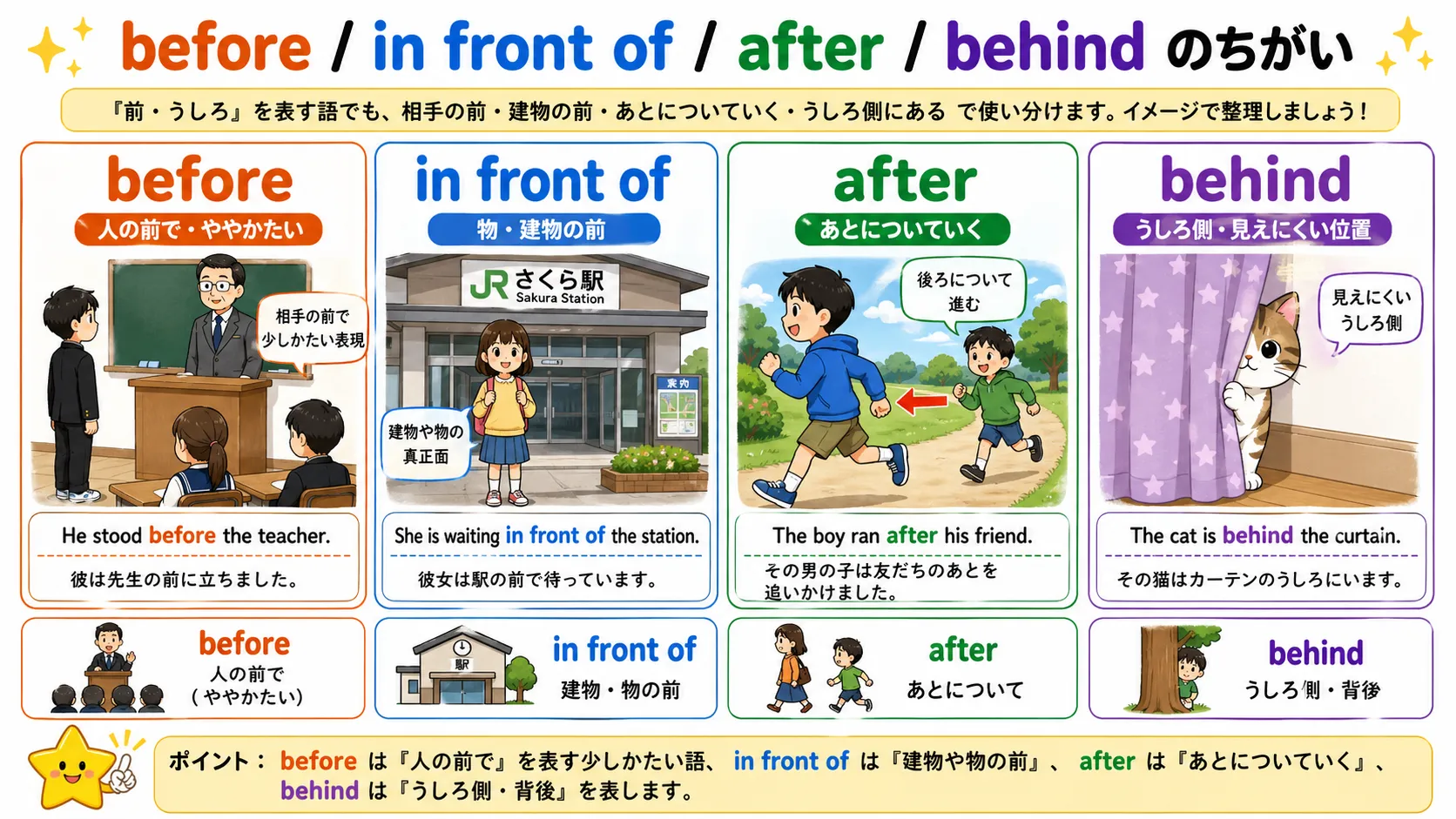
before / in front of / after / behind は、「前・後ろ」の位置関係を表す大切な表現です😊
ただし、日本語の「前」「後ろ」だけで覚えると少し混乱しやすいです。
before は人・権威・順番の前、
in front of は物・建物の正面、
after は後についていく・順番のあと、
behind はうしろ側・見えにくい位置
と考えると、使い分けがスッキリします。
特に in front of と behind は物理的な位置、
before と after は順番・場面・相手との関係 に広がりやすいです。
before は、ただ物の前にいるというより、
相手の前に出る・順番で前に来る
イメージです。
stand before the judge のように、裁判官・先生・聴衆など「人の前」に立つ場面でよく使われます。
in front of は、駅・建物・ドア・店などの
真正面にいる・前側にある
ことを表します。
待ち合わせや道案内では、in front of the station のようにとてもよく使います。
after は、誰かの
後を追う・次に来る
イメージです。
walk after me は「私の後について歩いて」、
after lunch は「昼食のあと」です。
behind は、人や物の
うしろ側・見えにくい位置
を表します。
behind the door は「ドアのうしろ」、
behind the building は「建物の裏側」です。
⚠️ よくあるミスと覚え方
before と in front of を全部同じにする
Stand before the audience. は「聴衆の前に立つ」。✅
Wait in front of the theater. は「劇場の前で待つ」。before は人・場面・順番、
in front of は物・建物の正面
と分けましょう。
after と behind を混ぜる
Walk after me. は「私の後について歩いて」。✅
The bag is behind me. は「バッグは私のうしろにある」。after は順番・追いかける、
behind は位置としてのうしろ
です。
📌 before / in front of / after / behind の使い分け早見表
| 分類 | 代表語・代表表現 | 意味のイメージ | 使い分けポイント | ミニ例文 |
|---|---|---|---|---|
|
before
人の前
|
before the judge(裁判官の前で)before the teacher(先生の前で)before the audience(聴衆の前で)before the manager(上司の前で)before the committee(委員会の前で)
|
人・権威・集団の 目の前に立つ イメージです。 |
物理的な正面というより、相手と向き合う場面。 ややフォーマルな響きがあります。 |
He stood before the judge.She spoke before the audience.
|
|
in front of
建物・物の正面
|
in front of the station(駅の前で)in front of the school(学校の前で)in front of the store(店の前で)in front of the door(ドアの前で)in front of the hotel(ホテルの前で)
|
建物・物の 正面側にいる イメージです。 |
待ち合わせ・道案内でよく使います。 「真正面にいる」が中心です。 |
Wait in front of the station.There is a bike in front of the door.
|
|
after
後についていく
|
walk after me(私の後について歩く)run after the bus(バスを追いかける)go after the child(子どもの後を追う)come after us(私たちの後から来る)follow after the guide(ガイドの後についていく)
|
人や物の 後を追う・後から続く イメージです。 | 位置の「うしろ」よりも、順番や追いかける動きが中心です。 |
Please walk after me.The boy ran after the dog.
|
|
behind
うしろ側の位置
|
behind the door(ドアの後ろに)behind the building(建物の裏に)behind the chair(椅子の後ろに)behind the curtain(カーテンの後ろに)behind me(私の後ろに)
|
人や物の うしろ側・見えにくい位置 にあるイメージです。 | 隠れる・裏側にある・視界から外れる感じが出やすいです。 |
The cat is behind the curtain.The parking lot is behind the building.
|
|
before
順番・時間の前
|
before lunch(昼食前に)before the meeting(会議の前に)before 5 p.m.(午後5時前に)before the deadline(締切前に)before my turn(私の番の前に)
|
時間・順番で 先に来る ことを表します。 |
場所だけでなく、時間・順序でも頻出。before は「前に起こる」が基本です。
|
Please call me before the meeting.Submit it before 5 p.m.
|
|
after
順番・時間のあと
|
after lunch(昼食後に)after work(仕事の後に)after the meeting(会議の後に)after 6 p.m.(午後6時以降に)after my turn(私の番のあとに)
|
時間・順番で あとに来る ことを表します。 |
before の反対。予定・順番・時間の説明でよく使います。 |
Let’s talk after lunch.I can call you after work.
|
|
in front of
列・人の前
|
in front of me(私の前に)in front of you(あなたの前に)in front of the line(列の前の方に)in front of the class(クラスの前で)in front of the camera(カメラの前で)
|
人・列・カメラなどの 正面・前側 にいることを表します。 | 人に対しても使えますが、日常的で具体的な位置関係です。 |
A tall man sat in front of me.Stand in front of the camera.
|
|
behind
遅れ・取り残される
|
fall behind schedule(予定より遅れる)be behind time(時間に遅れている)behind the others(他の人より遅れて)behind in math(数学で遅れている)behind on payments(支払いが遅れている)
|
位置のうしろから、 進み具合が遅れている 意味にも広がります。 | 予定・勉強・支払いなどで「遅れ」を表すときに使えます。 |
We are behind schedule.He is behind in math.
|
|
behind
原因・背景
|
behind the decision(決定の背景に)behind the problem(問題の背後に)behind the change(変更の裏に)behind the success(成功の裏に)behind the story(話の裏側に)
|
表から見えない 背景・理由・裏側 を表します。 | 物理的なうしろから、抽象的な「背後にある理由」に広がります。 |
What is behind this decision?There is a story behind the photo.
|
|
before
優先・先に
|
safety before speed(速さより安全を優先)family before work(仕事より家族を優先)quality before quantity(量より質を優先)customers before profit(利益より顧客を優先)health before everything(何より健康を優先)
|
順番で前に置くことから、 優先する 意味にもなります。 | スローガン・考え方・価値観を表す表現でよく見ます。 |
Safety comes before speed.Put quality before quantity.
|
before the judge(裁判官の前で) / before the teacher(先生の前で)
before the audience(聴衆の前で) / before the committee(委員会の前で)
📌 物の前より、人や場面と向き合う「前」です。
in front of the station(駅の前で) / in front of the store(店の前で)
in front of the door(ドアの前で) / in front of the hotel(ホテルの前で)
📌 待ち合わせ・道案内の「正面」は in front of が自然です。
walk after me(私の後について歩く) / run after the bus(バスを追いかける)
go after the child(子どもの後を追う) / follow after the guide(ガイドの後についていく)
📌 位置のうしろより、「後を追う・順番であと」が中心です。
behind the door(ドアの後ろに) / behind the building(建物の裏に)
behind the curtain(カーテンの後ろに) / behind me(私の後ろに)
📌 物理的な「うしろ側」「見えにくい位置」は behind。
before lunch(昼食前に) / before the meeting(会議の前に)
before 5 p.m.(午後5時前に) / before the deadline(締切前に)
📌 時間・順番で「先に来る」ときも before。
after lunch(昼食後に) / after work(仕事の後に)
after the meeting(会議の後に) / after 6 p.m.(午後6時以降に)
📌 before の反対。予定や順番の説明でよく使います。
behind schedule(予定より遅れて) / behind in math(数学で遅れていて)
behind the decision(決定の背景に) / behind the story(話の裏側に)
📌 位置のうしろから、「遅れ」「背景」の意味にも広がります。
💬 例文で感覚をつかもう!
The student stood before the principal and explained what happened.
(その生徒は校長先生の前に立ち、何が起きたのかを説明しました。)
🔧 before the principal は「校長先生の前に」という意味です。
✅ before は、権威のある人・相手・聴衆の前に立つような、ややフォーマルな場面に合います。
💡 駅や建物の前なら in front of の方が自然です。
I’ll wait in front of the ticket gate.
(改札の前で待っています。)
🔧 in front of the ticket gate は「改札の正面・前側に」という意味です。
✅ 待ち合わせ場所を具体的に言うとき、in front of はとても便利です。
📌 before the ticket gate でも通じる場合はありますが、日常会話では in front of が自然です。
Please walk after the guide and stay with the group.
(ガイドの後について歩き、グループから離れないでください。)
🔧 after the guide は「ガイドの後について」という意味です。
✅ after は、誰かの後ろを順番としてついていくイメージがあります。
💡 ただ「位置としてガイドの後ろにいる」なら behind the guide も使えます。
The delivery boxes are behind the reception desk.
(配送用の箱は受付デスクの後ろにあります。)
🔧 behind the reception desk は「受付デスクのうしろ側に」という意味です。
✅ behind は、見えにくいうしろ側・裏側を表すときに自然です。
📌 after the reception desk だと順番のように聞こえやすく、位置としては behind が合います。
Please check your messages before the meeting and reply after lunch.
(会議の前にメッセージを確認し、昼食後に返信してください。)
🔧 before the meeting は「会議の前」、after lunch は「昼食の後」です。
✅ before と after は、場所だけでなく時間の前後にもよく使います。
💡 予定や業務連絡では、この時間表現がとても実用的です。
There is a small garden in front of the house and a garage behind it.
(その家の前には小さな庭があり、後ろにはガレージがあります。)
🔧 in front of the house は「家の正面側」、behind it は「その家のうしろ側」です。
✅ 建物の前後を説明するときは、in front of と behind の対比がとてもわかりやすいです。
📌 it は直前の the house を指しています。
The child hid behind the curtain during the game.
(その子はゲーム中、カーテンの後ろに隠れました。)
🔧 behind the curtain は「カーテンのうしろ側に」という意味です。
✅ behind は、相手から見えにくい位置・隠れる位置を表すのが得意です。
💡 after the curtain では「カーテンの後の順番」のように聞こえて不自然です。
We are behind schedule, so we need to simplify the process.
(私たちは予定より遅れているので、工程を簡単にする必要があります。)
🔧 behind schedule は「予定より後ろにいる」=「予定より遅れている」という意味です。
✅ behind は物理的なうしろだけでなく、進み具合の遅れにも使えます。
📌 反対に「予定より進んでいる」は ahead of schedule と言えます。
The dog ran after the ball as soon as I threw it.
(私がボールを投げるとすぐに、その犬はボールを追いかけました。)
🔧 ran after the ball は「ボールの後を追って走った」という意味です。
✅ after には「後ろに続く」だけでなく、「追いかける」ニュアンスもあります。
💡 behind the ball は位置の説明になり、動きの「追いかける」は after が自然です。
We put safety before speed, and there is a clear reason behind that rule.
(私たちは速さより安全を優先しており、そのルールの背後には明確な理由があります。)
🔧 safety before speed は「速さより安全を前に置く」=「安全を優先する」という意味です。
✅ behind that rule は「そのルールの背後にある理由」という抽象的な使い方です。
📌 前後の表現は、位置だけでなく、優先順位・理由・背景にも広がります。
- ✅
beforeは「人・権威の前」や「時間・順番の前」を表します。 - ✅
in front ofは「建物・物・人の正面」にいる位置を表します。待ち合わせや道案内で便利です。 - ✅
afterは「後についていく」「順番・時間のあと」を表します。 - ✅
behindは「うしろ側・裏側・見えにくい位置」を表し、「遅れ」や「背景」の意味にも広がります。 - ⚠️ 迷ったら、正面の位置なら
in front of、うしろ側の位置ならbehind、順番の前後ならbefore/afterと整理しましょう。
before は「人・順番の前」、
in front of は「物や建物の正面」、
after は「後についていく・順番のあと」、
behind は「うしろ側・見えにくい位置」。
正面の位置なのか、順番の前後なのか、うしろ側なのかをクイズで確認してみよう 😊
7. between / among の使い分け
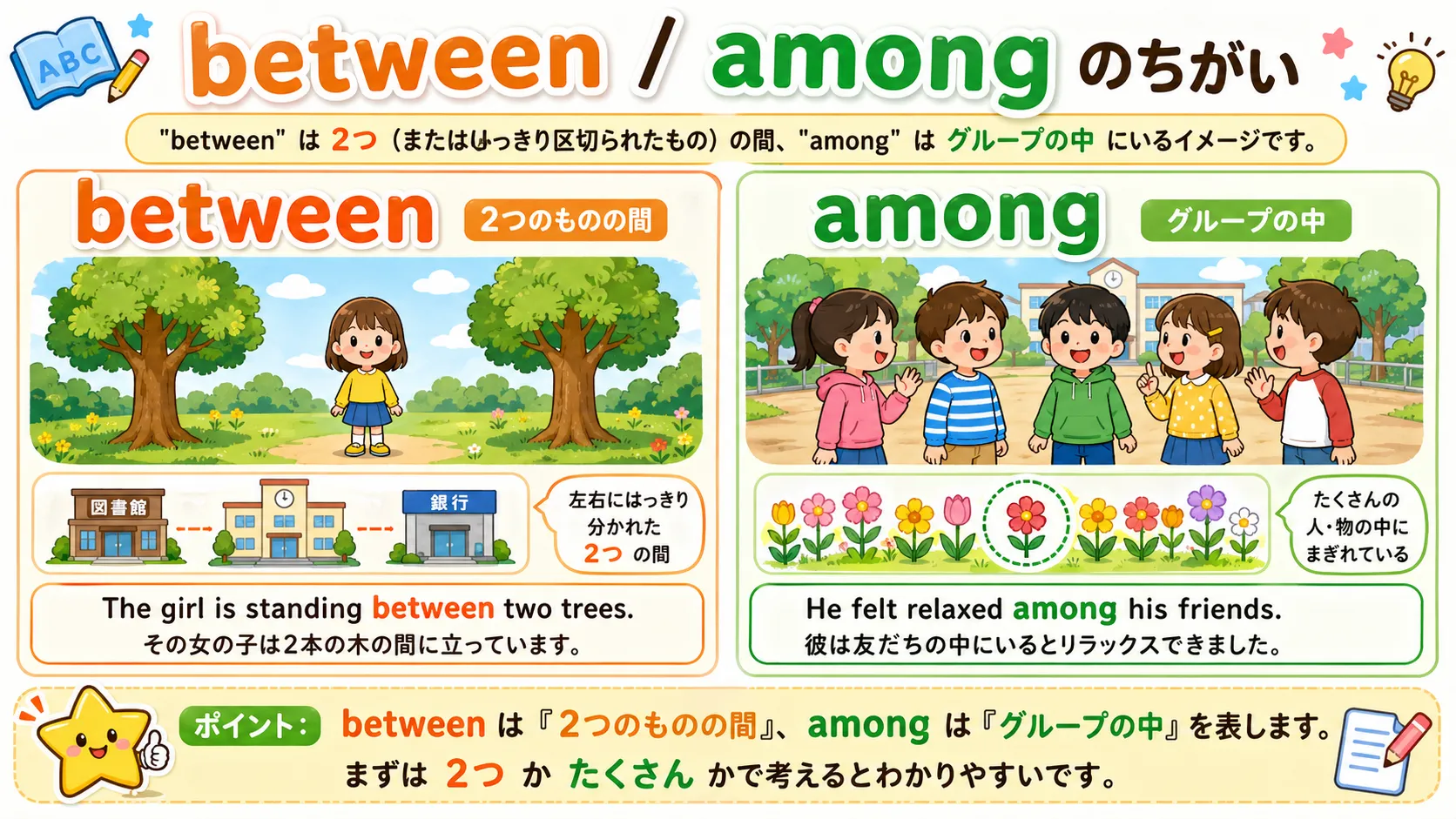
between と among は、どちらも「あいだ」「中に」と訳されることがあります😊
でも大切なのは、単純に「2つなら between、3つ以上なら among」と覚えることではありません。
between は、1つ1つが個別に見えているものの間、
among は、グループ全体の中にまぎれている感じ
と考えると、かなり自然に使い分けられます。
特に 3つ以上でも、A・B・Cのように個別に意識していれば between を使える点が重要です。
between は、2つの物・人・場所の間だけでなく、
3つ以上でも、それぞれを別々に意識している
ときに使えます。
between Tokyo, Nagoya, and Osaka のように、点と点を結ぶ関係にも向いています。
among は、1つ1つをはっきり区切るより、
たくさんの人・物の中にまぎれている
イメージです。
among the crowd は「人ごみの中に」、among friends は「友人たちの中で」という感じです。
choose between A and B や difference between A and B のように、
選択肢や違いを1つずつ比べる
ときは between がよく使われます。
選択肢が3つ以上でも、個別に並べて比べるなら between が使えます。
share among the members のように、グループ全体へ分けるときは
集団に行き渡る
感じが出るため among が自然です。
ただし、2人だけで分けるなら between the two people が自然です。
⚠️ よくあるミスと覚え方
Choose between tea, coffee, and juice. は自然です。3つありますが、tea / coffee / juice を個別の選択肢として見ています。
between は「2つだけ」と決めつけないようにしましょう。
She felt relaxed among her friends. が自然です。友人たちを1人ずつ線で結ぶより、 友人グループの中にいる 感じなので
among が合います。
📌 between / among の使い分け早見表
| 分類 | 代表語・代表表現 | 意味のイメージ | 使い分けポイント | ミニ例文 |
|---|---|---|---|---|
|
between
2つの間
|
between two buildings(2つの建物の間に)between the station and the bank(駅と銀行の間に)between you and me(ここだけの話で)between the doors(ドアとドアの間に)between both teams(両チームの間で)
|
2つの点・物・人の あいだにある イメージです。 |
AとBがはっきり見えているときに使います。 場所・関係・秘密の共有にも広がります。 |
The café is between the station and the bank.Keep this between you and me.
|
|
among
集団の中
|
among the crowd(人ごみの中に)among friends(友人たちの中で)among the students(生徒たちの中で)among the trees(木々の中に)among many people(多くの人々の中で)
|
たくさんの人・物の 集団の中にまぎれている イメージです。 | 1つ1つを区切るより、グループ全体の中にいる感じを出します。 |
She was standing among the crowd.He felt relaxed among friends.
|
|
between
3つ以上の個別選択
|
between tea, coffee, and juice(紅茶・コーヒー・ジュースの中から)between three options(3つの選択肢の間で)between Tokyo, Nagoya, and Osaka(東京・名古屋・大阪の間で)between the three candidates(3人の候補者の間で)between several dates(いくつかの日程の中で)
|
3つ以上でも、それぞれを 個別の選択肢 として見ています。 |
「3つ以上=必ず among」ではありません。 個別に比べるなら between が自然です。
|
Choose between tea, coffee, and juice.We discussed the route between three cities.
|
|
among
グループ内で
|
among the members(メンバーの中で)among the staff(スタッフの間で)among the children(子どもたちの中で)among local residents(地元住民の間で)among users(利用者の間で)
|
グループ全体の中で 広がっている・共有されている 感じです。 | 意見・人気・うわさ・感情などが集団内に広がる表現でよく使います。 |
The idea became popular among users.There was concern among the staff.
|
|
between
違い・比較
|
the difference between A and B(AとBの違い)compare between plans(プラン間で比べる)a choice between two courses(2つのコースの選択)a gap between levels(レベル間の差)a link between ideas(考え同士のつながり)
|
2つ以上のものを 並べて比べる イメージです。 |
違い・差・関係・比較は between が非常によく使われます。
|
What is the difference between these two words?There is a gap between the results.
|
|
among
分配・共有
|
share among the members(メンバー間で共有する)divide among the children(子どもたちに分ける)spread among the group(グループ内に広がる)distribute among the teams(チームに分配する)pass among the guests(客の間で回す)
|
物・情報・感情などが 集団の中に行き渡る イメージです。 |
2人だけなら between、集団全体なら among が自然です。
|
Share the files among the team members.The news spread among the students.
|
|
between
関係・交渉
|
between two companies(2社の間で)between the customer and the agent(お客様と担当者の間で)between parents and children(親子の間で)between countries(国同士の間で)between the teams(チーム間で)
|
個別の相手同士の 関係・やり取り を表します。 | 契約・交渉・連絡・信頼関係など、AとBの関係を言うときに便利です。 |
The agreement was made between the two companies.Trust is important between customers and agents.
|
|
among
人気・評価
|
popular among teenagers(10代に人気で)famous among fans(ファンの間で有名で)common among beginners(初心者によくある)well known among teachers(先生たちの間でよく知られている)highly rated among users(ユーザーの間で高評価で)
|
評価・人気・傾向が ある集団の中に広がっている 感じです。 | 「誰たちの間で人気?」のように、対象グループを示すときに便利です。 |
This app is popular among students.The mistake is common among beginners.
|
|
between
範囲・期間
|
between 9 and 5(9時から5時の間に)between Monday and Friday(月曜から金曜の間に)between 10 and 20 people(10人から20人の間で)between now and next week(今から来週までの間に)between the ages of 20 and 30(20歳から30歳の間で)
|
始まりと終わりの 2つの境界の間 を表します。 | 時間・数値・年齢など、範囲を示すときにも使えます。 |
Please call between 9 and 5.The course is for people between 20 and 30.
|
|
among
among others
|
among others(とりわけ / 他にもある中で)among other things(とりわけ / いろいろある中で)among the best(最高のものの1つで)among the top five(トップ5の中に)among the first(最初の人たちの中に)
|
いくつかある中の 1つ・一部 として表します。 | ランキング・評価・補足表現でよく使われます。 |
She is among the best players.The report mentions cost, among other things.
|
between two buildings(2つの建物の間に) / between the station and the bank(駅と銀行の間に)
between you and me(ここだけの話で) / between both teams(両チームの間で)
📌 AとBがはっきり見えているときは between。
among the crowd(人ごみの中に) / among friends(友人たちの中で)
among the students(生徒たちの中で) / among the trees(木々の中に)
📌 集団の中にまぎれている感じなら among。
between tea, coffee, and juice(紅茶・コーヒー・ジュースの中から)
between the three candidates(3人の候補者の間で) / between several dates(いくつかの日程の中で)
📌 数ではなく、選択肢を個別に見ているかがポイントです。
among the members(メンバーの中で) / among the staff(スタッフの間で)
among users(利用者の間で) / among local residents(地元住民の間で)
📌 意見・人気・うわさ・感情が集団に広がるときに便利です。
the difference between A and B(AとBの違い) / a gap between levels(レベル間の差)
a choice between two courses(2つのコースの選択) / a link between ideas(考え同士のつながり)
📌 比較・違い・関係を1つずつ見るなら between。
share among the members(メンバー間で共有する) / divide among the children(子どもたちに分ける)
spread among the group(グループ内に広がる) / distribute among the teams(チームに分配する)
📌 グループ全体へ分ける・広がるなら among。
between two companies(2社の間で) / between the customer and the agent(お客様と担当者の間で)
between countries(国同士の間で) / between the teams(チーム間で)
📌 個別の相手同士の関係・やり取りには between。
popular among teenagers(10代に人気で) / common among beginners(初心者によくある)
well known among teachers(先生たちの間でよく知られている) / among the best(最高のものの1つで)
📌 ある集団の中での人気・評価・傾向には among。
💬 例文で感覚をつかもう!
The small bakery is between the post office and the bank.
(その小さなパン屋は、郵便局と銀行の間にあります。)
🔧 between the post office and the bank は「郵便局」と「銀行」という2つの場所の間です。
✅ 2つの点がはっきり見えているので between が自然です。
💡 道案内では、between A and B の形がとてもよく使われます。
I found my friend among the crowd near the stage.
(ステージの近くの人ごみの中で、友人を見つけました。)
🔧 among the crowd は「人ごみの中にまぎれて」という意味です。
✅ 人を1人ずつ区切っているのではなく、集団全体の中にいる感じなので among が合います。
📌 コンサート・駅・イベント会場など、人が多い場面で使いやすい表現です。
We need to choose between Monday, Wednesday, and Friday for the next lesson.
(次のレッスンの日程を、月曜・水曜・金曜の中から選ぶ必要があります。)
🔧 月曜・水曜・金曜の3つがありますが、それぞれを個別の選択肢として比べています。
✅ そのため、3つ以上でも between が自然です。
⚠️ 「3つ以上なら必ず among」と覚えると、このような文で迷いやすくなります。
She felt comfortable among her new classmates.
(彼女は新しいクラスメートたちの中で心地よく感じました。)
🔧 among her new classmates は「新しいクラスメートたちの中で」という意味です。
✅ 1人ずつを比べるのではなく、クラスメートという集団の中にいる感覚です。
💡 安心・緊張・人気など、集団の中での状態には among がよく合います。
Can you explain the difference between these two phrases?
(この2つのフレーズの違いを説明してくれますか。)
🔧 the difference between ... は「〜の違い」という定番表現です。
✅ 2つの表現を並べて比べているので between が自然です。
📌 英語学習では、the difference between A and B をそのまま覚えておくと便利です。
This video is popular among young learners.
(この動画は若い学習者たちの間で人気があります。)
🔧 popular among young learners は「若い学習者たちの間で人気」という意味です。
✅ 人気・評価・傾向が、ある集団の中に広がっているときは among がよく使われます。
💡 popular with young learners も自然ですが、このセクションでは among の「集団内」の感覚を押さえましょう。
Clear communication between customers and support agents is important.
(お客様とサポート担当者の間の明確なコミュニケーションは重要です。)
🔧 between customers and support agents は「お客様」と「サポート担当者」という2つの立場の間です。
✅ 個別のグループ同士の関係を表すので between が自然です。
📌 communication between A and B は仕事でもよく使える表現です。
Please share the updated checklist among the team members.
(更新されたチェックリストをチームメンバー間で共有してください。)
🔧 among the team members は「チームメンバーたちの中で」という意味です。
✅ 情報をグループ全体に共有する感じなので among が合います。
💡 2人だけなら between the two members のように between が自然です。
The agreement was made between the two companies, and the news spread quickly among employees.
(その合意は2社の間で結ばれ、そのニュースは従業員の間にすぐ広まりました。)
🔧 between the two companies は「2社」という個別の相手同士の関係です。
✅ among employees は「従業員という集団の中に広がった」という意味です。
📌 同じ文の中で使い分けると、between と among の違いがはっきり見えます。
Her presentation was among the best in the class.
(彼女の発表はクラスの中で最も良いものの1つでした。)
🔧 among the best は「最高のものの中に入っている」=「最高レベルの1つ」という意味です。
✅ among は、ランキングや評価のグループの中に含まれる感じにも使えます。
💡 one of the best と近い意味で覚えるとわかりやすいです。
- ✅
betweenは、2つ以上のものを「個別に見て、その間・関係・違い」を表すときに使います。 - ✅
amongは、たくさんの人や物の「集団の中にいる・まぎれている・広がっている」感じを表します。 - ✅ 3つ以上でも、選択肢を1つずつ比べるなら
betweenが使えます。 - ✅ 人気・評価・共有・分配など、集団全体の中で起こることには
amongがよく合います。 - ⚠️ 迷ったら、点と点を結ぶなら
between、グループの中にまぎれるならamongと考えましょう。
between は「個別に見えるものの間」、
among は「集団の中」。
2つか3つ以上かだけで判断せず、1つ1つを個別に見ているのか、グループ全体の中にいるのかをクイズで確認してみよう 😊
8. near / by / beside の距離感の違い
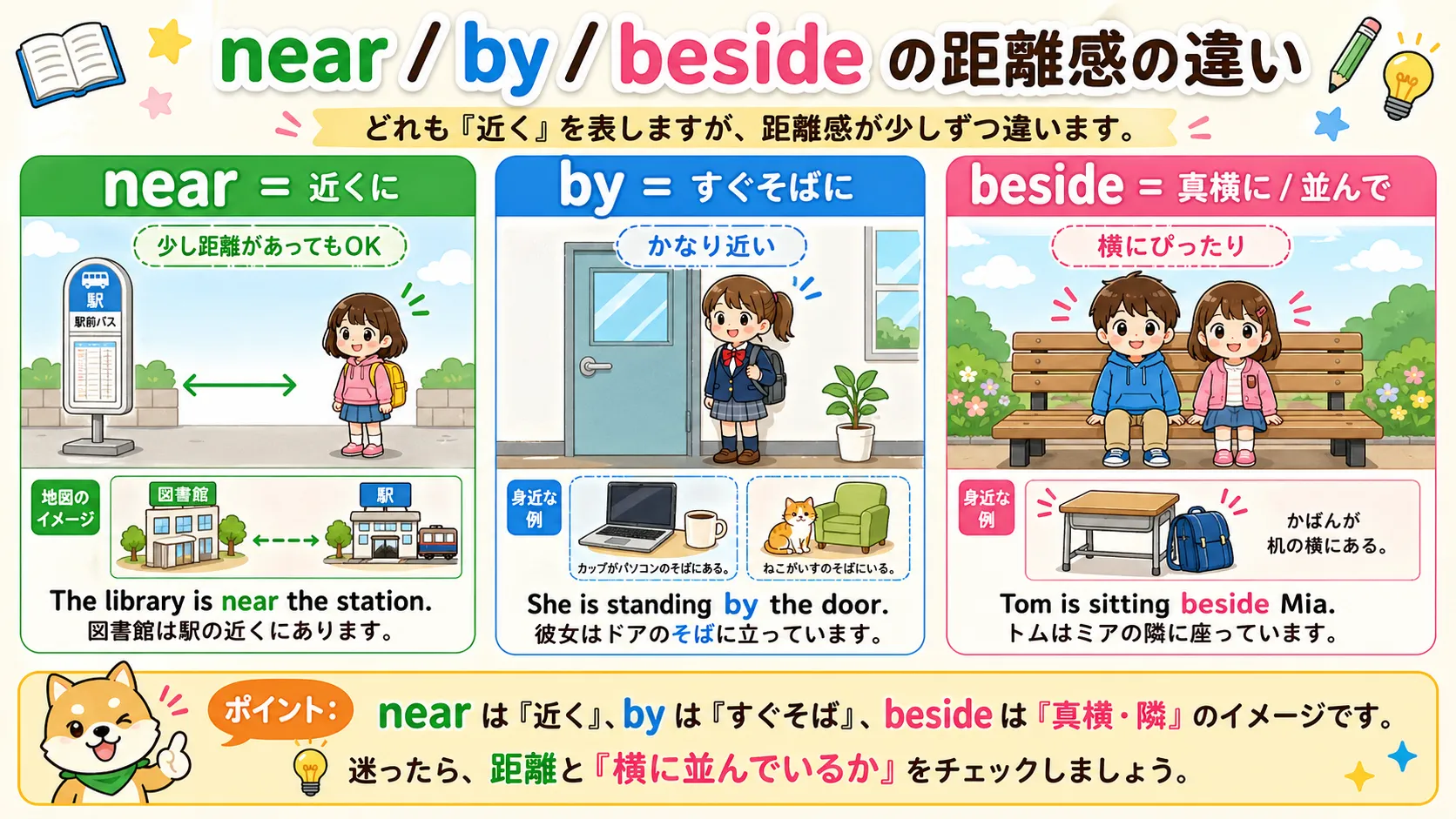
near / by / beside は、どれも「近くに」と訳されることがあります😊
でも、実際には距離感が少し違います。
near は少し離れていても近い、
by はすぐそば・近接、
beside はすぐ横に並ぶ
と考えると、かなり使い分けやすくなります。
迷ったら、「近いだけ?」 「すぐそば?」 「横に並んでいる?」 の3つで判断しましょう。
near は、対象から
少し距離があっても近い
と感じるときに使います。
駅・学校・公園・会社など、ざっくりした位置説明に向いています。
by は、対象の
すぐ近く・そば
にいる感じです。
by the window(窓辺に)、by the door(ドアのそばに)のように使います。
beside は、人や物の
真横・隣
にあるイメージです。
sit beside me は「私の横に座る」で、横並びの感じが強く出ます。
⚠️ よくあるミスと覚え方
near を「ぴったり隣」と思い込む
The hotel is near the station. は「駅の近く」です。駅の目の前とは限らず、 歩ける距離・近いエリア くらいの感覚でも使えます。
「ぴったり横」なら
beside の方が合います。
by と beside を完全に同じにする
Stand by the door. は「ドアのそばに立って」。✅
Sit beside me. は「私の横に座って」。by はそば、
beside は横並び
と考えましょう。
near → by → beside と具体的になります✨
📌 near / by / beside の距離感早見表
| 分類 | 代表語・代表表現 | 意味のイメージ | 使い分けポイント | ミニ例文 |
|---|---|---|---|---|
|
near
近くのエリア
|
near the station(駅の近くに)near the school(学校の近くに)near the park(公園の近くに)near my office(私の職場の近くに)near the airport(空港の近くに)
|
少し距離があっても 近いと感じる範囲 を表します。 |
ざっくり「近く」。 すぐ横・目の前とは限りません。 |
My apartment is near the station.There is a park near the school.
|
|
by
すぐそば
|
by the window(窓辺に)by the door(ドアのそばに)by the river(川のそばに)by the entrance(入口のそばに)by the phone(電話のそばに)
|
対象の すぐ近く・そば にあるイメージです。 |
near より近い感じ。そばに立つ・置く・待つ場面で自然です。 |
She stood by the window.Leave your bag by the door.
|
|
beside
すぐ横
|
beside me(私の横に)beside the bed(ベッドの横に)beside the sofa(ソファの横に)beside the teacher(先生の横に)beside the table(テーブルの横に)
|
対象の 真横・隣に並ぶ イメージです。 |
横並び・隣接感が強い表現。 人の隣に座る・物の横に置くときに便利です。 |
Sit beside me.The lamp is beside the bed.
|
|
near
生活圏の近さ
|
near home(家の近くに)near work(職場の近くに)near campus(キャンパスの近くに)near downtown(中心街の近くに)near the shopping mall(ショッピングモールの近くに)
|
日常的に行きやすい 近いエリア・生活範囲 を表します。 | 「徒歩圏内」「車ですぐ」など、広めの近さにも使えます。 |
I found a café near work.They live near downtown.
|
|
by
通り過ぎる
|
walk by the river(川のそばを歩く)drive by the school(学校のそばを車で通る)pass by the store(店のそばを通る)go by the station(駅のそばを通る)run by the playground(遊び場のそばを走る)
|
対象の そばを通る・通り過ぎる 感じです。 |
by は位置だけでなく、「そばを通過する」動きにも使えます。
|
We walked by the river.I passed by the store.
|
|
beside
横並びの人
|
sit beside a friend(友人の横に座る)stand beside the guide(ガイドの横に立つ)walk beside my sister(姉妹の横を歩く)sleep beside the baby(赤ちゃんの横で寝る)wait beside the driver(運転手の横で待つ)
|
人と人が 横に並んでいる イメージです。 |
near より近く、by より「横」の向きがはっきりします。
|
She sat beside her friend.He walked beside his sister.
|
|
near
出来事・時間が近い
|
near the end(終わり近くに)near the beginning(始まり近くに)near midnight(真夜中近くに)near the deadline(締切近くに)near the exam date(試験日近くに)
|
場所だけでなく、時間・出来事が 近づいている 感じも表せます。 |
near は空間にも時間にも使えます。「もうすぐ」の感覚です。 |
We finished near midnight.The shop was busy near the deadline.
|
|
by
待つ・置く場所
|
wait by the gate(門のそばで待つ)stand by the elevator(エレベーターのそばに立つ)keep it by your side(それを手元に置く)put the chair by the desk(椅子を机のそばに置く)leave the package by the door(荷物をドアのそばに置く)
|
すぐ使える・すぐ見つかるように そばに置く・いる 感じです。 | 入口・ドア・窓・机など、目印のすぐ近くにいるときに便利です。 |
Please wait by the gate.Put the chair by the desk.
|
|
beside
物の横
|
beside the bed(ベッドの横に)beside the sofa(ソファの横に)beside the sink(流しの横に)beside the computer(パソコンの横に)beside the bookshelf(本棚の横に)
|
物と物が 横に並ぶ・隣接する イメージです。 | 「横に置く」「横にある」をはっきり言いたいときに使います。 |
The nightstand is beside the bed.The trash can is beside the sink.
|
|
比較
距離感まとめ
|
near the door(ドアの近くに)by the door(ドアのすぐそばに)beside the door(ドアの横に)near me(私の近くに)beside me(私の横に)
|
near は広め、 by はすぐそば、 beside は横 です。 | 迷ったら、位置の正確さをどこまで言いたいかで選びます。 |
Stand near the door.Stand by the door.Stand beside the door.
|
near the station(駅の近くに) / near the school(学校の近くに)
near my office(私の職場の近くに) / near the airport(空港の近くに)
📌 少し離れていても「近い」と感じる範囲なら near。
by the window(窓辺に) / by the door(ドアのそばに)
by the river(川のそばに) / by the entrance(入口のそばに)
📌 near より近く、「すぐそば」の感じです。
beside me(私の横に) / beside the bed(ベッドの横に)
beside the sofa(ソファの横に) / beside the teacher(先生の横に)
📌 横並び・隣にある感じをはっきり出すなら beside。
near home(家の近くに) / near work(職場の近くに)
near midnight(真夜中近くに) / near the deadline(締切近くに)
📌 場所だけでなく、時間が近いときにも near が使えます。
walk by the river(川のそばを歩く) / pass by the store(店のそばを通る)
drive by the school(学校のそばを車で通る) / go by the station(駅のそばを通る)
📌 by は「そばにいる」だけでなく「そばを通る」動きにも使えます。
sit beside a friend(友人の横に座る) / stand beside the guide(ガイドの横に立つ)
walk beside my sister(姉妹の横を歩く) / sleep beside the baby(赤ちゃんの横で寝る)
📌 横並びの人間関係には beside がとても自然です。
wait by the gate(門のそばで待つ) / stand by the elevator(エレベーターのそばに立つ)
put the chair by the desk(椅子を机のそばに置く) / leave the package by the door(荷物をドアのそばに置く)
📌 目印のすぐそばにいる・置くなら by。
near the door(ドアの近くに) / by the door(ドアのすぐそばに) / beside the door(ドアの横に)
near me(私の近くに) / beside me(私の横に)
📌 広めの近さなら near、すぐそばなら by、横なら beside。
💬 例文で感覚をつかもう!
There is a quiet coffee shop near the station.
(駅の近くに静かなコーヒーショップがあります。)
🔧 near the station は「駅の近くに」という意味です。
✅ 駅のすぐ隣とは限らず、歩いて行ける近いエリアくらいの感覚でも使えます。
💡 ざっくり場所を説明するときは near がとても便利です。
Please put the extra chairs by the window.
(予備の椅子は窓のそばに置いてください。)
🔧 by the window は「窓のすぐそばに」という意味です。
✅ by は、目印になるもののすぐ近くに置く・立つ・待つときに自然です。
📌 near the window でも言えますが、by の方が距離が近い感じになります。
My younger brother sat beside me during the movie.
(映画の間、弟は私の横に座っていました。)
🔧 beside me は「私のすぐ横に」という意味です。
✅ beside は、横に並ぶ位置関係をはっきり表します。
💡 near me だと「私の近く」なので、横に座ったとは限りません。
They moved to an apartment near their children’s school.
(彼らは子どもたちの学校の近くのアパートに引っ越しました。)
🔧 near their children’s school は「子どもたちの学校の近くに」という意味です。
✅ 家・学校・職場など生活圏の近さを言うとき、near は自然です。
📌 「学校の真横」ではなく、「通いやすい近さ」という広めの距離感です。
We walked by the river after dinner.
(夕食後、私たちは川のそばを歩きました。)
🔧 by the river は「川のそばを」という意味です。
✅ by は「すぐそばにいる」だけでなく、「そばを通る・そばを歩く」動きにも使えます。
💡 near the river は「川の近く」で、川沿いを歩いた感じは by the river の方が出やすいです。
The small lamp is beside the bed.
(小さなランプはベッドの横にあります。)
🔧 beside the bed は「ベッドのすぐ横に」という意味です。
✅ 家具や物の横にあることをはっきり言いたいときは beside が便利です。
📌 by the bed でも近い意味になりますが、beside の方が「横並び」が強くなります。
The hotel is near the lake, and there are benches by the water.
(そのホテルは湖の近くにあり、水辺のそばにはベンチがあります。)
🔧 near the lake は「湖の近くに」という広めの近さです。
✅ by the water は「水辺のすぐそばに」という近い距離感です。
💡 near はエリア、by はそば、と分けると理解しやすいです。
I’ll wait by the main entrance at six.
(6時に正面入口のそばで待っています。)
🔧 by the main entrance は「正面入口のすぐそばで」という意味です。
✅ 待ち合わせでは、目印のそばにいることを示す by が自然です。
📌 near the main entrance だと、入口から少し離れた場所も含められます。
The nurse walked beside the patient to support him.
(看護師は患者を支えるために、患者の横を歩きました。)
🔧 beside the patient は「患者の横に並んで」という意味です。
✅ walk beside ... は、相手の横を一緒に歩くイメージがはっきり出ます。
💡 near the patient だと、横に並んでいるとは限りません。
Our seats were near the stage, my bag was by my feet, and my friend sat beside me.
(私たちの席はステージの近くで、バッグは足元のそばにあり、友人は私の横に座っていました。)
🔧 near the stage は「ステージの近く」という広めの近さです。
✅ by my feet は「足元のすぐそば」、beside me は「私の横」です。
📌 1文で比べると、near → by → beside の距離感の違いが見えやすくなります。
- ✅
nearは「近くに」。少し離れていても、近いエリアなら使えます。 - ✅
byは「すぐそばに」。窓・ドア・川・入口など、目印のすぐ近くを表します。 - ✅
besideは「すぐ横に」。人や物が横に並んでいる感じをはっきり出します。 - ✅
byは「そばを通る」という動きにも使えます。例:walk by the river - ⚠️ 迷ったら、広めの近さなら
near、目印のそばならby、横並びならbesideと整理しましょう。
near は「近くのエリア」、
by は「すぐそば」、
beside は「すぐ横」。
近いだけなのか、目印のそばなのか、横に並んでいるのかをクイズで確認してみよう 😊
9. round / around / about の使い分け
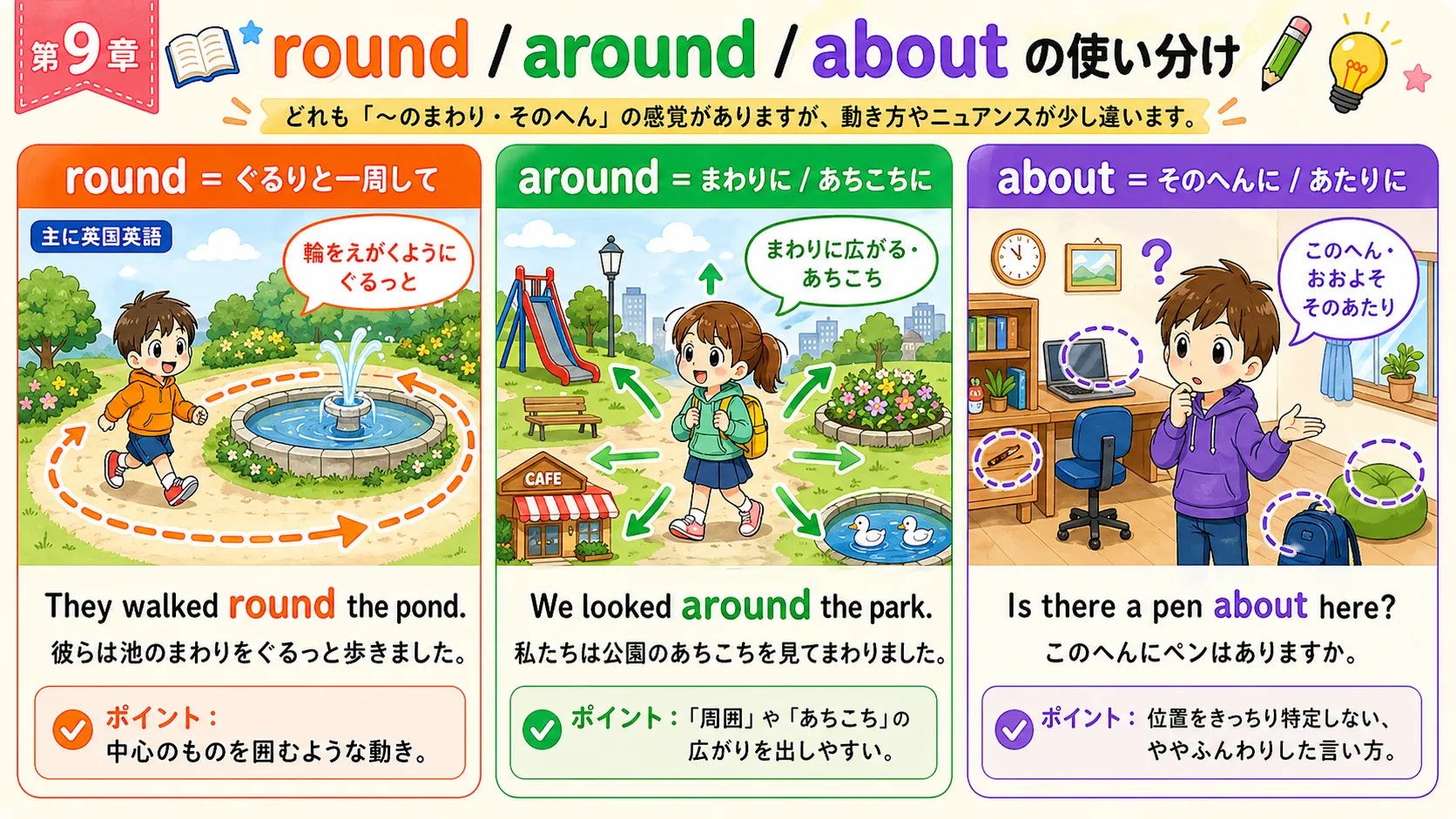
round / around / about は、どれも「まわり」「あたり」という意味に関係します😊
ただし、使う場面や響きが少し違います。
round は、ぐるりと回る・囲む感覚、
around は、まわり・あちこち・だいたい、
about は、このあたり・散らばって・およそ
と考えると整理しやすくなります。
特に round は英国英語寄り、around は米国英語で特によく使われる という違いも押さえておきましょう。
round は、何かの
周囲をぐるっと回る・囲む
感覚です。
英国英語でよく使われ、go round the corner や sit round the table のように出ます。
around は、場所のまわり・周辺・あちこちを表す
日常で使いやすい表現
です。
米国英語では、round の意味でも around を使うことが多いです。
about は、場所がぴったり決まらない
このへん・あたり
の感覚です。
場所ではやや英国英語・書き言葉寄りになることもあり、日常では around here の方が自然な場面も多いです。
⚠️ よくあるミスと覚え方
round と around を完全に別物だと思う
walk round the park は主に英国英語。✅
walk around the park は米国英語でも広く自然です。意味が重なる場面もありますが、
round はぐるり感、
around は広く日常的
と押さえましょう。
about を場所でいつも使う
Is there a restroom around here? は日常会話でかなり自然です。✅
somewhere about here は「このあたりのどこか」という少しゆるい感じです。about は少しぼんやり
した響きがあるため、まずは around here を基本にすると安心です。
round、日常の広い「まわり」なら around、ぼんやりした「あたり」なら about です✨
📌 round / around / about の使い分け早見表
| 分類 | 代表語・代表表現 | 意味のイメージ | 使い分けポイント | ミニ例文 |
|---|---|---|---|---|
|
round
ぐるりと回る
|
walk round the lake(湖の周りを歩く)run round the track(トラックをぐるりと走る)go round the corner(角を曲がって回り込む)drive round the town(町をぐるっと車で回る)turn round(振り向く / 回転する)
|
何かの周囲を 円を描くように回る イメージです。 |
主に英国英語でよく使われます。 米国英語では around が使われやすいです。
|
We walked round the lake.Turn round and look at the sign.
|
|
around
まわりを回る
|
walk around the park(公園の周りを歩く)travel around Japan(日本をあちこち旅する)look around the room(部屋を見回す)move around the office(オフィス内を動き回る)drive around the city(街を車で回る)
|
周囲・周辺・あちこちを 広く動き回る イメージです。 |
日常会話で非常に使いやすい表現。 米国英語では round より一般的です。
|
We walked around the park.She looked around the room.
|
|
about
このあたり
|
somewhere about here(このあたりのどこかに)about the room(部屋のあちこちに)about the house(家の中や周辺に)about the town(町のあちこちに)about here(このへんに)
|
場所がぴったり決まらない このへん・あたり の感覚です。 |
場所の意味では、やや英国英語・書き言葉寄りに聞こえることがあります。 日常では around here も便利です。
|
I think the key is somewhere about here.There were papers about the room.
|
|
round
囲む・集まる
|
sit round the table(テーブルを囲んで座る)stand round the fire(火を囲んで立つ)gather round the screen(画面の周りに集まる)put a fence round the garden(庭の周りに柵を立てる)wrap a scarf round your neck(首にマフラーを巻く)
|
中心を 囲む・取り巻く イメージです。 |
英国英語では自然。 米国英語では around を使うことが多いです。
|
They sat round the table.She wrapped a scarf round her neck.
|
|
around
周辺にある
|
around the station(駅周辺に)around the school(学校の周りに)around the house(家の周りに)around the office(オフィス周辺に / オフィス内のあちこちに)around the neighborhood(近所のあたりに)
|
中心の近くに広がる 周辺エリア を表します。 |
場所をざっくり言うときに便利。near より「周囲に広がる」感じが出ます。
|
There are many shops around the station.We looked around the neighborhood.
|
|
about
散らばって
|
papers about the room(部屋中に散らばった書類)toys about the floor(床のあちこちのおもちゃ)clothes about the room(部屋のあちこちの服)tools about the garage(ガレージ内のあちこちの工具)books about the house(家のあちこちの本)
|
1か所ではなく あちこちに散らばっている 感じです。 |
around に近いですが、やや書き言葉・英国英語寄りに感じることがあります。
|
There were toys about the floor.Books lay about the house.
|
|
around
だいたい
|
around ten minutes(10分くらい)around 5 p.m.(午後5時ごろ)around thirty people(30人くらい)around one hundred dollars(100ドルくらい)around the same size(だいたい同じ大きさ)
|
数字・時間が ぴったりではなく、およそ という意味です。 |
日常会話でとてもよく使います。about と近い意味です。
|
It takes around ten minutes.We need around thirty chairs.
|
|
about
およそ
|
about ten minutes(10分くらい)about 5 p.m.(午後5時ごろ)about thirty people(30人くらい)about one hundred dollars(100ドルくらい)about the same size(だいたい同じ大きさ)
|
数字・時間・量が およそ・約 であることを表します。 |
around とかなり近い意味。どちらも日常で使えます。 |
The meeting lasted about an hour.There were about twenty guests.
|
|
around
あちこち探す
|
look around(見回す / 見て回る)search around the room(部屋のあちこちを探す)ask around(あちこち聞いて回る)shop around(いろいろ見て回る)hang around(ぶらぶらする)
|
1点ではなく 周辺を広く動く 感じです。 | 動詞と組み合わせると、日常会話でとても使いやすい表現になります。 |
Look around before you decide.I asked around, but no one knew.
|
|
比較
英米差・使いやすさ
|
round the corner(角を曲がったところに / 英国英語寄り)around the corner(角を曲がったところに / 広く自然)round the table(テーブルを囲んで / 英国英語寄り)around the table(テーブルを囲んで / 広く自然)about here(このあたりに / ややゆるい)
|
round は英国英語寄り、 around は広く使いやすい、 about はぼんやり です。 |
迷ったら、日常会話では around を基本にすると安全です。英国英語らしい響きなら round も使えます。
|
The café is around the corner.The key is somewhere about here.
|
walk round the lake(湖の周りを歩く) / go round the corner(角を曲がって回り込む)
run round the track(トラックをぐるりと走る) / turn round(振り向く / 回転する)
📌 主に英国英語でよく使われます。円を描くような「ぐるり感」がポイントです。
walk around the park(公園の周りを歩く) / look around the room(部屋を見回す)
travel around Japan(日本をあちこち旅する) / move around the office(オフィス内を動き回る)
📌 日常会話で使いやすく、米国英語では round よりよく使われます。
somewhere about here(このあたりのどこかに) / about here(このへんに)
about the room(部屋のあちこちに) / about the house(家の中や周辺に)
📌 場所では少しゆるい響き。日常では around here もよく使います。
sit round the table(テーブルを囲んで座る) / stand round the fire(火を囲んで立つ)
put a fence round the garden(庭の周りに柵を立てる) / wrap a scarf round your neck(首にマフラーを巻く)
📌 中心を囲む感じ。米国英語では around もよく使われます。
around the station(駅周辺に) / around the school(学校の周りに)
around the office(オフィス周辺に / オフィス内のあちこちに) / around the neighborhood(近所のあたりに)
📌 中心の近くに広がるエリアを表します。
papers about the room(部屋中に散らばった書類) / toys about the floor(床のあちこちのおもちゃ)
tools about the garage(ガレージ内のあちこちの工具) / books about the house(家のあちこちの本)
📌 1か所ではなく、あちこちに散らばっている感じです。
around ten minutes(10分くらい) / around 5 p.m.(午後5時ごろ)
around thirty people(30人くらい) / around one hundred dollars(100ドルくらい)
📌 数字・時間がぴったりではなく「およそ」の意味になります。
about ten minutes(10分くらい) / about 5 p.m.(午後5時ごろ)
about thirty people(30人くらい) / about the same size(だいたい同じ大きさ)
📌 around とかなり近い意味で、日常的に使えます。
💬 例文で感覚をつかもう!
We walked round the old castle before lunch.
(昼食前に、私たちは古い城の周りをぐるりと歩きました。)
🔧 round the old castle は「古い城の周りをぐるりと」という意味です。
✅ round は、対象の周囲を円を描くように回るイメージが強いです。
💡 主に英国英語でよく使われ、米国英語では around the old castle の方が一般的です。
There are several convenience stores around the station.
(駅の周辺にはコンビニがいくつかあります。)
🔧 around the station は「駅の周辺に」という意味です。
✅ around は、中心となる場所のまわりに広がるエリアを表すのに便利です。
📌 駅のすぐ隣だけでなく、駅の近くのエリア全体をふわっと含められます。
I think the lost ticket is somewhere about here.
(なくしたチケットは、このあたりのどこかにあると思います。)
🔧 somewhere about here は「このあたりのどこかに」という意味です。
✅ about は、場所がぴったり決まっていない「このへん」の感覚を出せます。
💡 日常会話では somewhere around here もとても自然です。
Let’s look around the store before we decide.
(決める前に、店内を見て回りましょう。)
🔧 look around the store は「店の中をあちこち見て回る」という意味です。
✅ around は、1か所ではなく周辺・内部を広く動くイメージがあります。
📌 買い物・観光・部屋探しなどで、look around は非常によく使います。
The children sat round the small table and shared snacks.
(子どもたちは小さなテーブルを囲んで座り、おやつを分け合いました。)
🔧 round the small table は「小さなテーブルを囲んで」という意味です。
✅ round は、中心を取り囲むイメージにも使えます。
💡 米国英語なら around the small table の方が自然に聞こえることが多いです。
There were documents lying about the meeting room.
(会議室のあちこちに書類が置きっぱなしになっていました。)
🔧 about the meeting room は「会議室のあちこちに」という意味です。
✅ about は、物が1か所ではなく散らばっている感じを表すことがあります。
📌 日常会話では around the meeting room もよく使えますが、about は少し文章的な響きです。
The tour takes around two hours, and the museum is about ten minutes from here.
(ツアーは約2時間かかり、博物館はここから約10分です。)
🔧 around two hours と about ten minutes は、どちらも「およそ・約」という意味です。
✅ 数字や時間では、around と about はかなり近い意味で使えます。
💡 厳密な数字ではなく、だいたいの目安を伝えるときに便利です。
Is there a restroom around here?
(このあたりにトイレはありますか。)
🔧 around here は「このあたりに」という意味です。
✅ 道案内・旅行・外出先でとてもよく使う自然な表現です。
📌 about here も意味は近いですが、会話では around here をまず覚えると使いやすいです。
The café is just round the corner, or in American English, just around the corner.
(そのカフェは角を曲がってすぐのところにあります。米国英語では around the corner と言うのが一般的です。)
🔧 round the corner と around the corner は、どちらも「角を曲がってすぐ」の意味で使えます。
✅ round は英国英語寄り、around は米国英語で特によく使われます。
💡 学習者は、まず around the corner を基本表現として覚えると安心です。
People were walking around the hall, and brochures were lying about the tables.
(人々はホールの中を歩き回っていて、パンフレットはテーブルのあちこちに置かれていました。)
🔧 walking around the hall は「ホール内を歩き回る」という動きです。
✅ lying about the tables は「テーブルのあちこちに置かれている」という散らばりの描写です。
📌 around は動き回る感じ、about は散らばっている感じを出しやすいです。
- ✅
roundは「ぐるりと回る・囲む」イメージ。主に英国英語でよく使われます。 - ✅
aroundは「まわり・周辺・あちこち」。日常会話でとても使いやすく、米国英語では特に一般的です。 - ✅
aboutは「このあたり・散らばって・およそ」。場所では少しゆるく、書き言葉寄りに聞こえることもあります。 - ✅ 数字・時間では
aroundとaboutはどちらも「およそ・約」の意味で使えます。 - ⚠️ 迷ったら、日常会話では
aroundを基本にし、英国英語らしい「ぐるり」ならround、ぼんやりした「あたり」や「約」ならaboutと整理しましょう。
round は「ぐるりと回る・囲む」、
around は「まわり・あちこち・およそ」、
about は「このあたり・散らばって・およそ」。
英米差や距離感・ぼんやり感の違いを、クイズで確認してみよう 😊
総まとめ:場所を表す前置詞マップ
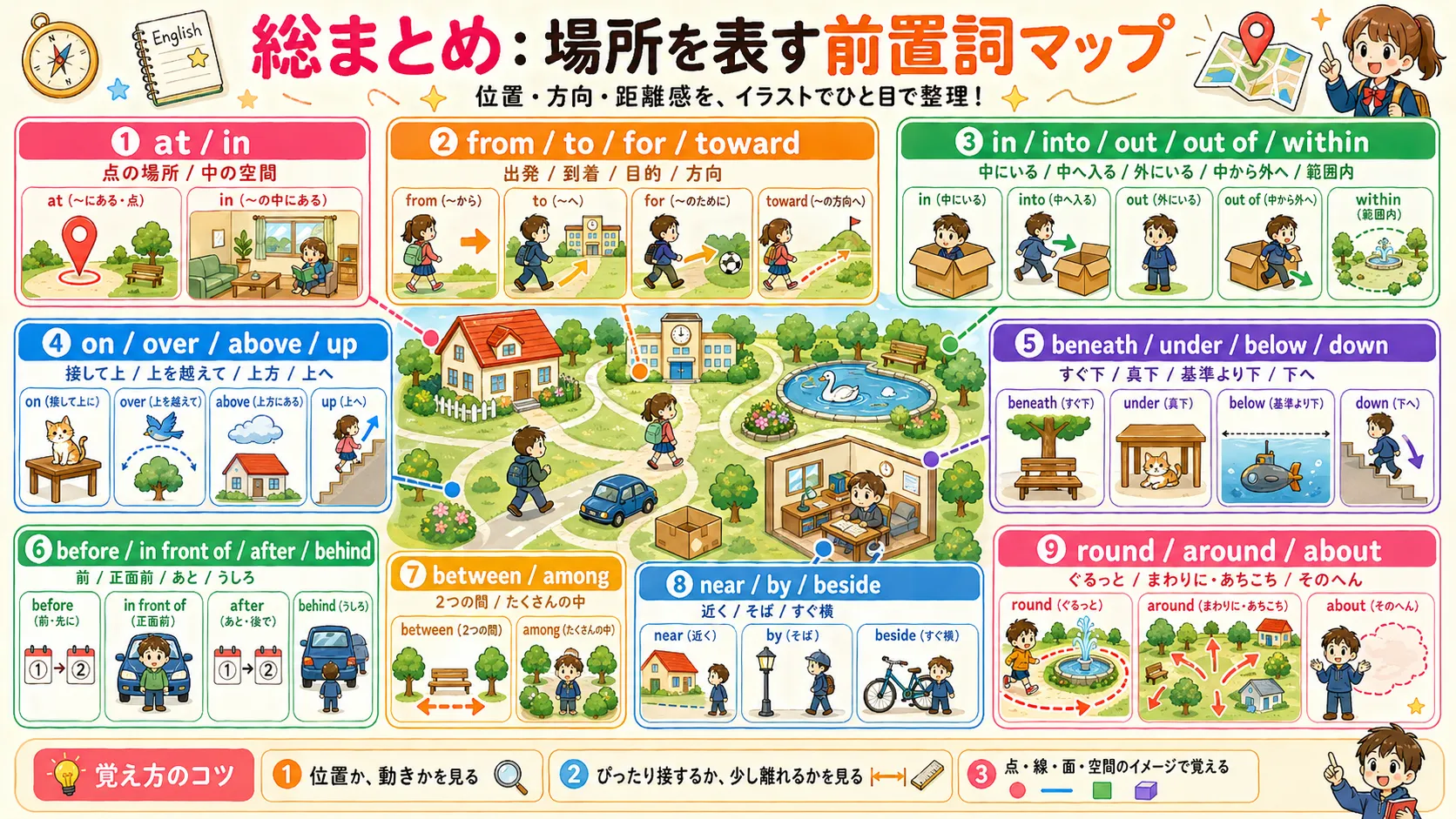
場所を表す前置詞は、1つずつ暗記するよりも、
場所の見方
でまとめると一気に整理しやすくなります😊
たとえば、at は点、
in は中、
on は接触、
between は個別の間
のように、前置詞にはそれぞれ「見ているポイント」があります。
この総まとめでは、これまで学んだ前置詞を
点・空間・方向・上下・前後・距離・周辺
のマップとして確認します。
at はピンで刺すような
一点、
in は空間の
中、
on は表面への
接触
です。
from は出発点、
to は到着点、
toward はその方向、
into は中へ、
out of は外へ、という
矢印の向き
で考えます。
above / below は
基準より上・下、
in front of / behind は
正面・うしろ側
として整理します。
⚠️ 迷いやすいポイントと覚え方
✅
at the station(駅という一点)✅
in the room(部屋の中)✅
on the desk(机の表面に接触)日本語訳ではなく、イメージで選ぶ のがコツです。
near は広めの近さ、by はすぐそば、beside は横並びです。「上」でも、
on は接触、over は上を覆う・越える、above は基準より上です。同じ日本語でも、英語では見ている角度が違う と覚えましょう。
📌 場所を表す前置詞マップ早見表
| 分類 | 代表語・代表表現 | 中心イメージ | 判断ポイント | ミニ例文 |
|---|---|---|---|---|
|
点・空間
at / in
|
at the station(駅に)at the entrance(入口に)at the reception desk(受付で)in the room(部屋の中に)in Tokyo(東京に)in the box(箱の中に)
|
at は
一点、
in は
空間の中
です。
|
ピンで場所を指すなら at。中に入っているなら in。
|
Meet me at the station.She is in the room.
|
|
方向
from / to / toward
|
from Osaka(大阪から)from the station(駅から)to the office(会社へ)to the airport(空港へ)toward the river(川の方へ)toward the exit(出口の方へ)
|
from は出発点、
to は到着点、
toward は
方向
です。
|
到着まで含むなら to。その方向だけなら toward。
|
He came from Osaka.Walk toward the river.
|
|
目的
for
|
leave for Paris(パリへ出発する)head for the station(駅へ向かう)wait for the bus(バスを待つ)a gift for you(あなたへの贈り物)for the meeting(会議のために)for safety(安全のために)
|
for は、行き先そのものより
目的・ねらい
を表します。
|
「〜へ向けて」「〜のために」の目的感があるかを見る。 |
We left for Paris.This gift is for you.
|
|
中・外
in / into / out / out of / within
|
in the room(部屋の中に)go into the room(部屋の中へ入る)stay out(外にいる)get out of the car(車から出る)within five minutes(5分以内に)within the area(その区域内で)
|
in は中の状態、
into は中への動き、
out of は
中から外へ
です。
|
状態なら in。動いて入るなら into。外へ出るなら out of。
|
She went into the room.He got out of the car.
|
|
上
on / over / above / up
|
on the table(テーブルの上に)on the wall(壁に)over the bridge(橋の上を越えて)over my head(頭上に)above the line(線より上に)go up the stairs(階段を上る)
|
on は接触、
over は上を覆う・越える、
above は
基準より上、
up は上方向です。
|
くっついているか、離れて上か、基準より上か、動いて上かを見る。 |
The keys are on the table.She went up the stairs.
|
|
下
beneath / under / below / down
|
beneath the tree(木の下に)under the table(テーブルの下に)under the umbrella(傘の下に)below the line(線より下に)below zero(0度未満で)go down the stairs(階段を下りる)
|
under は真下、
below は
基準より下、
down は下方向です。
|
真下なら under。数値・基準より下なら below。下へ動くなら down。
|
The bag is under the desk.Walk down the stairs.
|
|
前後
before / in front of / after / behind
|
before the audience(聴衆の前で)before lunch(昼食前に)in front of the station(駅の前で)after the guide(ガイドの後について)after work(仕事の後で)behind the door(ドアの後ろに)
|
in front of は正面、
behind はうしろ側、
before / after は
順番の前後
にも使えます。
|
物理的な位置なら in front of / behind。順番・時間なら before / after。
|
Wait in front of the station.The cat is behind the door.
|
|
間・集団
between / among
|
between two buildings(2つの建物の間に)between A and B(AとBの間で)between three options(3つの選択肢の間で)among the crowd(人ごみの中に)among friends(友人たちの中で)popular among students(学生の間で人気で)
|
between は
個別に見える間、
among は集団の中です。
|
数よりも「見方」が大事。 個別に比べるなら3つ以上でも between。
|
Choose between tea and coffee.She was among friends.
|
|
距離感
near / by / beside
|
near the station(駅の近くに)near my office(職場の近くに)by the window(窓のそばに)by the door(ドアのそばに)beside me(私の横に)beside the bed(ベッドの横に)
|
near は近いエリア、
by はすぐそば、
beside は
すぐ横
です。
|
広めの近さなら near。目印のそばなら by。横並びなら beside。
|
Sit beside me.Wait by the door.
|
|
周辺
round / around / about
|
round the corner(角を曲がったところに)round the table(テーブルを囲んで)around the station(駅周辺に)look around the room(部屋を見回す)somewhere about here(このあたりのどこかに)about ten minutes(約10分)
|
round はぐるり、
around はまわり・あちこち、
about は
このあたり・およそ
です。
|
日常会話では around が使いやすい。英国英語寄りの「ぐるり」は round。
|
Look around the room.It takes about ten minutes.
|
|
最終判断
迷ったとき
|
at(点)in(中)on(接触)to(到着点)toward(方向)above / below(基準より上 / 下)behind(うしろ側)around(まわり)
|
前置詞は、訳語よりも どんな位置関係を見ているか で選びます。 | 「点・中・面・方向・基準・距離・集団」のどれかを先に決める。 |
Think of the image first.Then choose the preposition.
|
at the station(駅に) / at the entrance(入口に)
in the room(部屋の中に) / in Tokyo(東京に)
📌 点なら at、空間の中なら in。
from Osaka(大阪から) / to the office(会社へ)
for Paris(パリへ向けて) / toward the exit(出口の方へ)
📌 出発点は from、到着点は to、目的は for、方向は toward。
in the room(部屋の中に) / go into the room(部屋の中へ入る)
get out of the car(車から出る) / within five minutes(5分以内に)
📌 状態なら in、中へ動くなら into、外へ出るなら out of。
on the table(テーブルの上に) / over the bridge(橋の上を越えて)
above the line(線より上に) / under the desk(机の下に) / below zero(0度未満で)
📌 接触は on、真下は under、基準の上下は above / below。
go up the stairs(階段を上る) / go down the stairs(階段を下りる)
walk into the room(部屋へ入る) / get out of the car(車から出る)
📌 動きの向きを見れば、選ぶ前置詞がかなり決まりやすくなります。
in front of the station(駅の前で) / behind the door(ドアの後ろに)
before lunch(昼食前に) / after work(仕事の後で)
📌 位置の前後なら in front of / behind、順番の前後なら before / after。
between two buildings(2つの建物の間に) / between three options(3つの選択肢の間で)
among the crowd(人ごみの中に) / among friends(友人たちの中で)
📌 個別に見える間なら between、集団の中なら among。
near the station(駅の近くに) / by the window(窓のそばに)
beside me(私の横に) / beside the bed(ベッドの横に)
📌 広めの近さは near、すぐそばは by、横並びは beside。
around the station(駅周辺に) / look around the room(部屋を見回す)
round the corner(角を曲がったところに) / somewhere about here(このあたりのどこかに)
📌 日常では around が使いやすく、round は英国英語寄り、about はぼんやりした「あたり」です。
at(点) / in(中) / on(接触) / to(到着点)
above(基準より上) / below(基準より下) / behind(うしろ側) / around(まわり)
📌 まず「どんな位置関係?」を考えてから、前置詞を選びましょう。
💬 例文で感覚をつかもう!
Let’s meet at the entrance, and then wait in the lobby.
(入口で会って、それからロビーの中で待ちましょう。)
🔧 at the entrance は「入口という一点」、in the lobby は「ロビーという空間の中」です。
✅ at はピンポイント、in は中にいる感覚で使います。
💡 待ち合わせでは、まず at で場所を指し、その後 in で中の位置を説明できます。
She walked from the station toward the river and finally went to the museum.
(彼女は駅から川の方へ歩き、最終的に博物館へ行きました。)
🔧 from the station は出発点、toward the river は方向、to the museum は到着点です。
✅ toward は「その方向へ」で、必ず到着したとは限りません。
📌 動きを表す文では、矢印の始まり・向き・ゴールを分けると自然に選べます。
The poster is on the wall, the clock is above the poster, and a light hangs over the desk.
(ポスターは壁に貼ってあり、時計はポスターの上にあり、ライトは机の上にぶら下がっています。)
🔧 on the wall は壁に接触、above the poster はポスターより上、over the desk は机の上方にあります。
✅ on は接触、above は基準より上、over は上を覆う・真上にある感じです。
💡 同じ「上」でも、接触しているか、基準より高いか、上を覆っているかで変わります。
My bag is under the chair, the label is below the handle, and we need to go down the stairs.
(私のバッグは椅子の下にあり、ラベルは取っ手の下にあり、私たちは階段を下りる必要があります。)
🔧 under the chair は椅子の真下、below the handle は取っ手より下、down the stairs は下方向への動きです。
✅ under は真下、below は基準より下、down は下へ動くときに使います。
📌 「下」の表現も、位置なのか動きなのかを先に見ると選びやすくなります。
There is a bus stop in front of the library and a bicycle parking area behind it.
(図書館の前にはバス停があり、その後ろには駐輪場があります。)
🔧 in front of the library は図書館の正面、behind it は図書館のうしろ側です。
✅ 建物や物の前後を説明するときは、in front of と behind の対比が便利です。
💡 it は直前の the library を指しています。
We chose between three routes, and the final plan was shared among all members.
(私たちは3つのルートの中から選び、最終案は全メンバーで共有されました。)
🔧 between three routes は3つのルートを個別に比べています。
✅ among all members はメンバー全体の中で共有されたという意味です。
⚠️ 3つ以上でも、個別に選ぶなら between が使えます。
The café is near the station, so I’ll wait by the entrance and keep a seat beside me.
(そのカフェは駅の近くなので、私は入口のそばで待ち、私の横の席を取っておきます。)
🔧 near the station は広めの近さ、by the entrance は入口のすぐそば、beside me は私の横です。
✅ near → by → beside の順に、位置が具体的になります。
📌 待ち合わせでは、この距離感の違いがとても役立ちます。
There are many shops around this area, and the nearest pharmacy is about five minutes from here.
(この地域の周辺には店がたくさんあり、最寄りの薬局はここから約5分です。)
🔧 around this area は「この地域の周辺」、about five minutes は「約5分」です。
✅ around は周辺、about は数字や時間の「およそ」によく使います。
💡 道案内では、場所の周辺と所要時間をセットで説明すると自然です。
- ✅
atは点、inは中、onは接触。まずはこの3つを土台にしましょう。 - ✅ 動きを表すときは、
from(出発点)・to(到着点)・toward(方向)・into(中へ)・out of(外へ)で整理します。 - ✅ 上下は、接触なら
on、基準より上ならabove、真下ならunder、基準より下ならbelow。 - ✅ 前後は、正面なら
in front of、うしろ側ならbehind、順番・時間ならbefore/after。 - ✅ 距離感は、広めの近さなら
near、すぐそばならby、すぐ横ならbeside。 - ⚠️ 前置詞は日本語訳だけで選ばず、「点・空間・接触・方向・基準・距離・集団」のイメージで選びましょう。
in / on / under / behind / between / near / around
など、Lesson090で学んだ「場所を表す前置詞」を総復習しよう 😊
位置・方向・距離感・まわり方の違いを、文の意味から正しく判断できるか確認してみよう!