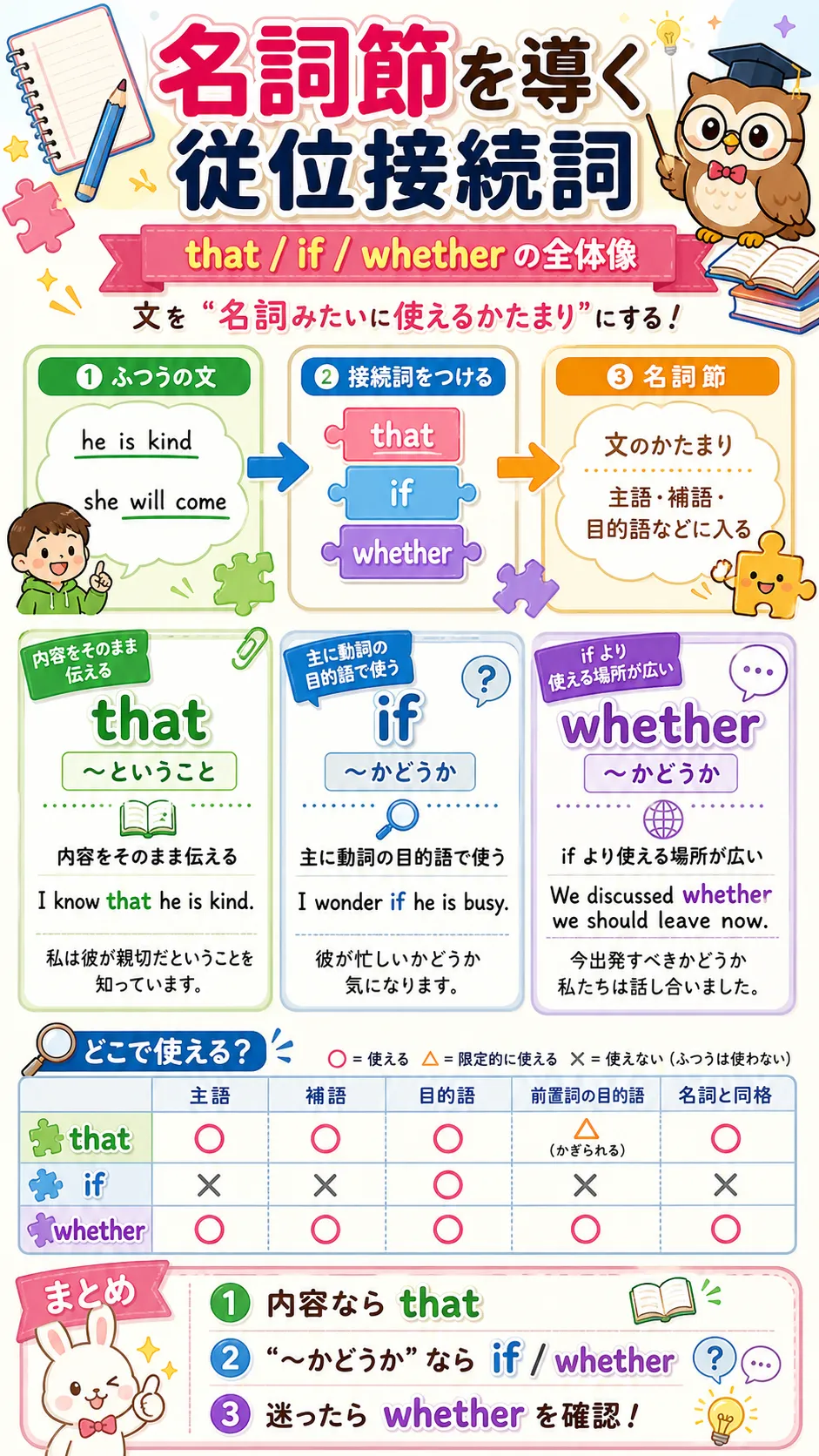
名詞節を導く従位接続詞
このページでは、that / if / whether が作る
名詞節を、例文・図解・音声を通してわかりやすく整理します。
「文のかたまり」が主語・補語・目的語として使える感覚をつかみながら、
that と if / whether の違いも順番に確認していきましょう😊
▮ 目次
✅ 迷ったら 「1 → 2 → 3 → 総まとめ」 の順がおすすめです。
📱 スマホでも見やすいように、今回は大きな章だけを並べています。
-
1. 名詞節を導く接続詞(まずは全体像) 最初にここ
that / if / whetherが「文のかたまり」を名詞として使えるようにする、という基本イメージをつかみます。 -
2. 従位接続詞
that(「〜ということ」)that + 文が、主語・補語・目的語などの「名詞の席」に入る考え方を整理します。 -
3. 間接疑問の名詞節:
if/whether(「〜かどうか」)「質問の中身」を文の中に入れる形を学び、ifとwhetherの使える場所の違いを確認します。 -
🧾 総まとめ:名詞節(that / if / whether)の要点チェック 迷ったらここ「意味の違い」+「置ける場所」+「省略・例外」をまとめて確認します。
-
🎯 Lesson108 まとめクイズ — 名詞節を導く従位接続詞 仕上げ
that(〜ということ)とif / whether(〜かどうか)をまとめて復習し、 名詞節を導く従位接続詞を正しく使えるか確認します。
1. 名詞節を導く接続詞(まずは全体像)
名詞節
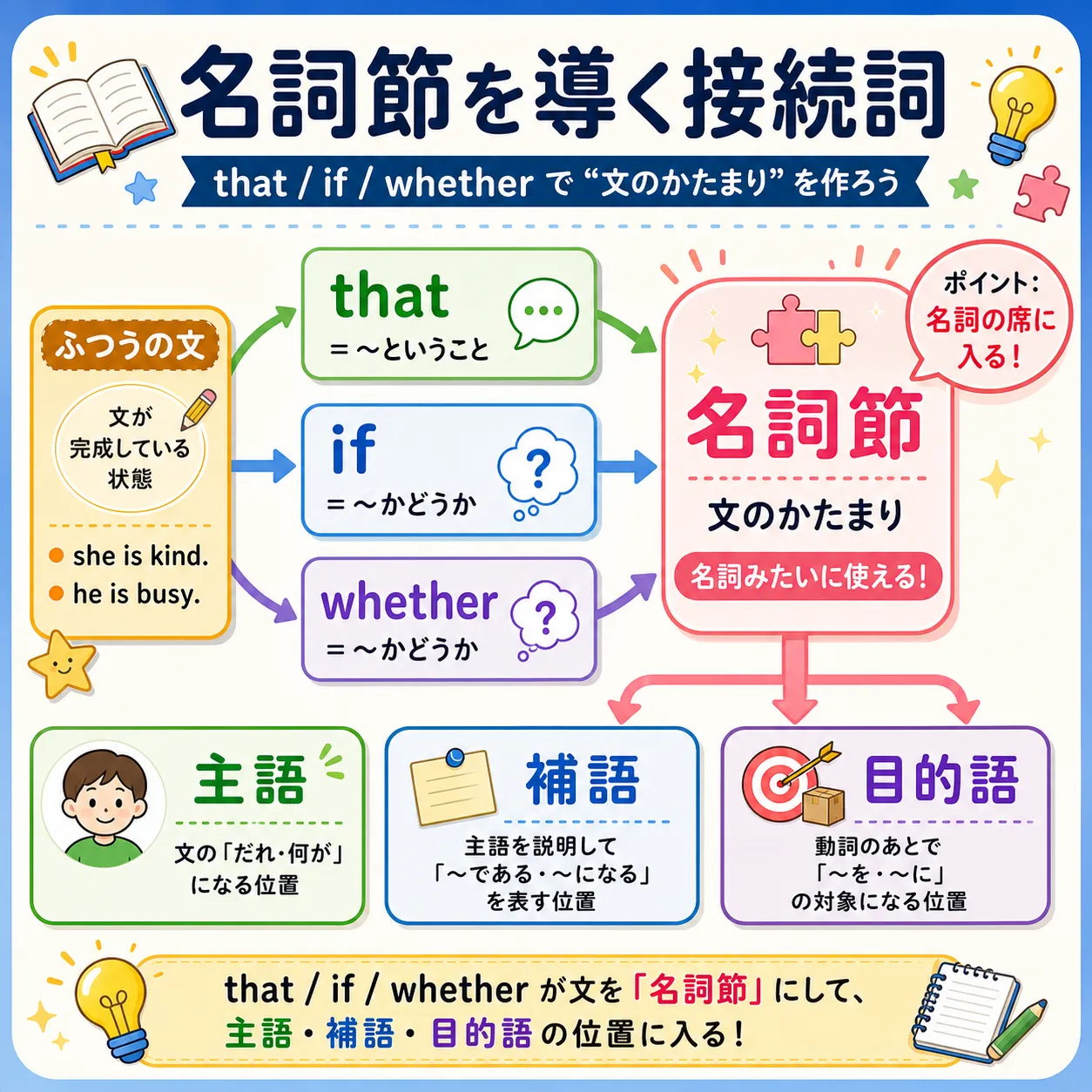
とは、かんたんに言うと
「文のかたまり」を名詞のように使う形
です。
たとえば she is kind(彼女は親切だ)という文に
that
をつけると、
that she is kind(彼女が親切だということ)という
1つの名詞のかたまり
として扱えるようになります😊
that(〜ということ)
if(〜かどうか)
whether(〜かどうか)
主語
補語
目的語
that / if / whether は、後ろに
主語 + 動詞
を続けて、文全体を
ひとかたまりの名詞
にします。
名詞節は、ふつうの名詞と同じように 主語 ・ 補語 ・ 目的語 の場所に入れます。
that は
内容を伝える
とき、if / whether は
〜かどうか
を表すときに使います。
🧩 名詞節が入れる「3つの席」
文の最初に置いて、「〜ということは」「〜かどうかは」と言えます。
Whether we can finish it today is important.
be動詞 の後ろで、「答え・問題・理由の中身」を説明します。
The question is whether we should wait.
know / think / ask / check などの後ろでよく使います。
I know that she is busy.
⚠️ 最初に押さえる注意点
if は「もし」だけではない
if には「もし〜なら」だけでなく、
〜かどうか
の意味もあります。
例:I don't know if he is home.
ここでは「彼が家にいるかどうかわからない」という意味です。
whether のほうが使える場所が広い
if と whether はどちらも「〜かどうか」ですが、
主語・補語・前置詞の後ろ
では whether が基本です。
まずは「迷ったら whether のほうが安全」と考えると整理しやすいです。
そして、名詞節は 「名詞の席に入る文のかたまり」 と覚えましょう✨
📌 名詞節を導く語の全体像
| 分類 | 代表語(日本語訳) | 基本の意味 | よく入る場所 | 注意点 |
|---|---|---|---|---|
| 内容を伝える |
that(〜ということ)the fact that(〜という事実)the idea that(〜という考え)the news that(〜という知らせ)
|
文の内容をそのまま 名詞のかたまり にします。 |
主語
補語
目的語
同格I know that ...The fact is that ...
|
目的語では that が省略されることがあります。
|
| 〜かどうか |
if(〜かどうか)ask if(〜かどうか尋ねる)wonder if(〜かなと思う)check if(〜かどうか確認する)see if(〜かどうか見てみる)
|
Yes / No で答えられる内容を、 疑問の中身 として入れます。 |
目的語 が中心I wonder if ...Please check if ...
|
「もし」ではなく「〜かどうか」になる場面があります。 |
| 広く使える |
whether(〜かどうか)decide whether(〜かどうか決める)discuss whether(〜かどうか話し合う)consider whether(〜かどうか検討する)depend on whether(〜かどうかに左右される)
|
if より少し
かため・明確
な「〜かどうか」です。
|
主語
補語
目的語
前置詞の目的語Whether ... is important.It depends on whether ...
|
主語・補語・前置詞の後ろでは whether が基本です。
|
| 選択を明示 |
whether or not(〜かどうか)whether A or B(AかBか)whether to do(〜すべきかどうか)whether it is possible(可能かどうか)
|
「する / しない」「A / B」のような 選択肢 をはっきり示します。 |
主語
目的語
前置詞の目的語I'm not sure whether or not ...
|
迷い・判断・選択を強調したいときに便利です。 |
| that省略 |
say (that)(〜と言う)think (that)(〜と思う)know (that)(〜と知っている)hope (that)(〜だと望む)believe (that)(〜だと信じる)
|
目的語の that は、
会話では省略されることがよくあります。
|
目的語 が中心She said (that) she was tired.
|
省略しても、後ろの文全体が目的語になっています。 |
that
that(〜ということ)
the fact that(〜という事実)
the idea that(〜という考え)
the news that(〜という知らせ)
✅ 文の内容をそのまま名詞のかたまりにします。目的語では省略されることもあります。
if
if(〜かどうか)
ask if(〜かどうか尋ねる)
wonder if(〜かなと思う)
check if(〜かどうか確認する)
see if(〜かどうか見てみる)
✅ 動詞の目的語でよく使います。「もし」ではなく「〜かどうか」の意味になる点に注意。
whether
whether(〜かどうか)
decide whether(〜かどうか決める)
discuss whether(〜かどうか話し合う)
consider whether(〜かどうか検討する)
depend on whether(〜かどうかに左右される)
✅ 主語・補語・前置詞の後ろでは whether が基本です。
whether or not
whether or not(〜かどうか)
whether A or B(AかBか)
whether to do(〜すべきかどうか)
whether it is possible(可能かどうか)
✅ 「する / しない」「A / B」のような選択をはっきり見せたいときに便利です。
say (that)
say (that)(〜と言う)
think (that)(〜と思う)
know (that)(〜と知っている)
hope (that)(〜だと望む)
believe (that)(〜だと信じる)
✅ 会話では that が見えなくても、後ろの文全体が目的語になっています。
💬 例文で感覚をつかもう!
I know that she works from home on Fridays.
(彼女が金曜日は在宅勤務をしていることを知っています。)
🔧 know の後ろに that + 主語 + 動詞 が入り、「何を知っているのか」を説明しています。
✅ that she works from home on Fridays 全体が 目的語 です。
💡 会話では I know she works ... のように that が省略されることもあります。
The point is that we need more time.
(要点は、私たちにはもっと時間が必要だということです。)
🔧 is の後ろに that節 があり、主語 The point の中身を説明しています。
✅ この位置の名詞節は 補語 です。
📌 The problem is that ... / The reason is that ... も同じ形でよく使います。
That he remembered my name made me happy.
(彼が私の名前を覚えていてくれたことが、私をうれしくさせました。)
🔧 That he remembered my name が文の主語です。
✅ 「彼が私の名前を覚えていたこと」全体で1つの名詞のように働いています。
💡 少しかたい言い方なので、会話では It made me happy that ... の形もよく使われます。
I wonder if the store is open today.
(その店が今日開いているかどうか気になります。)
🔧 ここでの if は「もし」ではなく、〜かどうか です。
✅ if the store is open today が wonder の目的語になっています。
📌 I wonder if ... は「〜かなあ」と自然に言える便利表現です。
Please check if the link works on your phone.
(そのリンクがあなたのスマホで開くかどうか確認してください。)
🔧 check if ... は「〜かどうか確認する」という実用的な形です。
✅ the link works は「リンクが動く・開ける」という意味で、ITやWeb制作でもよく使えます。
⚠️ if の後ろは疑問文語順ではなく、the link works のような普通の語順になります。
Whether we can finish it today depends on the number of calls.
(今日それを終えられるかどうかは、電話の件数によります。)
🔧 文頭で「〜かどうか」を主語にする場合は、基本的に whether を使います。
✅ Whether we can finish it today 全体が主語です。
📌 depend on ... は「〜に左右される・〜次第だ」という意味です。
The question is whether we should wait for his reply.
(問題は、彼の返信を待つべきかどうかです。)
🔧 The question is ... の後ろで、問題の中身を whether節 が説明しています。
✅ 補語の場所では if より whether が自然です。
💡 should を入れると「〜すべきかどうか」という判断の意味になります。
I'm not sure whether or not we should change the plan.
(私たちが計画を変更すべきかどうか、まだ確信がありません。)
🔧 whether or not は「するか、しないか」をはっきり出す表現です。
✅ I'm not sure ... と組み合わせると、「まだ判断できない」という自然な言い方になります。
📌 会議・相談・予定変更の場面でよく使えます。
She said she would call me later.
(彼女はあとで私に電話すると言いました。)
🔧 said の後ろには、本来 that を入れて She said that ... と考えられます。
✅ 会話では that が省略され、she would call me later がそのまま目的語になります。
💡 that が見えなくても、「後ろの文のかたまり」が名詞節として働いている点がポイントです。
- ✅ 名詞節は、 文のかたまりを名詞のように使う形 です。
-
✅
thatは 「〜ということ」、if / whetherは 「〜かどうか」 を表します。 - ✅ 名詞節は 主語・補語・目的語 の場所に入れます。
-
⚠️
ifは目的語で使いやすく、主語・補語・前置詞の後ろではwhetherが基本です。
2. 従位接続詞 that(「〜ということ」)
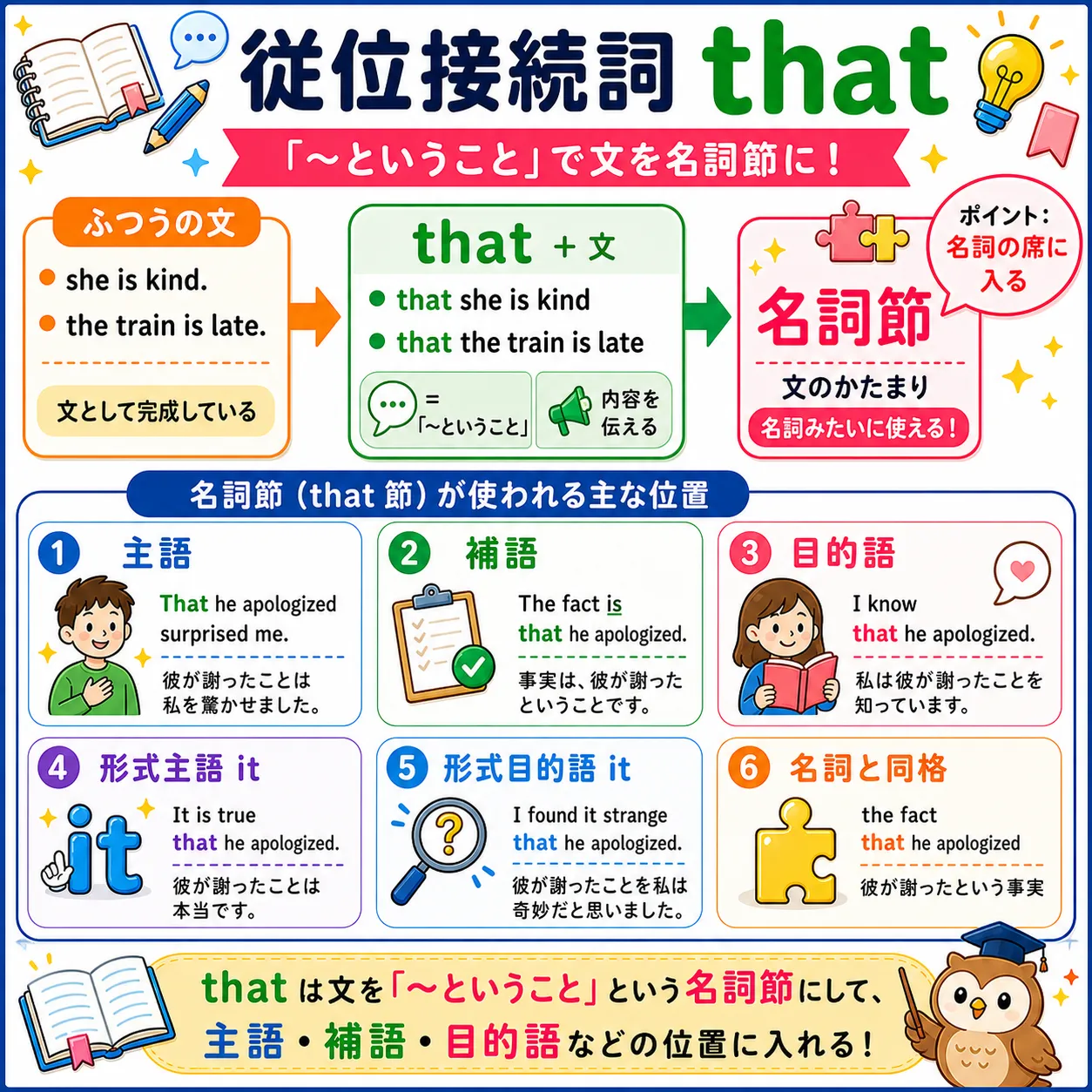
従位接続詞 that は、
後ろの文を「〜ということ」という名詞のかたまりにする
はたらきをします。
つまり、that + 主語 + 動詞 全体が
主語・補語・目的語・同格
などの場所に入れるようになります😊
that S V(SがVするということ)
内容を伝える
名詞の席に入る
目的語では省略されやすい
同格では省略しない
that は「もし」や「かどうか」ではなく、
〜ということ
と内容をまとめる接続詞です。
that節 は、名詞と同じように
主語・
補語・
目的語
になります。
目的語の that は省略されやすいですが、 同格の that は基本的に省略しません。
⚠️ よくあるミス(that節でつまずきやすいところ)
that が名詞節を導くときは、指示語の「それ」ではなく
〜ということ
と考えると自然です。
That ... が長いと読みにくくなるので、
It is ... that ...
にするとスッキリします。
the idea that ... や the fact that ... の
that は、名詞の中身を説明する目印なので、基本的に残します。
that は「文を箱に入れて、名詞として置けるようにするフタ」。
中身は文、外側は名詞
と考えると整理しやすいです✨
📌 that 節の使い方まとめ
| 分類 | 代表語・目印(日本語訳) | 基本の型 | 使い方・ニュアンス | 省略 |
|---|---|---|---|---|
| 主語 |
that S V(SがVするということ)surprising(驚くべき)important(重要な)true(本当の)possible(可能な)
|
That S V + V ...例: That he came early surprised us.
|
文頭主語
「〜ということは」と、文の主役として使います。 少しフォーマルで、書き言葉寄りです。 |
基本的に省略しません。 |
| 形式主語 it |
clear(明らかな)true(本当の)likely(ありそうな)natural(自然な)a pity(残念なこと)no surprise(驚きではない)
|
It is + 形容詞 / 名詞 + that S V ...例: It is clear that we need a new plan.
|
長い主語を後ろへ移動して、文を読みやすくします。 会話・説明文の両方でかなりよく使います。 |
that は残すのが基本です。
|
| 補語 |
fact(事実)problem(問題)point(要点)truth(真実)reason(理由)trouble(困った点)
|
S + be + that S V ...例: The problem is that the file is missing.
|
主語の中身を that 節で説明します。「問題は〜ということです」「要点は〜ということです」の形です。 |
省略しないほうが明確です。 |
| 目的語 |
think(〜と思う)know(〜と知っている)believe(〜と信じる)say(〜と言う)hear(〜と聞く)notice(〜と気づく)hope(〜だと望む)realize(〜とわかる)understand(〜と理解する)
|
S + V + that S V ...例: I realized that I had the wrong key.
|
動詞の「何を?」にあたる部分です。 会話でも文章でも一番よく使う that 節です。
|
会話では省略されやすいです。I think that ... → I think ...
|
| 形式目的語 it |
find it C that(〜ということをCだと思う)make it C that(〜ということをCにする)consider it C that(〜ということをCだと考える)take it for granted that(〜を当然だと思う)see to it that(〜するよう取り計らう)
|
S + V + it + C + that S V ...例: We found it strange that the door was open.
|
目的語が長いと読みにくいので、いったん it で受けて、
本当の中身を後ろに置きます。
|
that は残すのが自然です。
|
| 前置詞の目的語 |
except that(〜という点を除いて)but that(〜ということを除けば)besides that(〜ということに加えて)in that(〜という点で)save that(〜ということを除いて)
|
前置詞 + that S V ...例: The plan is good except that it costs too much.
|
かなり限られた表現です。 ふつうの前置詞の後ろに何でも that 節を置けるわけではありません。
|
省略しません。 |
| 名詞と同格 |
idea(考え)fact(事実)belief(信念)hope(希望)evidence(証拠)possibility(可能性)rumor(うわさ)news(知らせ)conclusion(結論)
|
名詞 + that S V ...例: The idea that anyone can improve is powerful.
|
前の名詞の中身を that 節で説明します。「〜という考え」「〜という事実」の形です。 |
基本的に省略しません。 × the idea anyone can improve
|
that S V(SがVするということ)
surprising(驚くべき)
important(重要な)
true(本当の)
✅ That he came early surprised us.
文頭に置くと少しフォーマル。長い場合は形式主語 it が便利です。
clear(明らかな)
likely(ありそうな)
a pity(残念なこと)
no surprise(驚きではない)
✅ It is clear that we need a new plan.
長い that 節を後ろへ置いて、文を読みやすくします。
fact(事実)
problem(問題)
point(要点)
reason(理由)
trouble(困った点)
✅ The problem is that the file is missing.
主語の中身を that 節で説明します。
think(〜と思う)
know(〜と知っている)
believe(〜と信じる)
say(〜と言う)
realize(〜とわかる)
understand(〜と理解する)
✅ I realized that I had the wrong key.
会話では that が省略されることも多いです。
find it C that(〜ということをCだと思う)
make it C that(〜ということをCにする)
take it for granted that(〜を当然だと思う)
✅ We found it strange that the door was open.
長い目的語を後ろへ移動して、文を軽くします。
except that(〜という点を除いて)
besides that(〜ということに加えて)
in that(〜という点で)
✅ The plan is good except that it costs too much.
使える表現が限られるため、例外枠として覚えます。
idea(考え)
fact(事実)
belief(信念)
hope(希望)
possibility(可能性)
rumor(うわさ)
news(知らせ)
✅ The idea that anyone can improve is powerful.
名詞の中身を説明する that なので、基本的に省略しません。
💬 例文で感覚をつかもう!
That the meeting was canceled surprised everyone.
(会議が中止になったことは、みんなを驚かせました。)
🔧 That the meeting was canceled 全体が主語です。
✅ 「会議が中止になったこと」という1つの名詞のかたまりとして、動詞 surprised の前に置かれています。
💡 文頭の That ... 主語は少しフォーマルなので、ニュース文・説明文でよく見ます。
It is possible that the delivery will arrive earlier than expected.
(配達が予想より早く届く可能性があります。)
🔧 本当の主語は that the delivery will arrive earlier than expected ですが、長いので後ろに置いています。
✅ 先頭の It は形式主語で、意味の中心は後ろの that 節です。
📌 earlier than expected は「予想より早く」という実用表現です。
My main concern is that the instructions are not clear enough.
(私の主な懸念は、指示が十分に明確ではないということです。)
🔧 is の後ろの that 節が、主語 My main concern の中身を説明しています。
✅ 「懸念=指示が明確ではないこと」という関係です。
💡 concern(懸念)や problem(問題)は、that 節と相性が良い名詞です。
I realized that a short break can improve my focus.
(短い休憩が集中力を高めることに気づきました。)
🔧 realized の目的語が that 節です。
✅ 「何に気づいたのか?」の答えが that a short break can improve my focus です。
💡 目的語の that は、会話では I realized a short break can ... のように省略されることもあります。
The guide showed us that the entrance was on the second floor.
(案内係は、入口が2階にあることを私たちに示しました。)
🔧 showed us that ... で「私たちに〜ということを示した」という形です。
✅ us が相手、that 節が伝えた内容です。
📌 tell 人 that ... / remind 人 that ... も似た形でよく使います。
We found it helpful that the app saved our progress automatically.
(そのアプリが進捗を自動保存してくれることは便利だと感じました。)
🔧 it は仮の目的語で、本当の中身は後ろの that 節です。
✅ found it helpful は「それを便利だと感じた」という形で、後ろの that 節が「それ」の内容を説明します。
💡 長い that 節を前に置かないことで、英語らしく読みやすくなります。
The new plan looks good except that it may take extra time.
(新しい計画はよさそうですが、余分な時間がかかるかもしれない点を除けば、です。)
🔧 except that ... は「〜という点を除いて」という意味です。
✅ これは限られた前置詞表現の後ろに that 節が続く例外的な形です。
⚠️ すべての前置詞の後ろに that 節を置けるわけではないので、表現ごとに覚えるのがおすすめです。
The idea that anyone can learn English step by step is encouraging.
(誰でも一歩ずつ英語を学べるという考えは、励みになります。)
🔧 that anyone can learn English step by step が、前の名詞 The idea の中身を説明しています。
✅ これは同格の that で、「〜という考え」という意味です。
⚠️ 同格の that は、目的語の that と違って基本的に省略しません。
There is no doubt that regular review helps you remember more.
(定期的な復習がより多く覚える助けになることは、疑いありません。)
🔧 that regular review helps you remember more は、no doubt の中身を説明しています。
✅ 「疑いがない」だけで終わらせず、「何に疑いがないのか」を that 節で示しています。
💡 学習・ビジネス・説明文で使いやすい、少し説得力のある表現です。
-
✅
thatは、 後ろの文を「〜ということ」という名詞のかたまりにする 接続詞です。 -
✅
that節は、 主語・補語・目的語・形式目的語・同格 などで使えます。 - ✅ 長い主語・目的語は、 形式主語 it / 形式目的語 it を使うと読みやすくなります。
-
⚠️ 目的語の
thatは省略されやすいですが、 同格のthatは基本的に省略しません。
that + 主語 + 動詞 を「〜ということ」の名詞節として見抜けるかな?
主語・補語・目的語・同格での使い方や、that を省略できる場所・できない場所をクイズで確認してみよう 😊
3. 間接疑問の名詞節:if / whether(「〜かどうか」)
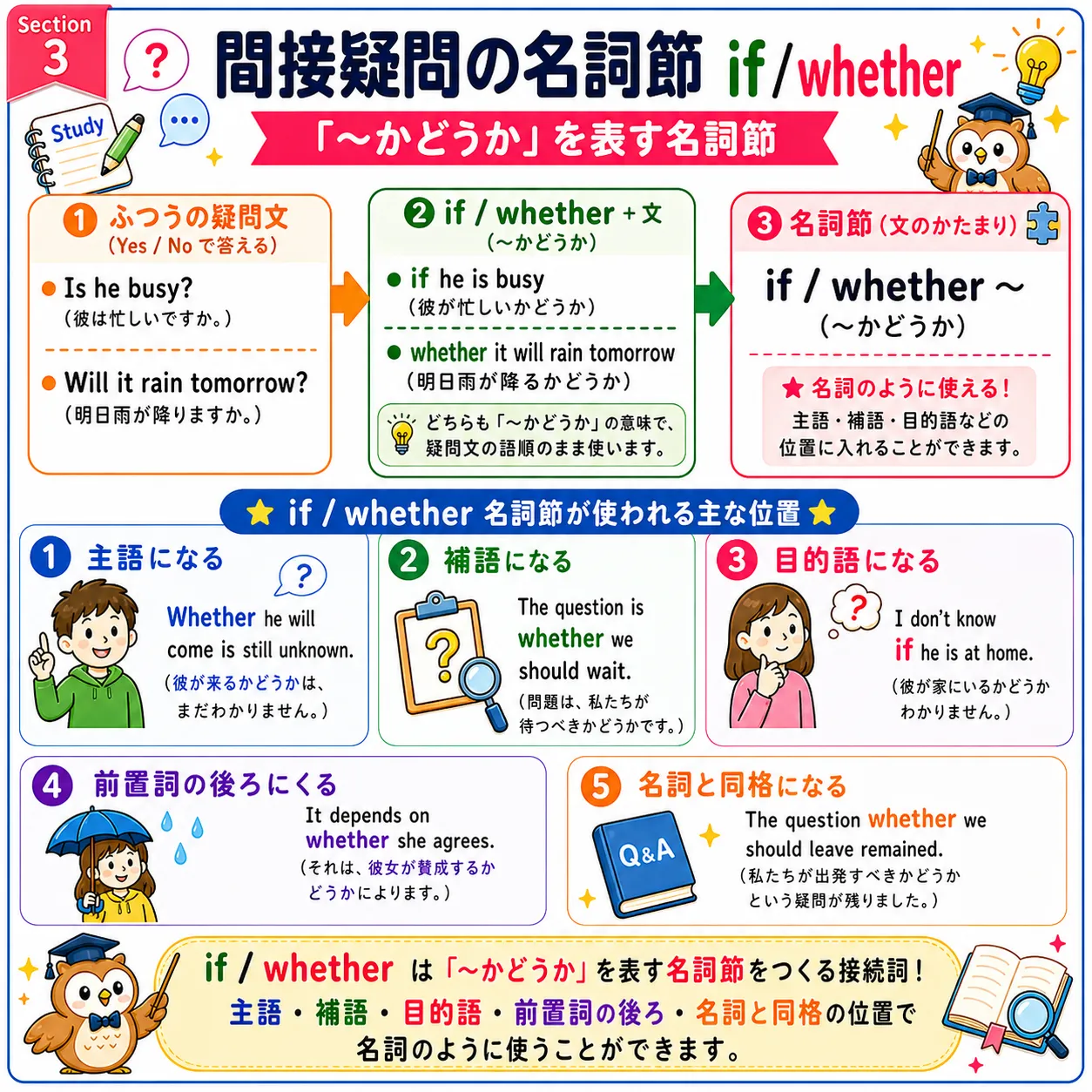
if / whether は、Yes / No で答えられる疑問の中身を
「〜かどうか」という名詞のかたまり
にする接続詞です。
たとえば Is he available?(彼は空いていますか?)という疑問文を、
文の中に入れると
whether he is available
のように、ふつうの語順へ変わります😊
if(〜かどうか)
whether(〜かどうか)
疑問文語順にしない
目的語なら両方OKが多い
主語・補語・前置詞の後ろは whether
if は「もし」だけではありません。
I don't know if ...
のように、動詞の後ろでは「〜かどうか」になります。
間接疑問の中では、
疑問文語順にしない
のが大切です。
✅ whether he is free
× whether is he free
if は目的語でよく使えますが、
主語・補語・前置詞の後ろ
では whether が基本です。
⚠️ よくあるミス(if / whether で迷いやすいところ)
× I don't know if is he busy.
✅ I don't know if he is busy.
間接疑問の中は
主語 + 動詞
の語順です。
× It depends on if he agrees.
✅ It depends on whether he agrees.
前置詞の後ろは基本
whether
です。
× The question is if we can finish it.
✅ The question is whether we can finish it.
be動詞 の後ろで「問題の中身」を言うときは
whether が自然です。
📌 if / whether の使い方まとめ
| 分類 | 代表語・目印(日本語訳) | 基本の型 | 使い方・ニュアンス | if / whether |
|---|---|---|---|---|
| 主語 |
whether(〜かどうか)important(重要な)unclear(不明確な)still unknown(まだ不明な)the main issue(主な問題)
|
Whether S V + V ...例: Whether he agrees is important.
|
「〜かどうかは」と、疑問の中身を文の主語にします。 文頭に置く場合は whether が基本です。
|
✅ whether⚠️ 文頭主語の if は避ける
|
| 形式主語 it |
it is unclear(不明だ)it is not certain(確かではない)it doesn't matter(重要ではない)it remains to be seen(今後わかる)it is doubtful(疑わしい)
|
It is ... whether / if S V ...例: It is unclear whether the event will continue.
|
長い主語を後ろに置く形です。 文頭主語より自然に見えることが多く、説明文でも会話でも使いやすいです。 |
✅ whether が安全△ if も出ることあり
|
| 補語 |
question(問題・疑問)issue(争点・問題)problem(問題)concern(懸念)point(要点)
|
S + be + whether S V ...例: The question is whether we can afford it.
|
主語の中身を「〜かどうか」で説明します。 「問題は〜かどうかです」の形です。 |
✅ whether× 補語の if は避ける
|
| 動詞の目的語 |
know(〜を知っている)ask(〜を尋ねる)tell(〜を伝える)check(〜を確認する)wonder(〜かなと思う)see(〜か見てみる)decide(〜を決める)confirm(〜を確認する)find out(〜を調べて知る)
|
S + V + if / whether S V ...例: Please check if the password works.
|
一番よく使う形です。 「何を知る・尋ねる・確認するのか」の中身が if / whether 節になります。
|
✅ if / whether 両方OKが多いwhether は少しかため
|
| 前置詞の目的語 |
depend on whether(〜かどうかによる)think about whether(〜かどうか考える)talk about whether(〜かどうか話す)decide on whether(〜かどうかで決める)be worried about whether(〜かどうか心配している)be interested in whether(〜かどうかに関心がある)
|
前置詞 + whether S V ...例: It depends on whether the client agrees.
|
前置詞の後ろに「〜かどうか」を置く形です。 ここは if を使わず、whether を使うのが基本です。
|
✅ whether× on if は不可
|
| 名詞と同格 |
doubt(疑い)question(疑問)issue(争点)uncertainty(不確実性)decision(決定)debate(議論)discussion(話し合い)
|
名詞 + whether S V ...例: The question whether we should continue remains.
|
前の名詞の中身を whether 節で説明します。「〜かどうかという疑問・問題・議論」の形です。 |
✅ whether× 同格の if は避ける
|
| 選択を明示 |
whether or not(〜かどうか)whether A or B(AかBか)whether to do(〜すべきかどうか)decide whether to(〜するか決める)not sure whether to(〜すべきか迷っている)
|
whether or not S V ...whether to + 動詞の原形例: We need to decide whether to postpone it.
|
「する / しない」「A / B」の選択をはっきり出します。 判断・決定・迷いを表す場面で便利です。 |
✅ whether が自然whether to は if to にしない
|
whether
whether(〜かどうか)
important(重要な)
unclear(不明確な)
still unknown(まだ不明な)
✅ Whether he agrees is important.
文頭主語では whether が基本です。
It is ... whether / if ...
it is unclear(不明だ)
it is not certain(確かではない)
it doesn't matter(重要ではない)
it remains to be seen(今後わかる)
✅ It is unclear whether the event will continue.
whether が安全ですが、if が出ることもあります。
The question is whether ...
question(問題・疑問)
issue(争点・問題)
problem(問題)
concern(懸念)
✅ The question is whether we can afford it.
補語の場所では if を避けます。
if / whether 両方OKが多い
know(〜を知っている)
ask(〜を尋ねる)
check(〜を確認する)
wonder(〜かなと思う)
confirm(〜を確認する)
✅ Please check if the password works.
一番よく使う形です。
whether
depend on whether(〜かどうかによる)
think about whether(〜かどうか考える)
talk about whether(〜かどうか話す)
be worried about whether(〜かどうか心配している)
✅ It depends on whether the client agrees.
× on if は避けます。
question whether ...
doubt(疑い)
question(疑問)
issue(争点)
uncertainty(不確実性)
debate(議論)
✅ The question whether we should continue remains.
同格では whether を使います。
whether or not / whether to
whether or not(〜かどうか)
whether A or B(AかBか)
whether to do(〜すべきかどうか)
decide whether to(〜するか決める)
✅ We need to decide whether to postpone it.
if to とは言いません。
💬 例文で感覚をつかもう!
Please check if the payment went through.
(支払いが正常に完了したかどうか確認してください。)
🔧 check if ... は「〜かどうか確認する」という実務でよく使う形です。
✅ if the payment went through 全体が check の目的語です。
💡 went through は「処理が通った・完了した」という意味で、支払い・申請・手続きでよく使います。
Could you tell me whether the report has been approved?
(その報告書が承認されたかどうか教えていただけますか。)
🔧 tell me whether ... は「〜かどうかを私に教える」という形です。
✅ whether を使うと、if より少し丁寧・明確な響きになります。
⚠️ 間接疑問なので、whether has the report been approved ではなく、whether the report has been approved の語順です。
Whether the new schedule works for everyone is still unclear.
(新しい予定が全員に合うかどうかは、まだはっきりしていません。)
🔧 文頭の Whether the new schedule works for everyone が主語です。
✅ 主語として「〜かどうか」を置く場合は、基本的に whether を使います。
📌 still unclear は「まだ不明確」という、会議・調整でよく使う表現です。
It is unclear whether the system will be ready by Monday.
(そのシステムが月曜日までに準備できるかどうかは不明です。)
🔧 It は形式主語で、本当の中身は後ろの whether 節です。
✅ 長い主語を後ろに置くことで、文の始まりが軽くなります。
💡 It is unclear whether ... は、状況がまだ確定していないときに便利です。
The main issue is whether we have enough staff for the weekend.
(主な問題は、週末に十分なスタッフがいるかどうかです。)
🔧 is の後ろで、whether 節が The main issue の中身を説明しています。
✅ 補語の位置では、if より whether が自然です。
📌 enough staff は「十分な人員」という実務で使いやすい表現です。
Our next step depends on whether the client accepts the estimate.
(次の対応は、顧客が見積もりを受け入れるかどうかによります。)
🔧 depends on の on は前置詞です。その後ろには基本的に whether を使います。
✅ whether the client accepts the estimate が、前置詞 on の目的語になっています。
⚠️ depends on if ... は避け、depends on whether ... としましょう。
The question whether online lessons are enough often comes up.
(オンラインレッスンだけで十分かどうかという疑問は、よく出てきます。)
🔧 whether online lessons are enough が、前の名詞 The question の中身を説明しています。
✅ これは同格の whether で、「〜かどうかという疑問」という意味です。
⚠️ 同格では if ではなく whether を使うのが基本です。
We need to decide whether or not to extend the deadline.
(締め切りを延長するかどうか決める必要があります。)
🔧 whether or not to ... は「〜するかしないか」をはっきり表す形です。
✅ decide の目的語として、「何を決めるのか」を説明しています。
📌 extend the deadline は「締め切りを延長する」という実務でよく使う表現です。
I don't remember if I locked the back door.
(裏口のドアに鍵をかけたかどうか覚えていません。)
🔧 remember if ... で「〜かどうか覚えている」という意味です。
✅ 目的語の位置なので if が自然に使えます。
💡 I don't remember whether ... も可能ですが、会話では if のほうが軽く聞こえます。
-
✅
if/whetherは、 Yes / No 疑問を「〜かどうか」という名詞節にする 接続詞です。 - ✅ 間接疑問の中は、 疑問文語順ではなく「主語 + 動詞」の語順 にします。
-
✅ 動詞の目的語では、
if/whetherの両方が使えることが多い です。 -
⚠️ 主語・補語・前置詞の目的語・同格では、
whetherが基本 です。 -
⚠️
whether to doは使えますが、if to doとは言いません。
if / whether を使って、「〜かどうか」を正しく表せるかな?
間接疑問では if is he busy ではなく if he is busy のように、
ふつうの語順になるところが大切です。
クイズで、目的語・主語・補語・前置詞の後ろでの使い分けを確認してみよう 😊
🧾 総まとめ:名詞節(that / if / whether)の要点チェック
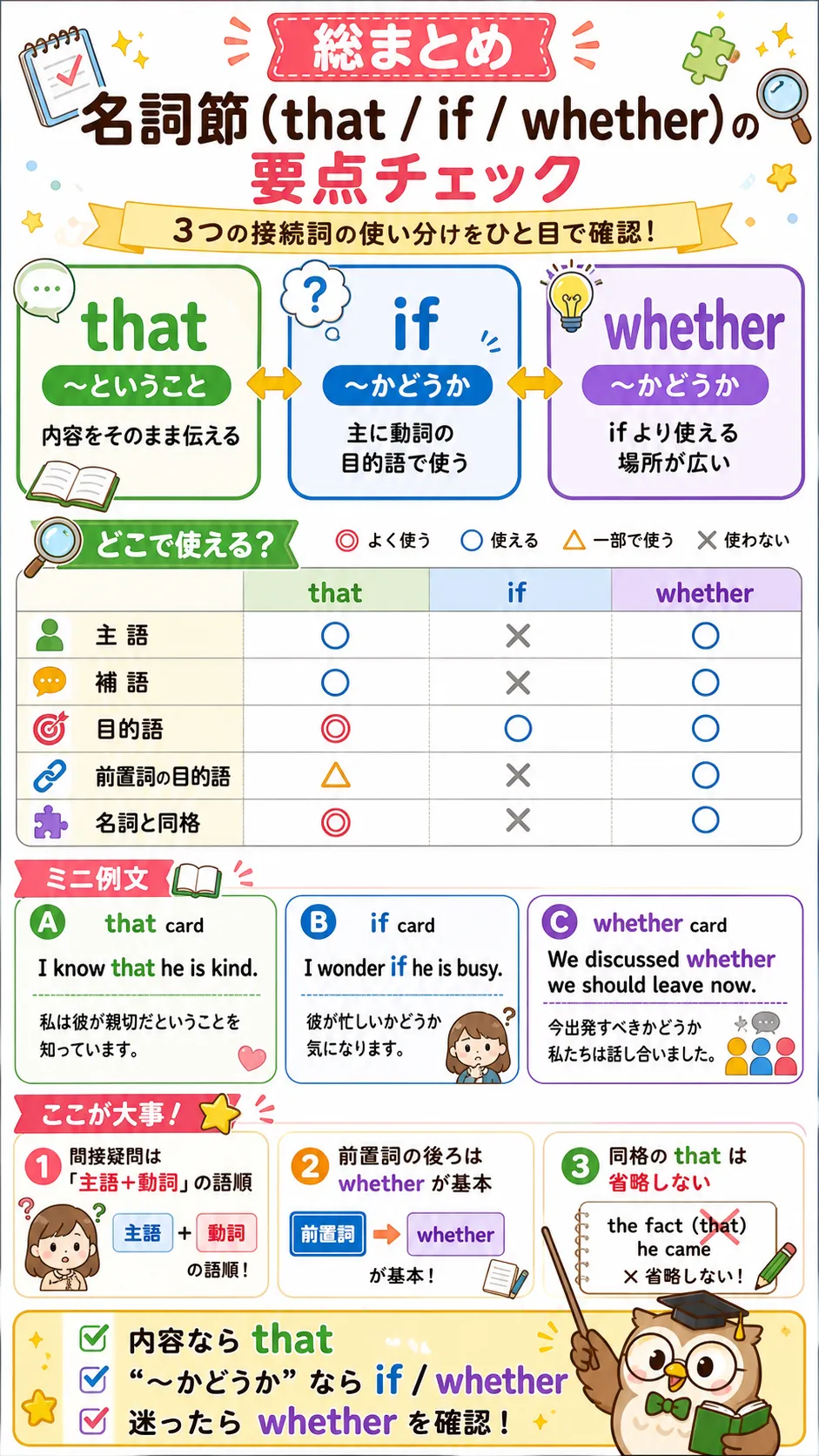
ここでは、Lesson108で学んだ
that
/
if
/
whether
の使い分けをまとめて確認します。
ポイントは、
「意味」→「置ける場所」→「省略できるか」
の順で見ることです😊
that = 〜ということ
if = 〜かどうか(目的語で多い)
whether = 〜かどうか(使える場所が広い)
間接疑問は普通の語順
同格の that は省略しない
内容をそのまま伝えるなら
that
。
「〜かどうか」という疑問の中身なら
if
/
whether
です。
主語・補語・前置詞の目的語・同格
では、基本的に whether が安全です。
if は動詞の目的語でよく使います。
間接疑問は
主語 + 動詞
の語順。
目的語の that は省略されやすいですが、
同格の that
は基本的に省略しません。
⚠️ 最後に確認!よくあるミス
目的語の that は省略できますが、
同格の that
は基本的に省略しません。
✅ the idea that practice matters
× I wonder if is he ready.
✅ I wonder if he is ready.
if / whether + 主語 + 動詞
が基本です。
× It depends on if they agree.
✅ It depends on whether they agree.
前置詞の後ろは
whether
が基本です。
that、
疑問なら if / whether。そして迷ったら、 置く場所を見て
whether が必要か確認
しましょう✨
📌 名詞節(that / if / whether)総まとめ表
| 分類 | 代表語・目印(日本語訳) | 基本の型 | 使い方・判断ポイント | 注意 |
|---|---|---|---|---|
| that:内容 |
that(〜ということ)think that(〜と思う)know that(〜と知っている)believe that(〜と信じる)realize that(〜と気づく)
|
S + V + that S V ...例: I realized that I needed help.
|
「何を思う・知る・信じるのか」を説明します。 動詞の目的語として一番よく出ます。 |
目的語の that は省略されやすいです。
|
| that:形式主語 |
It is clear that(〜ということは明らかだ)It is possible that(〜の可能性がある)It is true that(〜ということは本当だ)It is surprising that(〜ということは驚きだ)
|
It is + 形容詞 + that S V ...例: It is clear that the rule changed.
|
長い主語を後ろへ置いて、文を読みやすくします。 説明文・ビジネス文書でも便利です。 |
it は仮の主語です。
|
| that:同格 |
idea that(〜という考え)fact that(〜という事実)belief that(〜という信念)hope that(〜という希望)news that(〜という知らせ)
|
名詞 + that S V ...例: The fact that he apologized matters.
|
前の名詞の中身を that 節で説明します。「〜という事実」「〜という考え」の形です。 |
基本的に that を省略しません。
|
| if:目的語 |
ask if(〜かどうか尋ねる)check if(〜かどうか確認する)wonder if(〜かなと思う)see if(〜かどうか見てみる)remember if(〜かどうか覚えている)
|
S + V + if S V ...例: Check if the door is locked.
|
動詞の目的語で「〜かどうか」を表します。 会話では whether より軽く自然なことがあります。
|
「もし」ではなく「〜かどうか」になる場面に注意。 |
| whether:広く使える |
whether(〜かどうか)decide whether(〜かどうか決める)discuss whether(〜かどうか話し合う)consider whether(〜かどうか検討する)confirm whether(〜かどうか確認する)
|
S + V + whether S V ...例: We discussed whether the plan was realistic.
|
if より少し明確・かためです。書き言葉やビジネス文書でも使いやすいです。 |
迷ったら whether が安全なことが多いです。
|
| whether:主語・補語 |
Whether S V is important(SがVするかどうかは重要だ)The question is whether(問題は〜かどうかだ)The issue is whether(争点は〜かどうかだ)The concern is whether(懸念は〜かどうかだ)
|
Whether S V + V ...S + be + whether S V ...
|
主語・補語の位置では whether が基本です。「〜かどうかは」「問題は〜かどうかだ」を作ります。 |
この位置の if は避けます。
|
| whether:前置詞の後ろ |
depend on whether(〜かどうかによる)think about whether(〜かどうか考える)talk about whether(〜かどうか話す)be worried about whether(〜かどうか心配している)be interested in whether(〜かどうかに関心がある)
|
前置詞 + whether S V ...例: It depends on whether they reply today.
|
前置詞の目的語として「〜かどうか」を置きます。 ここは差が出やすい重要ポイントです。 |
× on if✅ on whether
|
| 語順チェック |
if S V(SがVするかどうか)whether S V(SがVするかどうか)whether to do(〜すべきかどうか)whether or not(〜かどうか)
|
✅ I don't know if he is free.× I don't know if is he free.
|
間接疑問の中は、疑問文語順ではなく普通の文の語順です。主語 + 動詞 を守ります。
|
語順ミスは最頻出です。 |
| 最終判断 |
content(内容)question(疑問)position(置く場所)omission(省略)word order(語順)
|
1. 内容なら that2. 〜かどうかなら if / whether3. 場所で whether 必須か確認
|
意味だけで決めず、最後に置く場所を確認します。 特に前置詞の後ろ・補語・同格では whether が強いです。
|
迷ったら表の左列から確認。 |
think that(〜と思う)
know that(〜と知っている)
believe that(〜と信じる)
realize that(〜と気づく)
✅ 内容をそのまま伝えるときは that。目的語では省略されることもあります。
idea that(〜という考え)
fact that(〜という事実)
belief that(〜という信念)
news that(〜という知らせ)
✅ 前の名詞の中身を説明します。同格の that は基本的に省略しません。
ask if(〜かどうか尋ねる)
check if(〜かどうか確認する)
wonder if(〜かなと思う)
see if(〜かどうか見てみる)
✅ 動詞の目的語では if がよく使われます。「もし」ではなく「〜かどうか」です。
decide whether(〜かどうか決める)
discuss whether(〜かどうか話し合う)
consider whether(〜かどうか検討する)
confirm whether(〜かどうか確認する)
✅ whether は少しかためで、使える場所が広いです。
Whether S V is important(SがVするかどうかは重要だ)
The question is whether(問題は〜かどうかだ)
The issue is whether(争点は〜かどうかだ)
✅ 主語・補語では if を避け、whether を使います。
depend on whether(〜かどうかによる)
think about whether(〜かどうか考える)
be worried about whether(〜かどうか心配している)
✅ 前置詞の後ろは whether。× on if は避けます。
✅ I don't know if he is free.
× I don't know if is he free.
✅ 間接疑問の中は疑問文語順ではなく、ふつうの文の語順です。
💬 例文で感覚をつかもう!
I noticed that the room was quieter after lunch.
(昼食後、その部屋がより静かになったことに気づきました。)
🔧 noticed の目的語として that 節が入っています。
✅ 「何に気づいたのか?」の答えが that the room was quieter after lunch です。
💡 内容をそのまま伝えるので that が自然です。
It is true that small habits can make a big difference.
(小さな習慣が大きな違いを生むことは本当です。)
🔧 It は形式主語で、本当の内容は後ろの that 節です。
✅ 長い主語を後ろに置くことで、文が読みやすくなります。
📌 make a big difference は「大きな違いを生む」というよく使う表現です。
The belief that mistakes help us grow is important.
(失敗は私たちを成長させる助けになるという考えは重要です。)
🔧 that mistakes help us grow が、前の名詞 The belief の中身を説明しています。
✅ これは同格の that です。
⚠️ 同格の that は、目的語の that と違い、基本的に省略しません。
Can you see if the file opens on your tablet?
(そのファイルがあなたのタブレットで開くかどうか見てもらえますか。)
🔧 see if ... は「〜かどうか見てみる・確認する」という意味です。
✅ if the file opens on your tablet が see の目的語です。
💡 動詞の目的語なので、会話では if が自然に使えます。
We discussed whether the new design would be easier to use.
(新しいデザインがより使いやすいかどうか話し合いました。)
🔧 discussed の目的語として whether 節が使われています。
✅ whether は if より少し明確で、議論・検討の文と相性が良いです。
📌 easier to use は「より使いやすい」というWeb制作や商品説明でも使いやすい表現です。
The real question is whether we can keep the service simple.
(本当の問題は、そのサービスをシンプルに保てるかどうかです。)
🔧 is の後ろで、whether 節が補語になっています。
✅ 「問題の中身」を説明する位置なので、if より whether が自然です。
⚠️ The real question is if ... より、whether を使うほうが安定します。
I'm worried about whether the message sounds too direct.
(そのメッセージが直接的すぎるように聞こえるかどうか心配しています。)
🔧 about は前置詞なので、その後ろでは whether を使います。
✅ whether the message sounds too direct が前置詞 about の目的語です。
⚠️ worried about if ... は避けましょう。
I don't know if the manager is available now.
(今、マネージャーが対応可能かどうかわかりません。)
🔧 if the manager is available now は間接疑問の名詞節です。
✅ 語順は the manager is。疑問文の is the manager にはしません。
💡 「〜かどうかわからない」は I don't know if ... で自然に言えます。
-
✅
thatは 「〜ということ」 。内容を名詞節にします。 -
✅
if/whetherは 「〜かどうか」 。Yes / No 疑問を名詞節にします。 -
✅ 動詞の目的語では
if/whetherの両方が使えることが多い です。 -
⚠️ 主語・補語・前置詞の目的語・同格では、
whetherが基本 です。 - ⚠️ 間接疑問の中は、 疑問文語順ではなく「主語 + 動詞」 にします。
-
⚠️ 目的語の
thatは省略されやすいですが、 同格のthatは基本的に省略しません。
that は「〜ということ」、
if / whether は「〜かどうか」を表します。
文の中で、主語・目的語・補語・前置詞の目的語として正しく使えているか、
クイズで総復習してみましょう!